The modern combat sports training landscape has increasingly turned toward wearable technology, promising athletes a revolutionary way to measure output, accelerate performance improvements, and gamify otherwise routine workouts. Across the fitness market, companies have introduced specialized boxing punch trackers and sensors designed to give users real-time feedback on their training sessions. These devices, typically ranging in cost from roughly one hundred to several hundred dollars, claim to provide an analytical edge similar to how a Fitbit tracks daily steps or heart rate. However, after more than two years of hands-on testing with leading models from PunchLab, FightCamp, Hykso, Corner, Everlast PIQ, StrikeTec, and various generic alternatives, a critical question remains: are these tech gadgets genuinely worth the investment, and which systems actually deliver on their promises?
To understand the current market, it is essential to first examine what these performance trackers are designed to do. At their core, boxing punch trackers function similarly to general fitness wearables, focusing primarily on recording the number of punches thrown during a workout. While devices like a Fitbit coordinate sleep monitoring, heart rate tracking, and body mass index calculations, boxing sensors generally limit their scope to punch counts and approximate speed measurements. More advanced models attempt to differentiate between straight punches and curved strikes like hooks and uppercuts, while others introduce metrics such as G-force or power ratings. Yet, veterans of the sport often note that these power metrics can lack true accuracy, serving largely as supplemental data points to enhance user engagement rather than offering precise biomechanical analysis.
Industry marketing often highlights a dual appeal for these products, targeting both professional competitors and casual fitness enthusiasts. Pro fighters are often naturally curious about any tool that might offer a competitive advantage, and diehard athletes are frequently willing to experiment with new training modalities. However, real-world application reveals limitations in accuracy, as trackers can occasionally miss shorter punches, follow-up jabs, or inside uppercuts and hooks. For beginners and home exercisers who lack formal training partners or structured drills, the appeal lies heavily in the novelty of high-tech connectivity, bridging the gap between physical workouts and mobile smartphone applications.
Despite the enthusiasm surrounding combat sports tech, many experienced trainers and fighters harbor significant skepticism regarding the actual utility of these devices. Critics argue that punch trackers measure quantity rather than quality, logging sheer frequency while ignoring the nuances of athletic execution. A traditional boxing coach focuses intently on technical fundamentals, such as hand positioning, defensive guard, pivoting the back foot during a cross, or proper elbow alignment on a hook. Trackers cannot evaluate strategy or technique; they merely aggregate frequency and speed to generate an intensity score. Furthermore, reliance on these metrics can potentially distort training habits, as users may be tempted to chase higher scores by sacrificing proper form for rapid, reckless punching.
Another limitation inherent to these devices is their restricted environment of use. Punch trackers are engineered primarily for heavy bag workouts and shadowboxing, suiting the solitary training style of the individual working out without a partner. They are rarely practical for live sparring or focused mittwork, where athletes must constantly adapt to varying tempos, tactical angles, and unpredictable defensive maneuvers. Because they rely heavily on dedicated bag work, individuals who incorporate heavy bags as only a minor component of their broader training regimen often find the setup process and maintenance more cumbersome than the data is worth. The physical friction of strapping sensors onto handwraps, managing Bluetooth connectivity, and handling smartphones with sweaty gloves adds an inconvenient layer of friction to a workout.
Evaluating the current market reveals distinct tiers among the leading options, beginning with PunchLab, which offers a unique approach by utilizing a smartphone as the primary tracking mechanism. Rather than requiring specialized hand sensors, PunchLab employs a belt that mounts the user’s phone directly to the heavy bag. This setup provides instant visual feedback directly in the athlete’s field of view, making it particularly useful in noisy gym environments where audio cues are difficult to hear. Beyond the hardware setup, PunchLab distinguishes itself through its application content, featuring drills and guidance curated by real boxing coaches emphasizing purist technique.
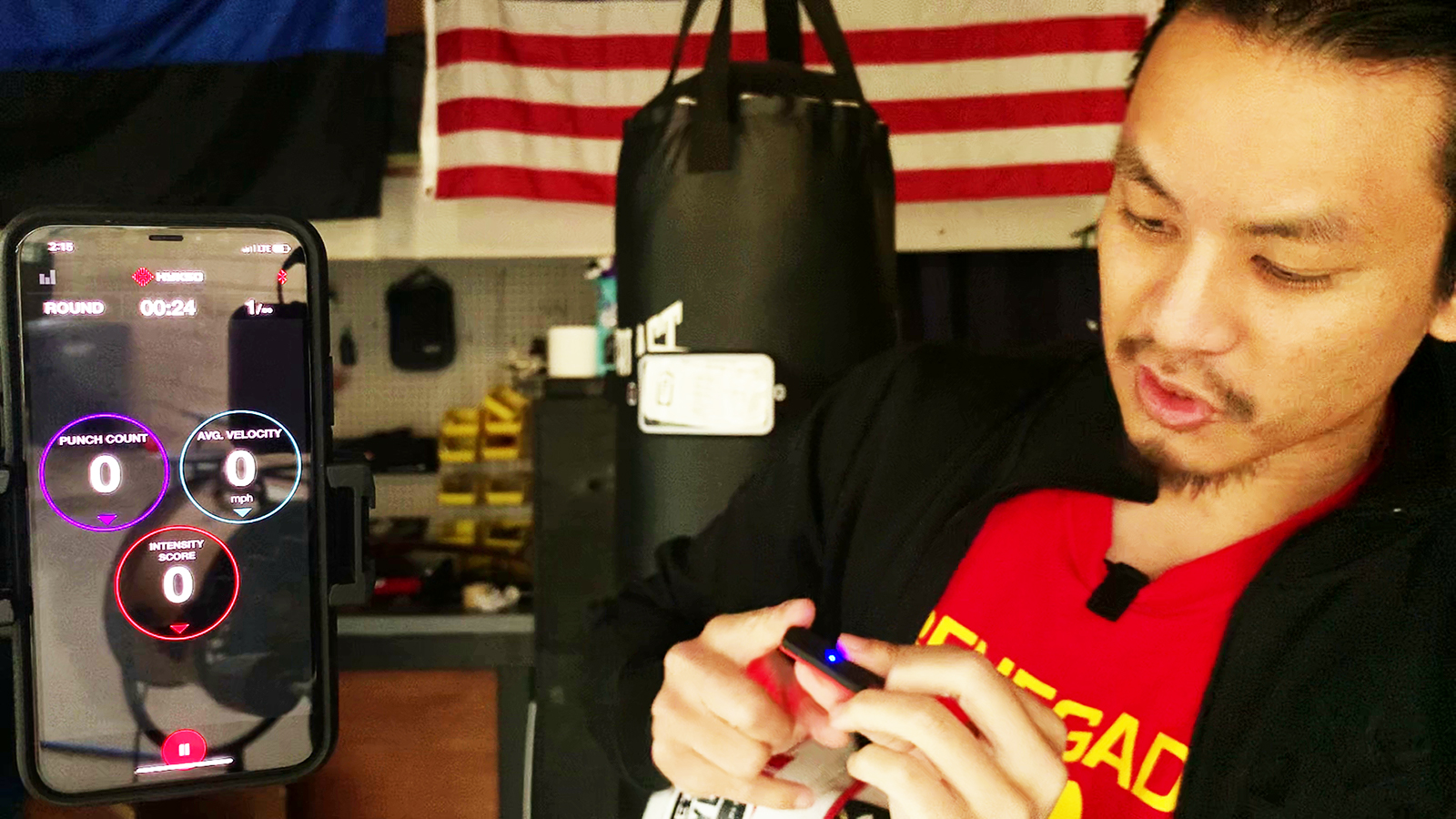
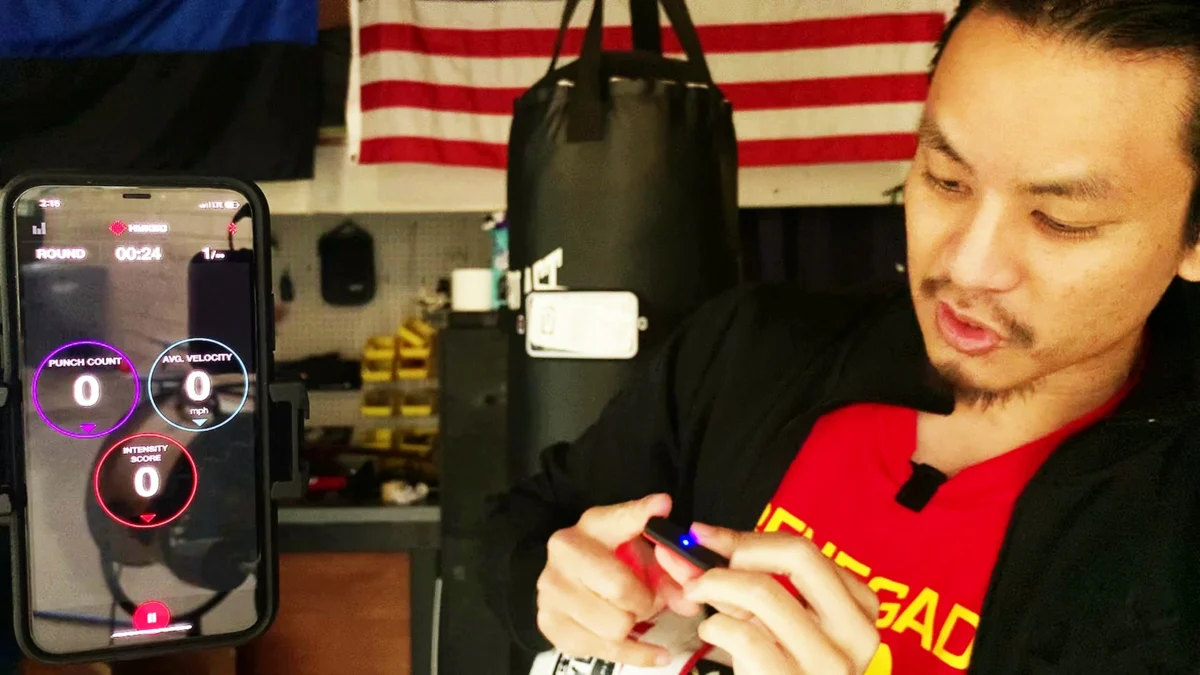
Ranking second among prominent platforms is FightCamp, which evolved from the earlier Hykso tracking ecosystem. FightCamp has established itself as one of the most recognizable and heavily marketed brands in the combat sports technology sector, featuring sleek hardware and high-production-value workout content. The trackers themselves utilize a clear color-coded system to distinguish between left and right hands, connecting easily via a double-tap interface. While early iterations of Hykso focused strictly on basic punch counts and speed, the rebranding under FightCamp introduced comprehensive home-workout programming led by experienced instructors like former USA national team member Tommy Duquette. The resulting application offers polished user interfaces, structured training routines, and interactive leaderboards.
Corner presents an alternative home fitness experience where boxing trackers are integrated into a broader virtual class ecosystem. While the hand trackers themselves feature a comfortable and straightforward design, the application focuses heavily on general fitness instruction, occasionally incorporating diverse disciplines like yoga alongside striking workouts. This broader approach makes Corner appealing to general home fitness enthusiasts seeking variety, though diehard boxing traditionalists may find that the platform feels less tailored to pure boxing development. Like other leading apps, Corner integrates smoothly with music streaming services, allowing users to customize their workout playlists.
Everlast PIQ represents a partnership between two established sporting and technology entities, delivering a robust technical performance backed by advanced sensor hardware. These trackers capture a wide array of metrics with high precision, reflecting the deep engineering experience of their developers. However, the hardware is hindered by practical drawbacks, notably short battery life and occasional connectivity issues with mobile devices. Combined with a relatively sparse selection of structured training videos within the companion application, these hardware and software limitations can lead users to abandon the device over time.
Other market entrants, such as StrikeTec, encountered significant developmental and logistical hurdles that hindered widespread adoption. Early distribution issues, combined with an initial focus on Android operating systems rather than iOS, alienated segments of the user base, and subsequent operational challenges further impacted brand presence. Meanwhile, various generic boxing trackers found on e-commerce platforms often suffer from poor build quality and unreliable data tracking, leading seasoned athletes to advise against their purchase altogether.
Ultimately, the market for boxing punch trackers continues to evolve, reflecting a growing intersection between traditional combat sports and digital fitness. While current technology offers engaging tools for casual users and fitness enthusiasts looking to gamify their heavy bag workouts, serious competitors seeking high-level technical refinement still rely heavily on traditional coaching and sparring feedback. As developers continue to refine hardware reliability, battery performance, and application content, the future of combat sports wearables will depend heavily on their ability to bridge the gap between simple data collection and true athletic development.