
American sporting exceptionalism has long defined the country’s relationship with men’s soccer. The world’s most popular sport has traditionally struggled to gain a firm foothold in a domestic market where American football reigns supreme and baseball is deeply woven into the national identity.
While the 1994 Fifa Men’s World Cup catalyzed the creation of Major League Soccer (MLS), the tournament’s legacy was remarkably slow-burning. A men’s national team that continually failed to threaten the latter stages of major international competitions prevented the sport from being thrust into the permanent American limelight.
Indeed, for many years, a significant portion of the domestic public regarded soccer as a distinctly foreign pursuit—one best left to women and children. Yet, it was precisely this prevailing cultural attitude that inadvertently created vital opportunities for female athletes at both the collegiate level and on the global stage.
The US women’s national team evolved into one of the most dominant forces in international sports history. Their thrilling victory in the 1999 Fifa Women’s World Cup delivered American soccer’s most iconic, enduring moment. The unforgettable image of Brandi Chastain removing her shirt in celebratory triumph adorned the front pages of national newspapers across the country, single-handedly catapulting the sport into the mainstream consciousness.
This watershed triumph renewed passionate calls for greater institutional and financial investment in women’s soccer, setting in motion nearly three decades of sustained growth—complete with a few inevitable hiccups along the way—that have closely coincided with a rising general popularity of the sport nationwide.
Today, MLS is firmly established, coverage of elite foreign competitions has migrated from the periphery of sports media onto major network television, and the 2026 men’s World Cup in North America proved to be a massive national event in a way that USA ’94 never quite managed.
According to data from Nielsen, the number of individuals across the United States identifying as soccer fans jumped dramatically from 66.8 million in July 2025 to 75.2 million by July 2026. Over the past five years alone, the overall growth rate has reached an impressive 26 per cent.
Now, women’s soccer is fully prepared to take up the baton and build on that formidable momentum for the entire soccer ecosystem in the US. Next year’s Women’s World Cup in Brazil effectively kicks off an extraordinary four-year cycle. This unique window features a brand-new National Women’s Soccer League (NWSL) broadcast deal, continued league expansion, the Los Angeles 2028 Olympic Games, and the momentous arrival of the 2031 Women’s World Cup in North America.
The NWSL’s Growth Trajectory
“I’ve always wondered when Americans are going to begin to pay attention to this sport of soccer that the rest of the world is enjoying,” NWSL commissioner Jessica Berman told the Leaders Week sports business conference in London.
“Pero the appreciation for the culture around the game, the respect for the game, and the appreciation for the unique attributes of the game that we had in America around the World Cup gave me a lot of enthusiasm and excitement about the future.”

Alongside the Women’s National Basketball Association (WNBA), the NWSL stands as the most high-profile professional women’s team sports competition in the United States. Now operating proudly in its 14th season, the league’s business operations are booming by almost every measurable metric. Match attendances, television viewership figures, and individual franchise valuations have all climbed considerably in recent years amid surging fan engagement and aggressive investor interest.
Commercial rights values have never been higher. Meanwhile, a historic collective bargaining agreement (CBA)—agreed upon in 2024 and slated to run through 2030—has delivered substantially improved pay, robust benefits, and better working conditions for players across the board.
Average match attendances rose by a notable ten per cent during the first half of the 2026 campaign. Demonstrating the soaring scale of the league, a high-profile regular-season fixture between the Denver Summit and the Washington Spirit drew a staggering 63,004 fans to Empower Field at Mile High, establishing a new attendance record for both the league and American women’s professional sports as a whole. Earlier this month, Gotham FC successfully raised US$100 million at a record-shattering US$350 million valuation, while the league itself harbors long-term ambitions to expand to 32 teams.
From Fragmentation to Consolidation?
These robust metrics are critically important as the league and its commercial partner IMG take the NWSL’s domestic media rights back to the open market. Next season marks the final year covered by the league’s landmark four-year, US$240 million pacts with CBS, ESPN, Amazon Prime Video, and Scripps-owned Ion.
The NWSL’s current media strategy was deliberately designed to cast the widest possible net, prioritizing broad discoverability over immediate financial consolidation. CBS offers major network television coverage alongside a committed audience of dedicated soccer fans on Paramount+; ESPN remains the most influential multi-platform sports network in the country; Amazon Prime reaches streaming-first and younger demographics; and Ion has steadily built an impressive, growing portfolio of women’s sports rights.
Broadcast ratings for the 2026 regular season presented a mixed picture. Viewership across ESPN remained relatively static while dipping ten per cent on CBS, though Roku stepped in dynamically as a fifth broadcast partner following the operational collapse of Victory+. Overall, however, the diversified media deals have proven highly successful from a revenue generation, brand discoverability, and audience expansion perspective.
Commissioner Berman remains supremely confident that the league’s expanding audience base, relentless broadcaster demand for live sports content, and the soaring fees commanded by properties like the WNBA will collectively pave the way for another significantly enhanced media rights agreement. This optimism is further bolstered by anticipated spikes in public interest following upcoming international World Cups and the strategic addition of two new expansion teams in 2028, right when the fresh broadcast cycle commences.
“The next 12 months are going to be critically important and foundational for the next stage of growth for the NWSL,” Berman noted. “Our biggest growth opportunity is continuing to build and scale audience.
“Our media deal had us really lean into the discoverability of our property. So, we have incredible partners in ESPN, CBS, Amazon, and Ion. Our audience is really spread across multiple channels, and so we’re really working hard to prioritize key matches and aggregate audience, so that we can really go into this next cycle continuing to build on the strength of the NWSL.”
While the league remains tight-lipped on whether it will retain a five-partner broadcast model moving forward, recent scheduling experiments have provided food for thought. ESPN’s comprehensive coverage of the final round of regular-season matches—which saw the network broadcast all eight games simultaneously in a single window—vividly demonstrated the immense benefits of content consolidation. Furthermore, the Disney-owned broadcaster has cleverly scheduled several marquee matches in primetime slots to fill the summer programming gap left by Major League Baseball (MLB), granting the women’s game unprecedented reach and visibility.

Meanwhile, CBS’s multiplatform coverage of the championship showdown between the Washington Spirit and the Kansas City Current serves as a timely reminder of the unmatched power of traditional network television, providing the NWSL with a premier national stage to crown its champion.
Hosted at the Spirit’s home ground, Audi Field, the title match stands as the most expensive NWSL championship game to attend by a wide margin, with surging consumer demand driving up ticket prices aggressively on the secondary market.
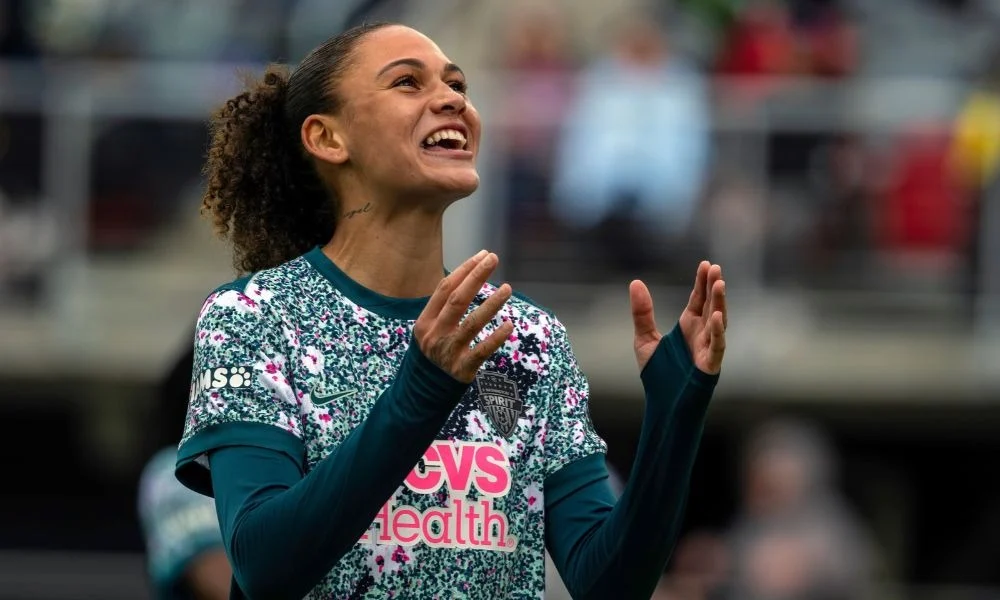
The continued involvement of transcendent star players like Trinity Rodman has proven instrumental in drawing casual viewers into the fold. With the NWSL final having easily surpassed one million viewers in 2025, another robust television rating this year will reinforce to prospective media suitors that they are acquiring a bona fide marquee sporting event as part of their package.
The Netflix Effect
Looking further ahead, the next major date circled firmly on the global sporting calendar is the 2027 Women’s World Cup. Although the tournament will be hosted in Brazil rather than the United States, the favorable time zones present an enormous advantage for North American audiences. Crucially, Netflix’s landmark acquisition of the exclusive tournament broadcast rights in the US and Canada promises to fundamentally transform how the competition is packaged, promoted, and consumed.
The streaming giant has consistently demonstrated both operational competence and bold innovation in its methodical forays into live sports programming, purposefully prioritizing properties that function as massive cultural events capable of captivating wider audiences.
The platform’s peerless global reach, combined with its proven, uncanny ability to make a decade-old film trend overnight simply by featuring it prominently on its home screen, could exert a profound impact on viewing figures. This is especially true among younger audiences and casual fans who might not ordinarily engage with sports at all, let alone association football.
“You will not be surprised to know of the halo effect of what happened this summer [at the World Cup],” Hillary Mandel, executive vice president and head of Americas at IMG—the agency producing Netflix’s tournament coverage—tells SportsPro.
“Every network’s soccer numbers are up. It’s palpably documentable that America’s interest in looking at soccer is greater—I’m not saying they became avid fans, but they’re willing to look.
“If you look at what Netflix have done in the sporting ecosystem… there’s no stopping them. They’ve done well with the National Football League’s Christmas Games and have done a great job with Major League Baseball’s All-Star Game and Field of Dreams game.
“We have an inside seat, and we know how important the Women’s World Cup is going to be on Netflix. The innovation they’re adding and the amount of creative freedom we have—it’s a producer’s dream.”

Olympic Ambitions and World Cup Dreams
Historically, the women’s soccer tournament at the Olympic Games has always carried significantly more sporting and cultural significance than its male counterpart. In the men’s tournament, international governing body Fifa restricts national federations to selecting just three players over the age of 23 in a deliberate effort to protect the primacy of the men’s World Cup.
Fifa has occasionally floated the possibility of imposing similar age-restriction requirements on women’s national teams in the future, citing athlete welfare concerns. However, such suggestions frequently arrive alongside FIFA’s commercial ambitions to launch a dedicated women’s version of the Club World Cup, mirroring the expanded men’s edition that received a decidedly lukewarm reception from fans and clubs in 2025.
While any regulatory changes would likely encounter fierce resistance from players and federations alike, they certainly will not come into effect in time for the Los Angeles 2028 Olympic Games. There, a successful campaign by the US women’s national team is widely expected to serve as one of the definitive highlights of the entire multi-sport spectacle.
Yet, even an event as grand as the Olympics functions merely as an exhilarating appetizer for the 2031 Women’s World Cup. A joint North American bid stands as the sole candidate to host the tournament and is universally anticipated to be formally confirmed by FIFA, bringing the prestigious event back to American soil for the first time in 28 years. The United States last hosted the tournament back in 2003, stepping in on remarkably short notice just four months after original hosts China were forced to withdraw due to the global SARS outbreak.
Women’s soccer has evolved beyond all possible recognition during the four decades that have passed since Brandi Chastain’s iconic celebration. The 2031 World Cup promises to deliver a vastly expanded, higher-profile tournament staged within a nation fully primed to fall deeply in love with the sport—and, crucially, broadcast to millions through Netflix.
For the domestic league, the upcoming World Cup cycle represents an unprecedented, once-in-a-generation opportunity to accelerate grassroots participation levels and catapult the NWSL’s commercial growth trajectory to extraordinary new heights.
“The NWSL is preparing to meet that moment,” Berman emphasized. “Investors know that the horizon in front of us is bright, that the foundation of the sport of soccer is strong, and that participation for girls in our country has never been bigger.
“The reason that our commercial partners and our investors are so bullish, and investing literally billions of dollars as we speak, is that these milestones on the horizon… are going to create that watershed moment that’s going to be the tipping point for people to really embrace the soccer part of women’s sports.”
Infrastructure Challenges
Despite the immense optimism surrounding commercial valuations and broadcast horizons, league leadership readily acknowledges that foundational hurdles remain. According to Commissioner Berman, one of the most vital long-term legacies of this upcoming sports boom must be aggressive, sustained capital investment in dedicated training grounds and modern stadiums.
While several progressive clubs have successfully established dedicated training facilities, Kansas City Current remains the sole NWSL franchise that currently plays its home fixtures in a purpose-built, soccer-specific stadium—a stark operational reality recently highlighted in popular culture by the television series Ted Lasso, which sought to spotlight some of the systemic infrastructure challenges facing the modern women’s game.

“[This opportunity] is spurring investment in infrastructure,” Berman explained. “In some ways, we are 30 years behind MLS as our infrastructure boom has only just started. By 2028, we’ll have three purpose-built stadiums for our teams, [many of whom] will have state-of-the-art, best-in-class training facilities comparable to any in the other men’s professional leagues in America.
“[NWSL] owners want to be able to attract FIFA and bring events and teams to their markets. All of us who paid attention to the men’s World Cup want to be able to host the Netherlands or the Scots, because of the way they infiltrate the city, have a soccer takeover, and make the event a real cultural moment.”
These strategic ambitions arrived into sharp focus against the backdrop of venue controversies that inadvertently disrupted the NWSL semi-finals, vividly illustrating why rigorous infrastructure investment is so crucial if the league is to scale successfully.
Defending champions Gotham FC were forced to relocate their high-stakes playoff fixture against the Kansas City Current away from the New York Red Bulls’ stadium due to severe concerns regarding pitch quality. The impromptu replacement venue, Icahn Stadium, is a modest 4,500-seater athletics facility situated on the somewhat isolated and poorly connected Randall’s Island in New York’s East River.
Simultaneously, the Washington Spirit narrowly avoided being forced to vacate their Audi Field home and move to the NFL’s Northwest Stadium—the home of the Washington Commanders—because their primary landlords, D.C. United, had previously rented out the soccer-specific venue for a Division III college football game. Only intensive, last-minute negotiations prevented yet another disruptive relocation.
While such logistical hurdles were undeniably embarrassing for the league and laid bare the reality that many NWSL teams remain secondary or tertiary tenants within venues built for other sports, industry leaders view them as growing pains rather than fatal dealbreakers. Those embedded within US soccer and club front offices firmly believe that this unique, aligned cycle of major events will permanently cement the league’s position as one of the undisputed “big two” professional women’s sports leagues in North America, deeply embedding it within the daily American sports diet.
“The WNBA and NWSL are the two biggest women’s leagues in the US and everyone else is on a lower level,” Mandell concludes. “The league is delivering, the product is great, and owners are investing—they’re not trying to get their money out.
“People like Angel City FC co-owner Bob Iger don’t come into the league just because they have nothing else to do with their bazillions.”