
Instead, that cold night in Kyiv delivered one of the most stunning upsets of the late 1990s heavyweight division, teaching the young Ukrainian prodigy a harsh, career-defining lesson at the hands of a rugged, unheralded American journeyman named Ross Puritty.
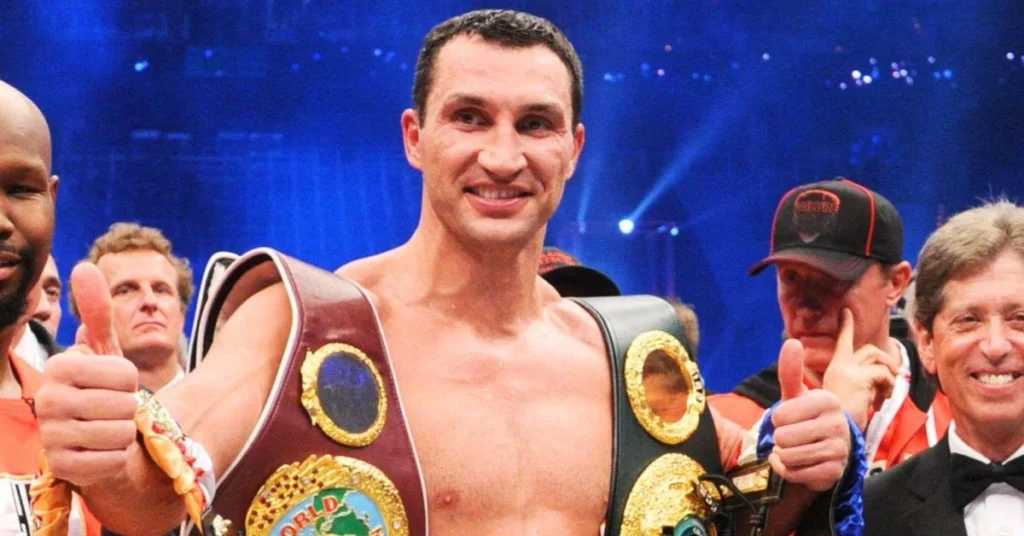
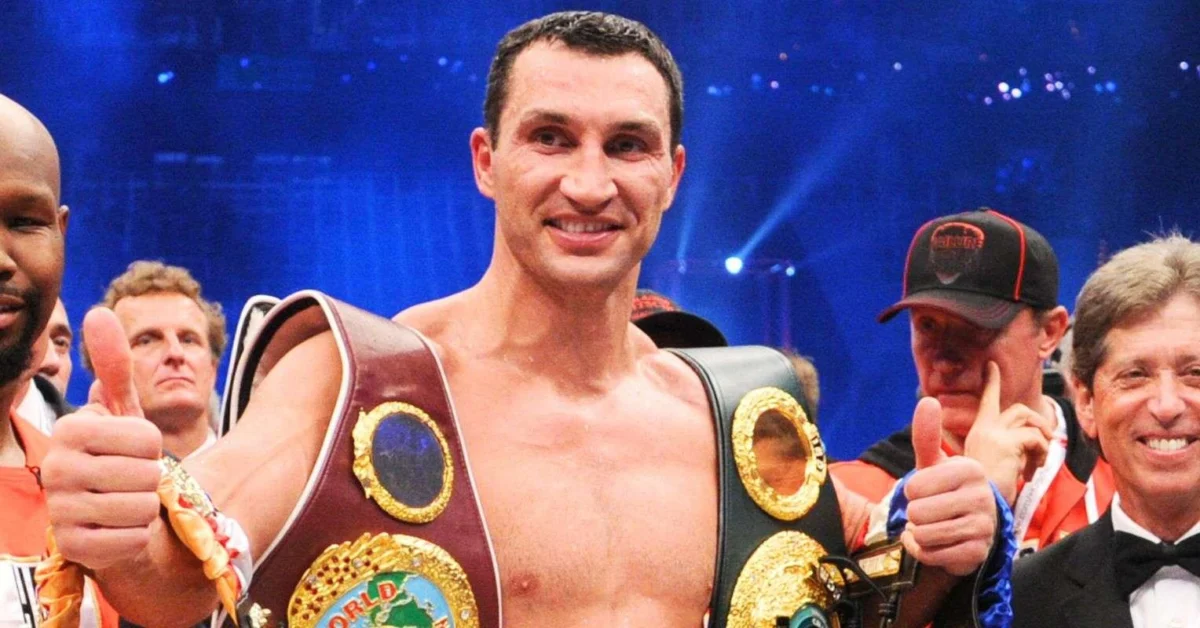
To understand the magnitude of the shock, one must examine the context of Klitschko’s early professional career. Following a stellar amateur career that culminated in a super-heavyweight gold medal at the 1996 Atlanta Olympic Games, Klitschko transitioned to the professional ranks alongside his older brother, Vitali. With their towering statures, university degrees, and devastating punching power, the brothers quickly became objects of fascination in the global boxing landscape. Wladimir, in particular, was viewed by many as the more technically refined of the two, a scientific boxer-puncher who methodically dismantled opponents from the outside while offering very few openings in return.
By late 1998, Klitschko was moving fast. He had compiled a pristine record through 24 professional fights, all of them victories, with the vast majority coming by way of knockout. He was fighting frequently, gaining invaluable experience, and dispatching opponents with clinical efficiency. The bout in Kyiv was intended to continue this steady momentum, serving as a homecoming celebration for the rising star against a foreign opponent whose record suggested he would be tough, durable, but ultimately manageable for a talent of Klitschko’s caliber.
Enter Ross Puritty, a quintessential American club fighter and boxing journeyman. Puritty was not brought in to win; fighters with his specific profile were typically hired to test the stamina and resolve of rising prospects. Coming out of the United States, Puritty had already accumulated a ledger filled with losses, having faced a punishing schedule that would have deterred lesser competitors. Just in that calendar year alone, Puritty had already fought three grueling times. He had dropped hard-fought points decisions to top contenders Larry Donald and Chris Byrd—two remarkably slick and difficult operators—before bouncing back to secure a knockout victory over Mark Hulstrom just 29 days prior to stepping into the ring against Klitschko.
Despite his modest overall record and a reputation as a fighter who lost whenever he stepped up to elite competition, Puritty possessed two critical attributes: an iron will and a legendary granite chin. He was notorious for absorbing immense amounts of punishment, pressing forward relentlessly, and wearing down opponents who punched themselves out trying to crack his formidable defenses.
As the opening bell sounded in Kyiv, the fight initially unfolded precisely as scriptwriters in Klitschko’s promotional camp would have drawn it up. Klitschko utilized his superior height and reach advantage to perfection, establishing total control from the center of the ring. He peppered Puritty with a relentless stream of sharp jabs and varied his attack with crisp, powerful combinations to both the head and body.
Puritty, true to form, absorbed the onslaught. While Klitschko was landing cleanly and accumulating a commanding lead on the judges’ scorecards, he quickly discovered that he was hitting a literal brick wall. No matter how hard or how frequently the Ukrainian prospect landed flush punches, Puritty refused to go down. He simply absorbed the heavy artillery, trudged forward through the fire, and continued to apply relentless physical pressure, waiting for an opportunity to turn the tide.
As the bout extended into the middle and later rounds, a subtle but significant shift began to occur inside the squared circle. The high volume of punches thrown by Klitschko, combined with the energy-sapping realization that his best shots were having virtually no cumulative knockout effect on his opponent, began to drain the young prospect. Fatigue set in rapidly. Klitschko’s vaunted mobility slowed, his punches lost their crisp snap, and his defensive posture began to drop.
Puritty, meanwhile, sensed the changing momentum and increased his work rate. Refusing to take a backward step, the rugged American began landing heavy, thudding punches of his own, exploiting the openings left by an increasingly exhausted and desperate Klitschko. The crowd in Kyiv watched in mounting disbelief as the invincible local hero was pushed into deep, uncomfortable waters for the very first time in his professional career.
The dramatic climax arrived in the eleventh round. By this stage of the contest, Klitschko was visibly exhausted, operating purely on reserve energy and sheer survival instinct. Seizing the moment, Puritty unleashed a sustained series of heavy punches that battered the tiring Ukrainian, leaving him stumbling and completely defenseless against the ropes. Recognizing that their fighter was in severe distress and absorbing unnecessary punishment, Klitschko’s corner made the courageous and necessary decision to throw in the towel, halting the contest and handing the young prospect his first-ever professional defeat via technical knockout.
The shockwaves of the defeat reverberated throughout the international boxing community. For a fighter who had known nothing but victory since lacing up gloves as a professional, the loss was a devastating blow to his immediate championship aspirations. Yet, looking back on boxing history, the setback against Ross Puritty proved to be an indispensable turning point in Klitschko’s legendary career.
Ross Puritty never reached elite status himself, finishing his professional journey with a modest record that reflected the turbulent life of a career journeyman. But on that unforgettable night in Kyiv, he was undeniably the better man inside the ring, exposing the early vulnerabilities of a future heavyweight dominator and handing him his first taste of defeat.
The loss forced a vital period of rebuilding and self-reflection. Klitschko went back to the drawing board, addressing the stamina and tactical issues that had exposed him against Puritty’s relentless pressure. Several years later, following a subsequent rebuilding phase that included another shocking knockout loss to Lamon Brewster in 2004, Klitschko found the missing puzzle piece to his career when he began working with legendary trainer Emanuel Steward.
Under Steward’s tutelage, Klitschko transformed his style into a hyper-disciplined, ultra-dominant machine. Embracing a cautious yet devastatingly effective approach centered on his colossal jab and devastating right hand, Klitschko ushered in an era of unmatched supremacy. Alongside his older brother Vitali, Wladimir ruled over the heavyweight division for roughly a decade starting around 2006, cleaning out the weight class and establishing himself as one of the most statistically dominant champions in boxing history—a legacy that traces its ultimate foundation back to the harsh lessons learned against Ross Puritty in Kyiv.