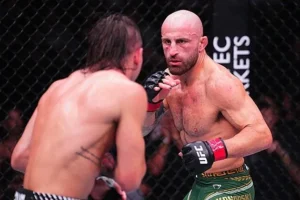

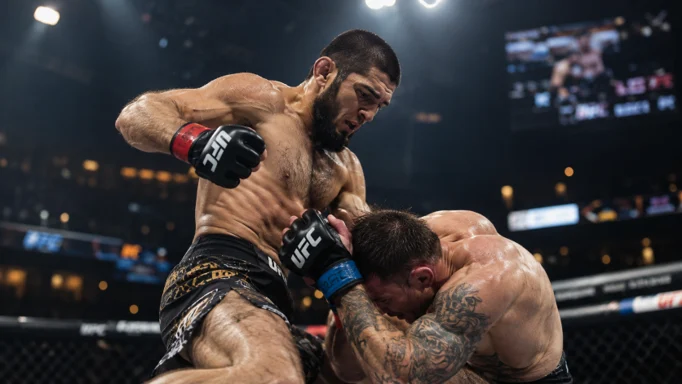
The debate over which martial art serves as the ultimate base for mixed martial arts has evolved significantly over the decades, moving far beyond the simple "striker versus grappler" paradigm that defined the sport’s infancy. Recent high-profile bouts inside the Octagon continue to demonstrate that modern MMA success is rarely about mastering a single discipline in isolation. Instead, elite fighters separate themselves through their ability to adapt, seamlessly transitioning between disciplines and retaining their primary offensive weapons even after opponents attempt to alter the dynamic of the fight.
Recent championship performances across the Ultimate Fighting Championship underscore this reality. Islam Makhachev utilized the later rounds of UFC 330 to systematically shepherd Ian Machado Garry back to the fence and down to the canvas, relying on relentless pressure to neutralize his opponent’s striking. On the same card, Mackenzie Dern continually secured crucial takedowns and dominant control positions. Meanwhile, Petr Yan charted an entirely different path to a world title in his December 2025 victory over Merab Dvalishvili, leaning heavily on forward pressure, targeted body work, and a robust defensive grappling foundation that kept the fight firmly in his preferred range. The common thread uniting these disparate champions is not a singular martial art, but rather the adaptability required to keep their best weapons available when the tactical landscape shifts.
Wrestling Still Lets a Fighter Pick the Geography
Although Islam Makhachev is officially listed by the UFC as a sambo practitioner, many of his most effective sequences rely on foundational wrestling concepts that translate with devastating efficiency to mixed martial arts. These include fence pressure, chained takedowns, mat returns, and long stretches of dominant top control. During his encounter with Ian Machado Garry, Makhachev deliberately returned to his wrestling in the championship rounds, ultimately closing out the fight on the challenger’s back.
This level of positional control remains immensely valuable because it dictates the fundamental geography of the bout. A competitor who possesses the technical capability to force an exchange from open space to the safety of the cage or the canvas invariably enjoys a wider array of tactical choices than an opponent who requires a single preferred range to operate. By dictating where the fight takes place, elite wrestlers neutralize the primary threats of dangerous strikers while imposing a grueling physical and mental toll.
Jiu-Jitsu Still Punishes One Bad Position
Brazilian jiu-jitsu maintains its status as one of the cornerstone submission systems in mixed martial arts, yet successful UFC grapplers rarely rely on traditional guard work alone to secure victories. Mackenzie Dern successfully leveraged takedowns and positional control to bank crucial rounds against Gillian Robertson at UFC 330, prioritizing proactive wrestling entries over passive bottom-game attempts. Meanwhile, veteran submission specialist Charles Oliveira continues to hold the promotional record with an astounding 17 submission victories, utilizing an aggressive transitional style.
Oliveira’s finishes have consistently come from rear-naked chokes, guillotines, armbars, and various other submissions reached during chaotic scrambles or following heavy sustained pressure. This evolution is vital in the modern era, where contemporary judging criteria heavily reward effective damage and meaningful offensive output. Consequently, simply remaining active or defensive from the bottom position is no longer sufficient to sway judges or break an opponent; jiu-jitsu must be proactively integrated with wrestling and striking to truly punish even a single momentary lapse in position.
Kickboxing Covers More of the Standing Fight
For athletes operating in the stand-up phase, kickboxing and Muay Thai provide comprehensive answers at distances where traditional boxing alone offers a narrower selection of tools. Weapons such as low calf kicks, powerful body kicks, piercing knees, and dynamic clinch attacks fundamentally alter how an opponent can safely enter the pocket or initiate a takedown.
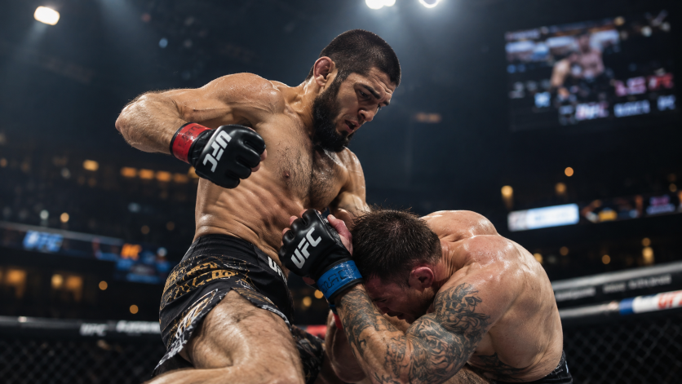
When analyzing these matchups, observers frequently look beyond basic knockout statistics to evaluate whether a striker can effectively defend the fence, absorb or check low kicks, and manage an opponent’s level changes. These intricate technical details often explain the outcome of a bout far more accurately than a broad "striker versus grappler" label. Understanding how a kickboxer mitigates wrestling threats provides a clearer picture of their overall viability in the modern cage.
Yan’s Boxing Worked Because He Could Stay Upright
Petr Yan’s December 2025 rematch against Merab Dvalishvili provided a textbook demonstration of how traditional boxing mechanics become exponentially more dangerous once the perpetual threat of the takedown is successfully neutralized. Yan pressed forward aggressively, damaged Dvalishvili with precise punches to the body, and repeatedly defended or recovered from wrestling exchanges on his way to securing a unanimous decision and recapturing championship gold.
His compact combinations and sustained pressure were effective precisely because he was not forced to spend entire rounds trapped underneath the formidable former champion. At the same time, pure boxing mechanics require significant structural modification in mixed martial arts. Adopting a high conventional boxing guard can leave a fighter’s hips dangerously open to explosive takedowns, while carrying excessive weight on the lead leg invites devastating low kicks and level changes from savvy opponents.
Judo Works Best When the Cage Gets Involved
The transition of elite judo into the Octagon was highlighted by Kayla Harrison’s performance against Julianna Peña at UFC 316. The two-time Olympic champion utilized her world-class throws to drive Peña backward, secure crucial takedowns, and decisively finish the high-stakes bout via a second-round kimura.
However, translating judo from the tatami to the cage requires distinct tactical adjustments. Combat sports analysts tracking elite grappling lineages note that Harrison’s success stems from her mastery of the clinch and cage-wall wrestling, which compensate for the removal of the traditional gi. In MMA, the presence of the chain-link fence fundamentally changes how throws and trips are executed, transforming classic judo techniques into devastating tools for dictating the fight’s momentum.
The Best Base Is the One That Survives the Next Phase
The career of Alex Pereira offers perhaps the most distinct case study regarding the limits and triumphs of a specialized striking base. His world-class kickboxing propelled him to UFC titles in both the middleweight and light heavyweight divisions, before eventually leading him to a heavyweight title challenge against Ciryl Gane, where Gane secured a second-round stoppage victory. Pereira’s journey illustrates that while an elite base discipline can carry a fighter to the pinnacle of the sport, every specialist eventually encounters an opponent capable of exploiting the gaps inherent to their style.
Ultimately, this adaptability serves as the primary separator at the elite UFC level. A credentialed wrestler must still develop reliable striking to close the distance safely on the feet. A polished boxer must learn to survive persistent low kicks and explosive level changes. A jiu-jitsu specialist requires a dependable mechanism to consistently bridge the gap and reach the mat against unwilling opponents. While an elite martial arts base provides a fighter the foundation to enter the sport, everything built around that foundation determines how long their competitive advantage will endure.