
Like many Olympic sports, equestrian disciplines largely find themselves relegated to the mainstream spotlight just once every four years. The high-profile platform of the Olympic Games delivers a rare combination of high-stakes competition, widespread global media coverage, and the added emotional weight of national pride. These elements combine to elevate the exact qualities that the sport’s supporters believe make it uniquely thrilling.
Yet outside of the Olympic cycle, equestrian sports historically struggle to make a lasting commercial impact. A fragmented calendar and a disjointed commercial landscape make it difficult to generate mainstream appeal or for athletes to make a dependable living from their exceptional talents. Even for dedicated aficionados, the lack of a coherent global structure often makes the sport remarkably difficult to follow.
Former Los Angeles Dodgers owner and current Olympique de Marseille custodian Frank McCourt is among a growing group of investors who believe that the equestrian art of showjumping holds considerable untapped potential. More than a decade ago, McCourt acquired a 50 per cent stake in the Global Champions Tour and subsequently co-founded the Miami Celtics Global Champions League team.
Although McCourt sold his stake in the Tour four years ago, his commitment to the sport remains entirely undimmed, and his commercial ambitions have only scaled upwards. Beginning next year, McCourt will officially bankroll the US$300 million Premier Jumping League (PJL), an ambitious team-based competition that will span iconic locations across Europe, North America, and the Middle East.
While the PJL risks adding a degree of further fragmentation at the elite end of the sport, McCourt is entirely confident that his new venture will go above and beyond existing structures, offering significant value for both die-hard fans and elite athletes. He remains adamant that the powerful combination of high athletic spectacle, an affluent core audience, and an escalating demand for premium live event experiences can create a sustainable economic foundation capable of widening showjumping’s appeal well beyond its traditional demographic.
From Hakkasan to Horses
This distinct difference in operational approach is immediately evident from the league’s high-profile hiring process. PJL Chief Executive Neil Moffitt and President and Chief Operating Officer Nick McCabe both boast exceptionally successful corporate backgrounds in the global hospitality and entertainment sectors. Both are previous chief executives of the Hakkasan Group—famous for its eponymous, high-end nightclub in Las Vegas—and bring impressive, battle-tested expertise in large-scale events, nightlife, and experiential entertainment.
While Moffitt points to his personal ownership of stables, an established equestrian consulting firm, and previous ownership of the Global Champions League’s London Knights team as proof of his deep roots within the sport, McCabe admits he was initially quite surprised to receive the recruitment call.
“I knew nothing about equestrian sport,” McCabe admits in an interview with SportsPro. “My first reaction was, why am I getting the phone call about showjumping?”
Even so, McCabe was immediately galvanized by the overarching prospect and how his commercial background could play a pivotal role in modernizing the sport.
“The idea was positioned as ‘here is a sport with a really sort of rich vein of content within it,’” he continues. “It has great storylines that were just not being exposed. And this is a sport with huge capital involved. There are massive amounts of money changing hands in the sale of horses and huge investments in stabling. Yet showjumping seems like one of the last remaining sports that hasn’t evolved in a meaningful way in the last couple of decades.”
During his first six months in the role, McCabe attended a horse show virtually every weekend while simultaneously analyzing the operational practices of comparable properties such as the X Games, SailGP, UFC, and Formula One. In recent years, each of these properties has enjoyed immense success in disrupting their respective markets, offering innovative formats and successfully expanding far beyond their traditional core audiences.
“All those best practices just haven’t been adopted by showjumping,” says McCabe. “Showjumping is incredible to watch, has great storylines, has gender and age parity, and is unique in that it’s about both humans and animals. In many ways, it’s incredibly inclusive, but nobody seems to really know about it. And, if anything, it felt like this sport was almost intentionally inaccessible. It was almost like those involved were like, ‘Don’t watch, don’t come, don’t attend. It’s our thing, and we don’t want you to come and change it.’ Frank sees an incredible opportunity here. We’re taking a lot of what’s already there. We’re not trying to reinvent the sport by any means; we believe in where it is. But we want to simplify it, make it easier to understand, and make it more accessible.”

How Will the PJL’s Franchise Model Work?
Frank McCourt’s substantial US$300 million investment guarantees total prize money funding for the next three years, providing the PJL with a reliable medium-term financial foundation to establish itself firmly in the market and build a sustainable business model. The league believes this period of financial certainty will successfully derisk investments in individual teams, driving early interest and increasing franchise valuations right from day one. Teams will consequently be granted a much longer runway to forge their own distinct brands and identify long-term commercial partners.
“That hopefully will bring to us much more serious investors with a long-term point of view on what the potential for this sport is, and they’ll see that Frank is personally committed to putting his own capital at risk to underwrite that investment,” says McCabe. “Teams regularly finishing in the podium places will be profitable from day one, which is very unusual. Even a team that finishes last breaks even at very worst.”
Under the proposed structure, teams will be permitted to secure individual commercial sponsorship deals and even sell their own naming rights. However, certain lucrative categories will be strictly ringfenced for a centralized sponsorship program, with the league aiming to secure major commitments from luxury brands that deeply value showjumping’s affluent audience but have historically struggled to find the right platform to invest in the sport.
This centralized revenue will help sustain robust prize money structures from season four onward. The PJL also argues that this hybrid commercial model will prevent individual teams from competing against the league for the same category sponsors, thereby protecting the collective financial windfall.
To maintain healthy commercial scarcity, four teams will be sold outright each season, while the remainder will be "leased out" to third-party operators who will retain the first option to purchase a franchise when it is officially placed on the market.
The first team was already sold to Jason McCarthy for US$50 million earlier this year, a striking sum that reflects rapidly rising interest in the sport among institutional investors and appears to strongly vindicate the PJL’s strategic roadmap. By way of comparison, SailGP teams initially changed hands for US$5 million to US$10 million back in 2019, with the current benchmark rising to US$70 million following several successful seasons of global competition.
Each of the 16 planned teams will comprise five elite riders, three of whom will compete in any single event. The PJL believes the promise of unprecedented financial rewards and a far more coherent seasonal structure will ensure more regular, predictable competition between the world’s best equestrian athletes compared to the current fragmented calendar.
Furthermore, the PJL’s schedule has been meticulously designed so that its events are located as close as possible to existing prestigious meets on the broader showjumping calendar, effectively reducing travel burdens for riders and horses and making participation an attractive commitment. McCabe claims that riders are likely to earn more financial compensation from the PJL than from the rest of the year combined, making it vastly easier to earn a comfortable living directly from the sport.
“We like to think that the economic reward warrants the commitment at that pretty low level, right?” he notes. “We’re not asking anybody to block themselves out. We ask for no exclusivity whatsoever. So, you can ride anywhere.”
Fixing a Complete Disconnect in Showjumping’s Event Experience
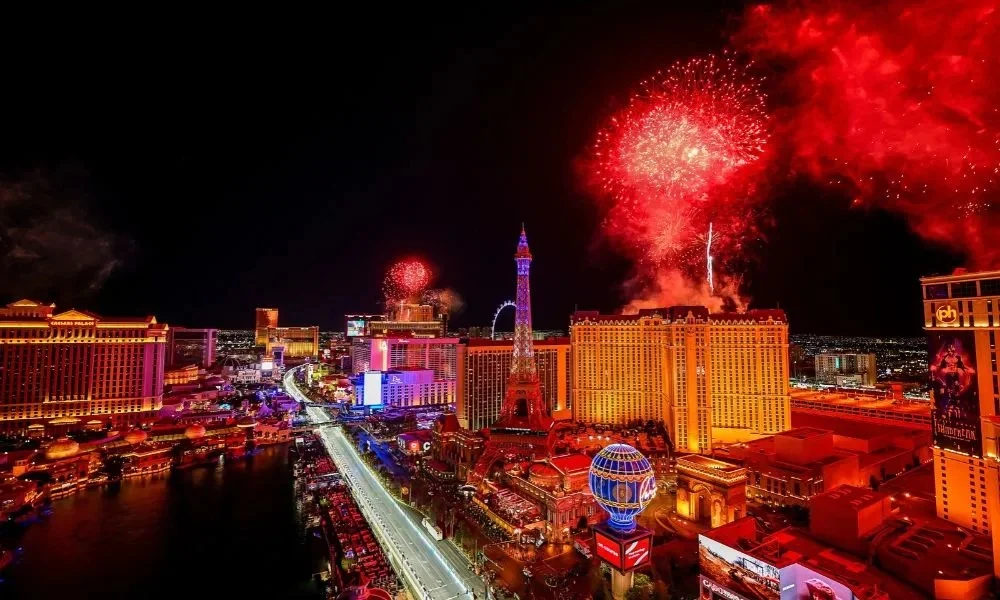
The inaugural PJL event is scheduled to take place next April in McCabe’s adopted city of Las Vegas at a purpose-built venue directly on the iconic Strip. While other traditional locations, such as Hamburg, have been chosen specifically for their rich equestrian heritage, Las Vegas was unashamedly selected to showcase the high-end hospitality that the PJL believes will help it stand out not just from other sporting properties, but from broader forms of modern entertainment.
“We want to build an experience there like it has never been done in sports,” says McCabe. “Because, candidly, if there’s one thing I learned on my travels last year, it’s that there was a pretty woeful experience on offer for what was a very high entry point on pricing. You would look around the VIP area and see the Bloomberg family, the Gates family, and Bruce Springsteen watching his daughter Jessica jump. Tom Brady was there with his kids. There was a very, very high-profile crowd, and yet they’re lining up for what is basically a cheap wedding experience. A buffet with dry chicken breasts, and you’re slopping pasta onto a plate with a spoon. There’s a wine list which reads red, white, and sparkling. If you think about the sophistication of the crowd that’s there and the offering—there’s a complete disconnect.”
Although big-spending hospitality guests will undoubtedly generate significant revenue, McCabe is quick to emphasize that organizers have carefully considered how to elevate the spectator experience across every single price point, likening the strategy to how high-end nightclubs accommodate VIP table-service guests alongside music fans who simply want to see their favorite DJ live. Looking ahead, McCabe envisions a future where major global cities might actively compete to host PJL events, eager to capitalize on the substantial economic and tourism benefits that the league’s events will generate.

A Budget Built Without Media Rights
Ticketing, hospitality, hosting fees, and direct sponsorship income will prove vital if the PJL is to achieve long-term financial self-sustainability once McCourt’s initial funding commitment concludes in 2030. Interestingly, traditional media rights revenues are not even baked directly into the core business plan.
As changing consumer habits and the proliferation of streaming services continue to reshape the sports broadcasting landscape, the market has entered a phase where only the largest, legacy properties can command an ever-greater share of media rights budgets, leaving smaller or emerging properties to fight for scraps. However, while the middle of the market faces a severe squeeze, the exact digital trends driving this shift present a massive opportunity for nimble disruptors operating without legacy broadcasting models. For the PJL, the core focus remains squarely on broad digital exposure designed to build a passionate audience, harvest valuable data, and directly drive ticket sales and commercial sponsorships.
“It’s quite a risky business putting your business plan on a media rights strategy if you’re a newcomer league, and especially a league in a sport that traditionally did not have that kind of following,” explains PJL Chief Commercial Officer Nikolaus von Doetinchem.
All live content will be made available across the PJL’s owned-and-operated digital services entirely for free, while the league simultaneously pursues strategic distribution deals with free-to-air broadcasters and pay-TV channels that maintain a deeply committed sports following.
Social media will also serve as a vital pillar of this strategy, with the PJL providing its participating athletes with a dedicated self-service media hub. This platform will enable riders and teams to instantly post professional video clips directly to their own social media channels within minutes or even seconds of finishing their competitive rounds. This seamless distribution helps all involved parties build their personal brands, dramatically amplifies the league’s global reach, and adds tangible value for individual team sponsors.
To ensure top-tier production values, the PJL will assume complete control over broadcast production, partnering with Aurora—the company that successfully manages the global feed for Formula E—to make the remote viewing experience feel as close as possible to being physically present in the arena.
“If you look at normal showjumping… how it has been broadcast and how it’s filmed, nothing has changed over the last 20 years,” says Von Doetinchem. “If you are in the stadium and see these 650-kilo horses jump over the jumps, or you hear the thunder of their hooves, it’s super exhilarating. If you watch the broadcast, it’s like somebody threw a wet blanket over it. It’s one camera. The audio is very muffled. It’s very sterile. We’re not going to innovate for vanity, but we are definitely going to present the sport in a way that has never been done before. We’re going to invest heavily in graphics, presentation, and production. Nobody has invested in graphics until now.”
Among the planned technical innovations are "shadow" horse graphics that digitally overlay an image of the event leader directly onto a competitor’s current run, alongside real-time flight data and precise measurements of the strides taken by each horse. Furthermore, a high-profile behind-the-scenes docuseries has been commissioned from Box to Box Films, the acclaimed producers behind Formula One’s Drive to Survive, in a concerted effort to capture a broader mainstream audience.
“If we can present in a modern way by integrating data into the broadcast and the storytelling and offering a behind-the-scenes viewpoint, then we can reach casual fans who might see our content via our ecosystem or through influencers,” explains Von Doetinchem. “Equestrian has always been horse people doing horse stuff for other horse people. We want to break that up.”
With the luxury of a reduced immediate pressure to generate short-term cash or traditional television ratings, the leadership team has a clear definition of what constitutes success for the PJL’s debut season.
“If we end up with word-of-mouth recommendations, that is success,” says McCabe. “If by day three in Las Vegas our riders, team owners, and fans are walking away saying ‘they delivered.’ We are lucky enough to have a founder here who has given us enough runway to not have to worry drastically about the season one economics. We know we’ll sell the teams, and if we put on the events we think we can put on, and the word of mouth is strong, we know that season two will help us get to where we want to get to. We have significant commercial revenue targets we need to hit by year four, but we believe we’ll get there if the events are what we believe they will be.”