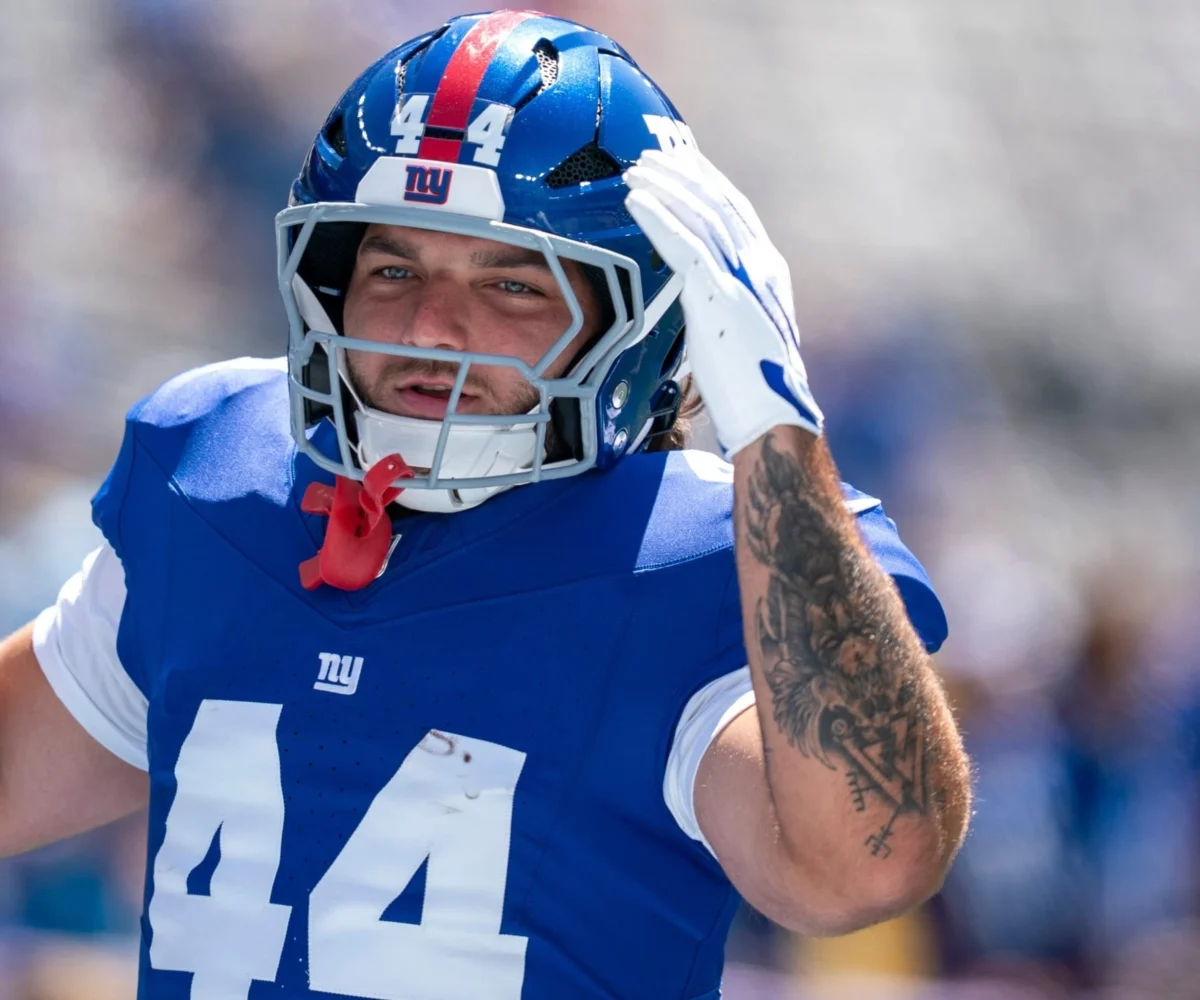
The professional journey of running back Najee Harris has taken a definitive new turn. Once selected in the first round out of Alabama by the Pittsburgh Steelers in the 2021 NFL Draft, Harris enters a fresh chapter with the Los Angeles Chargers, signing a one-year, fully guaranteed $5.25 million contract. Looking back at his career arc, his tenure in Pittsburgh did not entirely pan out as initially envisioned when the franchise invested a high-value selection on the bruising runner. The explosive, big-play capability that defined his collegiate days under Nick Saban in Tuscaloosa rarely materialized on Sundays in the National Football League, forcing analysts, fantasy managers, and coaching staffs to reevaluate what kind of asset he truly is at the professional level.
Throughout his time in the league, Harris has consistently proven to be a high-character, intelligent player capable of winning approval in any locker room, traits that should serve him well in his new environment with the Chargers. However, from a purely on-field perspective, he largely offers volume as a ballcarrier, typically taking whatever yardage the opposing defense yields rather than generating chunk plays independently. Despite possessing a massive frame—weighing in around 232 pounds—Harris has rarely run with the dominating power expected of a back of his size. While he is capable of setting his anchor, absorbing contact, and holding his ground, running through or cleanly around defenders in the open field has proven to be a relatively rare occurrence.
This specific skill set, nevertheless, holds an obvious and tangible utility for a Chargers offense that actively endeavors to establish itself among the most run-heavy units in the entire NFL. His ability to consistently absorb a high volume of carries—effectively eating up innings and wearing down opposing fronts—fits the exact blueprint of what Los Angeles wants to accomplish on the ground. Yet, the selection of rookie Omarion Hampton in the first round of the draft introduces a significant dynamic that threatens to preempt Harris’s main appeal, particularly in fantasy football circles. The 221-pound rookie arrives in the professional ranks built to handle a major workload in his own right, and unlike Harris, Hampton brings a legitimate, game-breaking speed threat to the field with his reported 4.46-second forty-yard dash. As the season unfolds, observers may witness a distinct division of labor, with Hampton’s usage trending upward in high-leverage, critical situations, while Harris’s deployment skews more toward low-leverage grounding duties.
During his initial years in Pittsburgh, Harris was never projected to be one of the league’s most explosive runners, but he established himself as a steadying, reliable presence capable of handling upward of twenty carries whenever head coach Mike Tomlin needed to lean heavily on the ground game. His knack for soaking up grinding, tough yards directly between the tackles served as a foundational asset to an aggressive Steelers offense. Pittsburgh frequently utilized Harris like a series of tactical jabs designed to soften the front seven, setting up a potentially bigger strike once linebackers and safeties adjusted to stop the inside run.
Despite his functional role in structuring the offense, Harris’s fantasy and statistical prospects steadily pointed downward relative to his high-flying 2021 rookie campaign. During that debut season, the former first-round pick commanded an immense workload, racking up 307 carries and 94 targets. However, the subsequent emergence of Jaylen Warren as the team’s preferred passing-down and general in-space running back badly drained Harris’s target share within the Pittsburgh passing game. Furthermore, Warren’s virtual monopoly on draw-type carries made it increasingly difficult for Harris to boost his rushing average against light defensive fronts. Harris saw his workload dip to 255 carries and just 37 targets by the 2023 season. That underlying theme of limitation persisted even with the Steelers hiring run-first offensive coordinator Arthur Smith, largely due to Warren’s established role in the offense.
The constant physical punishment and smothering defensive attention also caught up to Harris over the course of his grueling schedule. In 2022, the relentless wear and tear began to take a toll on the normally durable back, leaving him nicked up in ways he had never experienced previously, even as he managed to play in all 17 games for the second consecutive season. Running behind a sluggish Pittsburgh offensive line was already a difficult task—a challenge that was hardly helped by the Lisfranc sprain Harris suffered during training camp, an injury he bravely played through for an unspecified portion of the season. Later on, he also battled through lingering oblique and hip injuries.
Considering these difficult circumstances, Harris’s overall durability and production remained rather impressive. The primary reason he often failed to crack the upper tiers of fantasy and analytical rankings was a recognition that Pittsburgh’s passing game rarely inspired deep fear in opposing defensive coordinators. Consequently, defenses continuously loaded the box to stop Harris, effectively locking him into a high-volume, low-efficiency role for multiple consecutive seasons. On the positive side, his sheer volume of touches remained secure, especially as he managed to maintain a baseline level of health. The Steelers notably avoided adding direct backfield competition via free agency or the draft, choosing instead to invest heavily in bolstering their blocking units. Those efforts included signing former Eagles guard Isaac Seumalo, drafting tackle Broderick Jones in the first round, and adding massive rookie tight end Darnell Washington. Those reinforcements were brought in to clear paths not only for Harris and backup Jaylen Warren, but also to protect developing quarterback Kenny Pickett.
Volume was universally understood to be the ultimate selling point for Harris during his rookie fantasy drafts after the Alabama product was selected 24th overall. Head coach Mike Tomlin wasted no time making the newcomer an indispensable pillar of the Pittsburgh offense right out of the gate. Harris stood out as the only player across the entire league, alongside Jonathan Taylor, to eclipse the 300-carry threshold during his rookie campaign, while his 94 targets tied with Austin Ekeler for the most among all running backs.
Even so, his 3.9 yards per carry average proved disappointing to analysts, and his broader efficiency metrics left much to be desired. Those struggles were largely contextualized by the difficult environment he stepped into, featuring a subpar offensive line and a passing attack that completely lacked a vertical element. The retirement of veteran quarterback Ben Roethlisberger did little to immediately alleviate those structural issues, particularly as Mitchell Trubisky and rookie Kenny Pickett rotated under center. Yet, the roster behind Harris offered virtually no competition for touches, and the front office attempted to upgrade his blocking by bringing in center Mason Cole and guard James Daniels in prior offseasons. Analytics showed that Harris averaged just 1.7 yards before contact per carry during his early years, ranking him near the bottom of qualified running backs. Improved blocking was supposed to grant the heavy runner more opportunities to leverage his size against defensive backs in the open space, creating a theoretical formula for massive production if the broader Pittsburgh offense could take even a modest step forward.
Tracing back to his collegiate days, Harris arrived in the NFL as the latest heavily touted product of Nick Saban’s esteemed running back development program at Alabama. He was evaluated as a large, athletic runner carrying clear three-yard-potential into the professional ranks. His college tape was littered with instances of him running straight through would-be tacklers—most famously captured hurdling a defender in a memorable play against Notre Dame that replayed endlessly on sports networks. Beyond sheer size, Harris also flashed notable elusiveness and sudden burst through traffic, allowing him to manufacture extra yards even when running lanes closed quickly. While his lack of elite, top-end speed prevented him from establishing himself as a consistent home-run threat who could take any handoff eighty yards to the house, he operated as an instinctive runner capable of identifying a crease and attacking it decisively.
He continually worked to refine his craft as a pass-catcher and pass-blocker, though league evaluators generally viewed him as adequate rather than transformative in those specialized areas. Given the stellar historical track record of Crimson Tide running backs in the professional ranks, Harris entered the league with the foundational profile required to anchor a backfield. Scouts routinely compared his physical stature and running style to former Los Angeles Rams star Steven Jackson, a projection that underscored both his durability and his physical limitations as he navigated his career from Pittsburgh to his new home with the Chargers.