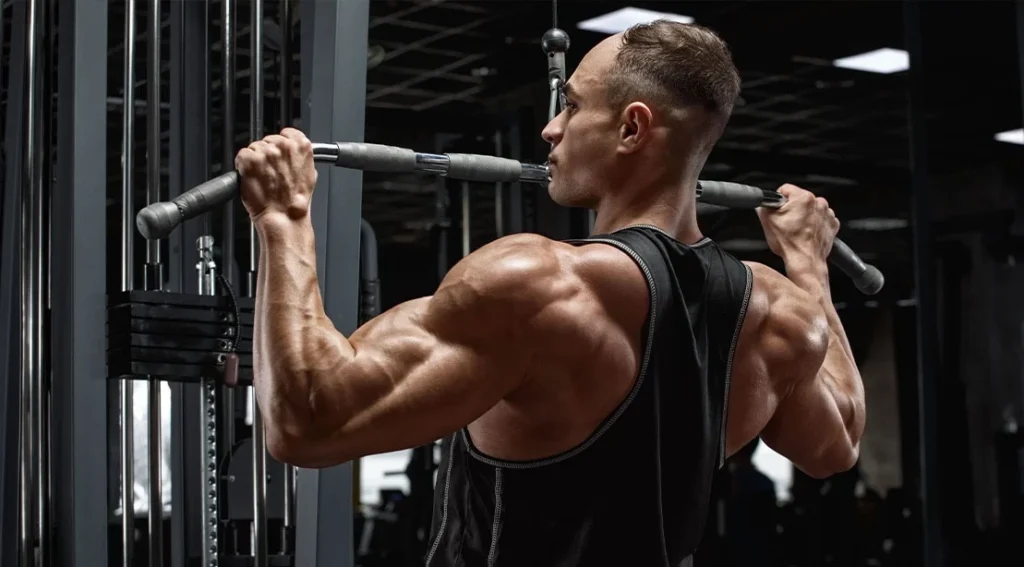



Strength means different things at different stages of life, shifting as a person ages, encounters new environments, and reevaluates what truly matters for their physical well-being. For Allan Thrall, a well-known strength coach and popular YouTube creator, that definition has undergone a dramatic, hard-fought evolution over the course of his 15-year training journey.
His ongoing transition from an uncompromising barbell purist to an advocate for holistic strength offers valuable lessons for anyone questioning their own approach to fitness, physical identity, and long-term health. What began as chasing rigid numerical milestones on a barbell eventually transformed into something far more meaningful, sustainable, and physically well-rounded.
From Football Field to Barbell Obsession
Thrall’s weightlifting journey began in middle school, driven by one clear and immediate goal: becoming a better, more competitive football player. At that stage, the weights served a purely functional purpose, acting as a tool to enhance his performance on the gridiron rather than becoming an end in themselves. However, once high school football came to an end, his interest in lifting vanished just as quickly.
"I stopped lifting weights once football stopped out of high school because I just kind of thought, what’s the point?" Thrall recalls, reflecting on a time when physical training lacked an intrinsic motivation outside of a specific team sport.
Years later, while serving in the military, Thrall rediscovered his passion for strength training. This time, the motivation was entirely different and much more personal. Fifteen years ago, strength quickly became his core identity. He wanted everyone who met him to immediately recognize him as big and strong, which in his mind meant one primary thing: lifting heavy barbells.
The Starting Strength Era
Around 2016 and 2017, during what Thrall describes as the peak of instructional fitness content on YouTube, he aligned deeply with the Starting Strength philosophy, eventually becoming a certified coach under that framework.
The system defines strength strictly as an individual’s ability to produce force against an external resistance. Within that specific paradigm, that external resistance was virtually restricted to a single piece of equipment: the barbell. Under this dogmatic philosophy, true physical strength boiled down to mastering just four primary movements—the bench press, the squat, the deadlift, and the overhead press.
Nothing else mattered. Accessory work, pull-ups, push-ups, and broader health markers were largely sidelined or dismissed as irrelevant to the core pursuit of force production against heavy iron.
Reflecting on that period, Thrall offers a candid assessment of his past mindset. "I wouldn’t have said anything about doing pull-ups, doing push-ups," he notes. "Sure you can deadlift 600, you are strong, however you have high blood pressure, you’re severely overweight." Looking back, Thrall admits he would no longer consider that individual truly strong in a holistic, well-rounded sense.
The Tribal Nature of Fitness Communities
Fitness communities often operate with a distinctly tribal mentality, particularly in the digital age of social media. People naturally gravitate toward specific athletic subcultures—whether powerlifting, strongman training, calisthenics, or CrossFit—and quickly adopt those communities’ specific values, dogmas, and biases as their own.
Within these groups, personal status gets prominently displayed through tribal metrics. For competitive powerlifters, it might be hitting a coveted 405-pound squat. For strongman competitors, it is winning local or regional contests. For bodybuilders or gymnasts, it might be achieving a specific aesthetic standard or landing a complex bodyweight movement.

"The tribe’s values are more important than your own," Thrall explains, describing the psychological pressure to conform. "If I want to continue showing some credibility, I have to keep increasing my bench, squat, deadlift."
Thrall recalls a telling moment from when he was 21 years old, when a powerlifting friend looked around a crowded restaurant and remarked with absolute seriousness, "I bet I have the highest bench in this restaurant." That narrow, hyper-focused mindset defined his entire social and athletic world at the time.
However, stepping outside those tribal boundaries often invites swift criticism. Mentioning the integration of running or endurance training as a dedicated powerlifter frequently brings pushback from peers, just as individuals who attempt to lift heavy weights while identifying primarily as runners often face deep skepticism from both sides.
What Strength Means Now
Today, Thrall views the entire concept of strength through a much broader, health-centered lens tied directly to overall physical capability and longevity.
Consider an individual who can deadlift 300 pounds while also possessing the ability to perform multiple strict pull-ups, maintain steady cardiovascular output during prolonged exertion, and demonstrate healthy metabolic markers. In Thrall’s view, that is a truly strong person.
True physical strength now encompasses a spectrum of attributes: absolute strength in terms of moving heavy external loads, relative strength defined by how well an individual can control their own bodyweight, robust cardiovascular capacity, and optimal metabolic health. None of these vital components exist in isolation, and prioritizing one at the total expense of the others ultimately limits a person’s physical potential.
This evolution mirrors a familiar pattern observed across many experienced lifters and coaches. After five or more years of dedicated, specialized training, many naturally gravitate away from singular, dogmatic approaches toward more balanced, holistic programs that support long-term vitality.
Busting the Lifting-Plus-Cardio Myth
For many years, Thrall adamantly believed that heavy weightlifting and consistent running productively could not coexist. The prevailing dogma within strength-focused circles warned of excessive interference effects and insurmountable recovery demands that would inevitably ruin muscle gains and destroy strength progress.
Deciding to challenge his own long-held assumptions, Thrall eventually tested the hypothesis directly on his own physique and training schedule. By incorporating low-intensity running twice a week, he monitored how his body responded to the concurrent demands of endurance work and heavy lower-body training. To his surprise, not only did his strength hold steady, but his squat recovery actually improved.
"It was refreshing to find out that I can do both of these things and get better at both simultaneously," Thrall noted of the breakthrough.
His personal experience directly aligns with broader scientific research demonstrating that concurrent training can successfully improve both strength and endurance when managed with appropriate volume and intensity. Studies published in sports science literature, including journals such as Sports Medicine, consistently show that moderate volumes of both resistance and aerobic training produce complementary physiological adaptations without triggering significant interference effects, particularly among non-elite training populations.