


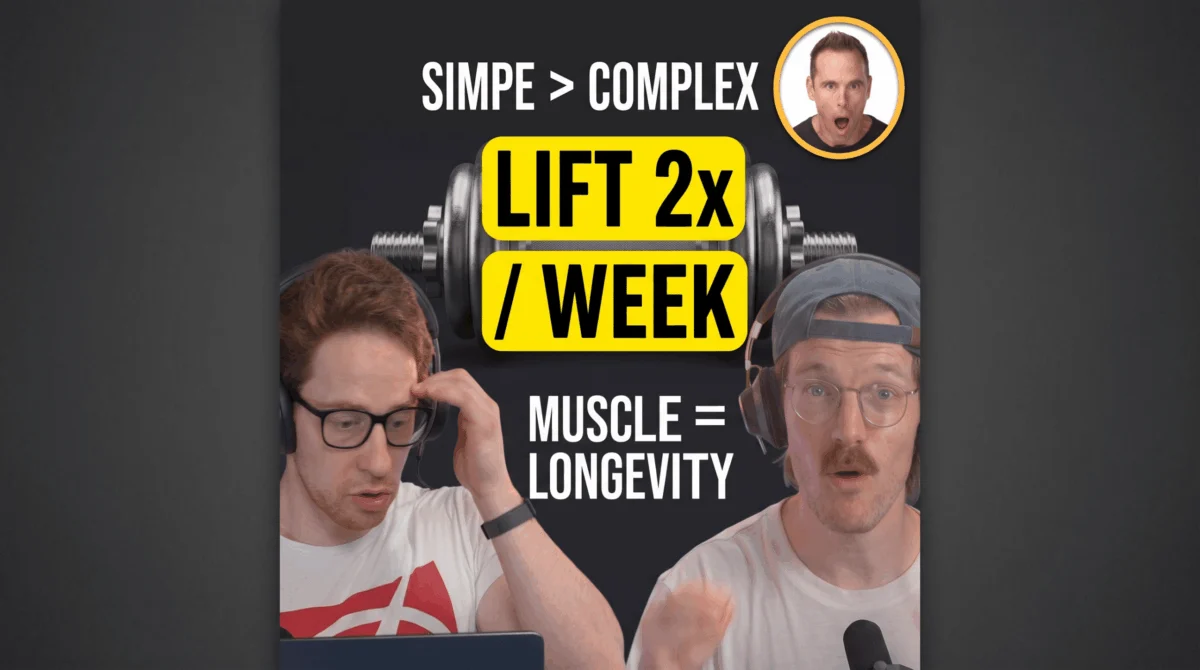
After a silence lasting nearly two decades, the American College of Sports Medicine (ACSM) has fundamentally updated its guidance on resistance training, challenging long-held gym myths and suggesting that individuals can achieve significant health benefits with far less time in the weight room than fitness influencers typically demand. The updated position stand, which arrives after a 17-year hiatus from major revisions by the organization, was recently examined by biological data scientists and podcast hosts on an episode of Fit for Science.
The comprehensive review behind the new guidelines aggregates an immense body of scientific literature, analyzing decades of research to determine what truly matters for muscle growth, strength, and overall longevity. According to the data scientists, the overarching takeaway from the updated position stand is that the most effective resistance training program is simply the one an individual will maintain consistently over the long term. While elite athletes and specialized strength competitors will always require meticulous, sport-specific periodization, the average person focusing on general health and wellness can drastically simplify their approach without sacrificing results.
To arrive at these conclusions, the researchers behind the new paper conducted an extensive umbrella review—essentially a systematic review of existing systematic reviews. Starting with a massive pool of 5,751 candidate reviews, the authors applied rigorous screening criteria until they were left with 137 high-quality systematic reviews encompassing data from more than 30,000 participants. The selected studies focused exclusively on healthy adults over the age of 18 who engaged in resistance training programs lasting anywhere from 6 to 52 weeks, with primary endpoints centered on muscle hypertrophy, maximal strength, and functional physical performance.
The release of these guidelines places a renewed emphasis on why resistance training is critical for long-term health and aging. Muscle mass serves a vital endocrine and metabolic function far beyond mere aesthetics, acting as a crucial organ for glucose disposal, metabolic regulation, and physical resilience as people age. For older adults who may be starting their fitness journeys later in life, the data scientists emphasized that it is never truly too late to begin. While the physiological return on investment diminishes with advanced age and the process becomes more challenging, the human body retains the capacity to adapt and build strength across the lifespan.
The newly surfaced evidence also quietly retires several entrenched pieces of gym lore that have dominated fitness culture for generations. For years, social media influencers and traditional bodybuilding dogma have insisted that extreme training methodologies are mandatory for progress. However, the data examined in the new ACSM review indicates that many of the variables lifters obsess over play a secondary role compared to consistency and total volume.
Among the myths challenged by the literature is the absolute necessity of training to muscular failure. While pushing every set to the brink of collapse was once considered a prerequisite for growth, the broader scientific consensus reveals that hypertrophy and strength gains can be achieved efficiently without constantly flirting with absolute failure. Training consistently close to failure requires a high cost in terms of recovery, systemic fatigue, and psychological burnout. Excessive soreness and fatigue can easily derail a training schedule, rendering individuals unable to complete subsequent sessions or eroding the motivation needed to stay active.
Instead of focusing on grueling, high-fatigue workouts, the research highlights the importance of progressive overload defined simply as increasing total work over time, calculated as the product of reps, sets, and weight lifted.
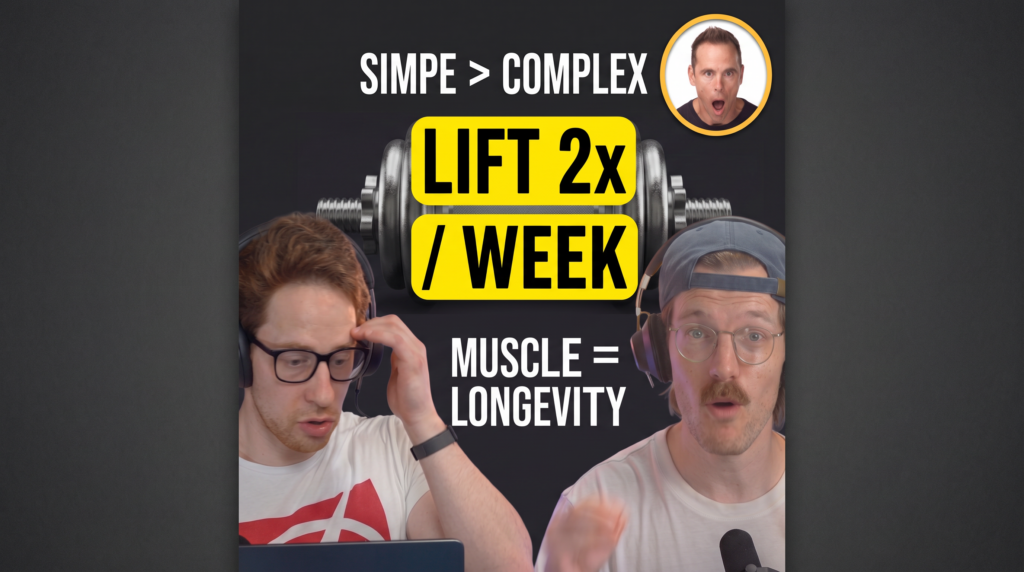
The review and its accompanying visual summaries outline several fundamental takeaways for the general population. Chief among them is the recommendation to train all major muscle groups at least two days per week. This means that a minimalist, full-body routine performed twice weekly can completely satisfy the requirements for general health and muscle preservation, a notable departure from the complex, high-frequency body-part splits popularized by professional bodybuilders.
When examining specific training goals, the literature distinguishes between maximizing strength and developing power. Power measures the velocity of force production, whereas strength reflects the absolute load an individual can move, a process heavily mediated by the nervous system learning to recruit motor units more efficiently. Across various training parameters, recent Bayesian network meta-analyses investigating resistance training prescriptions for healthy adults have consistently pointed toward a balanced, moderate approach as a optimal protocol. Lighter loads utilizing under 80 percent of a one-rep maximum, combined with multiple sets performed twice weekly, offer a highly effective middle ground. This "Goldilocks" approach minimizes excessive joint stress while stimulating sufficient adaptation for healthy aging and an improved quality of life.
Regarding optimal rep ranges, evidence-focused researchers and sports scientists note that there is no single magic number. Research indicates that anywhere from 3 to 30 repetitions per set can stimulate muscle growth, provided the set is performed with an adequate level of effort. Each approach carries inherent trade-offs: higher-rep sets reduce acute joint loading but demand more time and induce greater metabolic fatigue, whereas heavier, low-rep sets save time but place higher stress on connective tissues.
The practical implications of these findings are reflected in the shifting habits of everyday lifters. Many individuals who previously spent hours in the gym multiple days a week have transitioned to shorter, highly efficient sessions lasting between 30 and 50 minutes, supplemented by cardiovascular exercise, while successfully maintaining their physical conditioning. At the same time, genetic variation remains an undeniable factor; identical routines will inevitably yield different visual and physiological adaptations from person to person.
Safety and sustainability remain paramount under the updated framework. One guiding principle emphasized by fitness commentators discussing the literature is to avoid any gym activity today that compromises the ability to train tomorrow. For many lifters, this means re-evaluating high-risk movements, such as heavy barbell back squats performed under extreme fatigue, and substituting them with joint-friendly alternatives like dumbbell Bulgarian split squats.
Ultimately, the American College of Sports Medicine’s new position stand reinforces a reassuring message for the general public: complexity and heroic physical efforts are entirely optional. By prioritizing consistency, adhering to a manageable weekly schedule of basic movements, and focusing on sustainable habits, individuals can secure the lifelong benefits of resistance training without turning the gym into a second job. As the evidence demonstrates, doing something consistently is infinitely more valuable than striving for an unsustainable ideal.