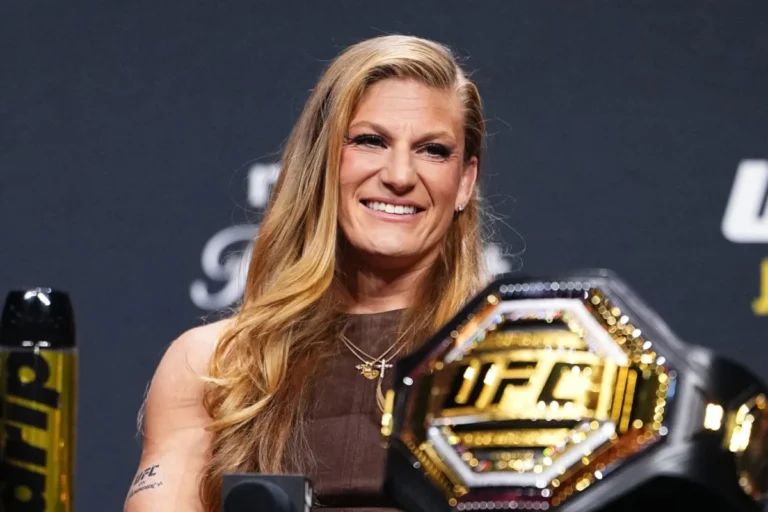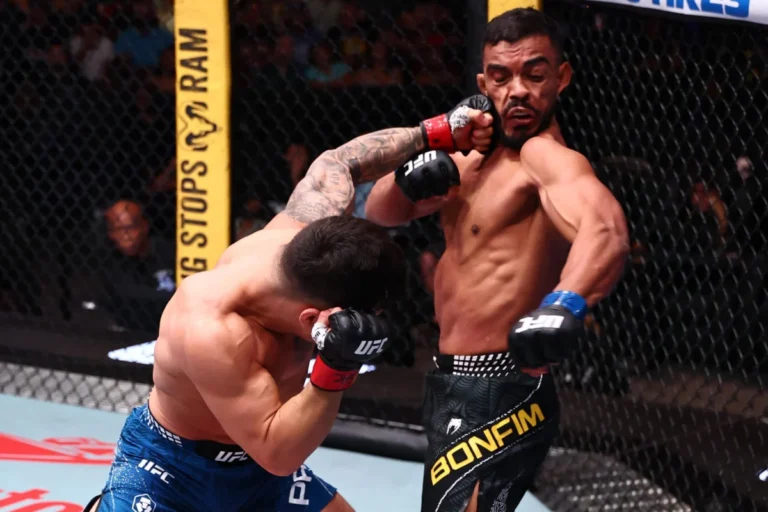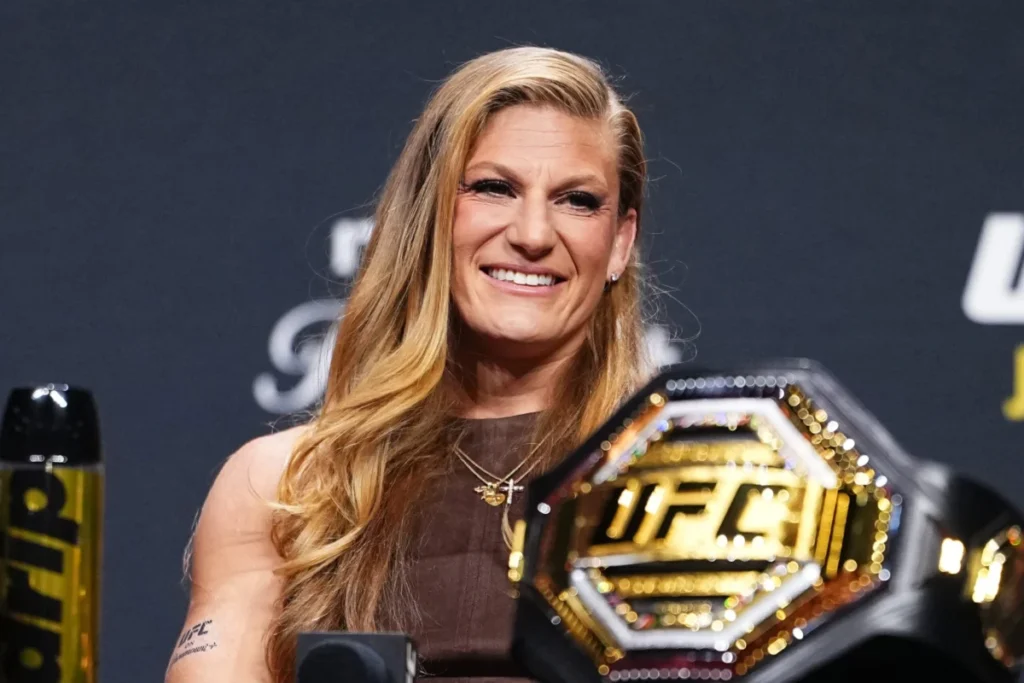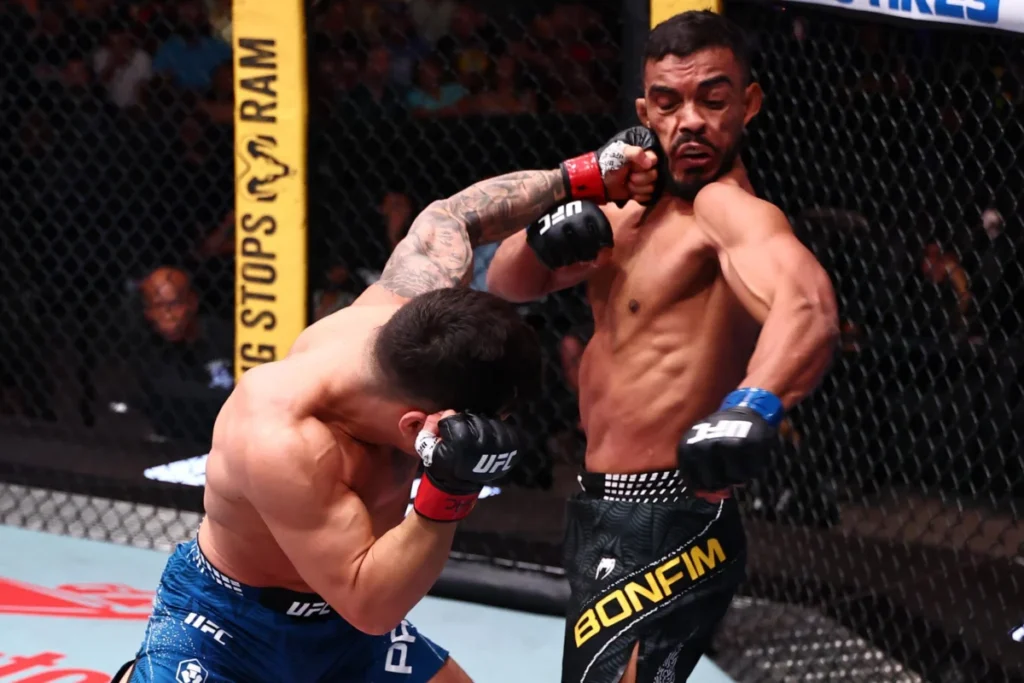
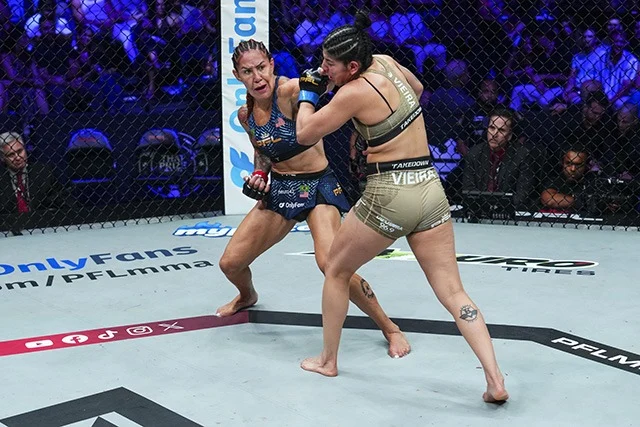
Nearly two months after securing the 30th mixed martial arts victory of her legendary career, combat sports icon Cris Cyborg has opened up about the circumstances surrounding her August 22 bout against fellow Brazilian Ketlen Vieira in Tampa, Florida. What was already a bizarre and frustrating night for the multi-promotion champion has taken an even more dramatic turn with official confirmation of a failed drug test by her opponent.
Vieira originally missed the featherweight limit by more than seven pounds ahead of the event, completely altering the stakes of the matchup. The final fight of Cyborg’s existing Professional Fighters League contract was swiftly converted from a high-profile championship defense into a non-title catchweight contest.
Now, those unusual circumstances have deepened significantly. According to Mike Mazzulli, director of the Mohegan Tribe Department of Athletic Regulation, both the A and B samples collected from Vieira during in-competition drug testing returned adverse analytical findings for a steroidal substance banned by the World Anti-Doping Agency.
Ketlen Vieira Failed Drug Tests Confirmed After Missing Weight by Over Seven Pounds Ahead of Cris Cyborg Bout
Mazzulli confirmed to Sherdog.com that a comprehensive analysis of Vieira’s biological samples yielded identical positive results for the prohibited compound. While Mazzulli declined to publicly identify the specific banned substance due to regulatory protocols, he verified that Vieira has been handed a six-month suspension, which has been applied retroactively to the date the fight took place.
"Thank you to Mike Mazzulli and everyone involved in maintaining a serious testing program," Cyborg said in the wake of the regulatory update. "I believe clean sport deserves strong enforcement."
Prior to the formal announcement, Vieira had been officially notified of the initial adverse finding and placed under a provisional suspension while awaiting the outcome of her requested B sample analysis.
The Mohegan Tribe Department of Athletic Regulation took over as the PFL’s independent anti-doping partner in 2025, stepping into the role previously held by the United States Anti-Doping Agency. The regulatory body is well-known within the industry, having previously overseen the comprehensive drug-testing protocols for Bellator MMA.
As the news broke and regulatory bodies took action, representatives for Vieira, the PFL, and the Florida Athletic Commission—which served as the local regulatory body overseeing the Tampa card—did not respond to multiple requests for comment from media outlets.
The matchup was originally envisioned as a historic milestone: the inaugural defense of Cyborg’s PFL women’s featherweight championship. The 41-year-old combat sports veteran captured the promotional belt late last year by earning a hard-fought victory over Australian contender Sara Collins. For her first defense, she was paired with Vieira, a seasoned veteran who had spent nearly a decade competing inside the Ultimate Fighting Championship.
During her tenure in the UFC’s bantamweight division, Vieira compiled a respectable 10-5 record inside the Octagon, though she had alternated wins and losses over her final four years with the organization. Her contract with the global market leader concluded following a victory in May, after which the UFC opted against extending an offer to re-sign her.
Just three months after securing a decision win over Jacqueline Cavalcanti in what would be her final promotional appearance under the UFC banner, Vieira was swiftly booked to challenge Cyborg for the PFL crown in the Sunshine State.
However, the event landscape shifted dramatically at the scales. While Cyborg successfully made championship weight, Vieira came in drastically heavy, missing the division limit by a staggering margin of more than seven pounds. Rather than walking away from the fight and refusing to compete, Cyborg chose to salvage the main event of the PFL card by agreeing on short notice to transition the encounter into a non-title catchweight affair contested at 153 pounds.

"I still accepted the fight and stepped into the cage knowing I would be giving up a significant physical advantage," Cyborg recalled.
Following the weigh-in struggles, Vieira explained to MMAFighting.com that she had suffered from severe kidney and stomach pain in the hours leading up to the official weigh-ins, which ultimately prevented her from safely reaching the featherweight limit.
Despite the physical discrepancy, the missed weight, and the subsequent regulatory infractions, Cyborg maintained a respectful tone toward her fallen compatriot.
"Ketlen, I respect you," Cyborg said. "I know what it takes to step into that cage. I wish you nothing but success moving forward. I know fighters can face difficult circumstances during a fight camp. I have no interest in attacking her personally."
After battling through five grueling rounds against an opponent she noted felt noticeably stronger than anticipated inside the cage, the decorated veteran—whose illustrious resume includes world titles under the banners of Strikeforce, Invicta Fighting Championships, the Ultimate Fighting Championship, Bellator, and the Professional Fighters League—found herself reflecting deeply on her career. In fact, her performance in Tampa gave her enough personal satisfaction to genuinely reconsider her impending retirement from active competition.
Having remained undefeated for nearly eight years—with her last defeat coming all the way back against Amanda Nunes when she lost the UFC featherweight title—Cyborg’s competitive fire has been reignited. She has outlined plans to step into the MMA cage two more times, alongside an additional venture into professional boxing.
The Professional Fighters League currently holds matching rights regarding any new contract Cyborg decides to sign. Once that specific contractual matching period officially expires, the legendary fighter will be free to negotiate her future as an unrestricted free agent in the combat sports marketplace.
Reflecting on the broader implications of performance-enhancing drug infractions in the sport, Cyborg drew from her own historical experiences in the combat sports spotlight.
"My career has not been perfect, and I never tried to hide from my past," Cyborg noted candidly. "In 2011, I had a positive test for a banned substance, served my suspension, accepted responsibility for what was in my body, and made major changes to the way I managed my team and supplements. Since then, I have competed under the most rigorous testing programs in MMA, including testing overseen by Mike Mazzulli, and I have continued to pass those tests."
For Cyborg, the revelation regarding her most recent opponent underscores why stringent oversight remains non-negotiable for the long-term health and integrity of mixed martial arts.
"That is why I believe strict, independent testing is important," Cyborg concluded. "It protects the fighters, the sport, and the legacy we work our entire lives to build."