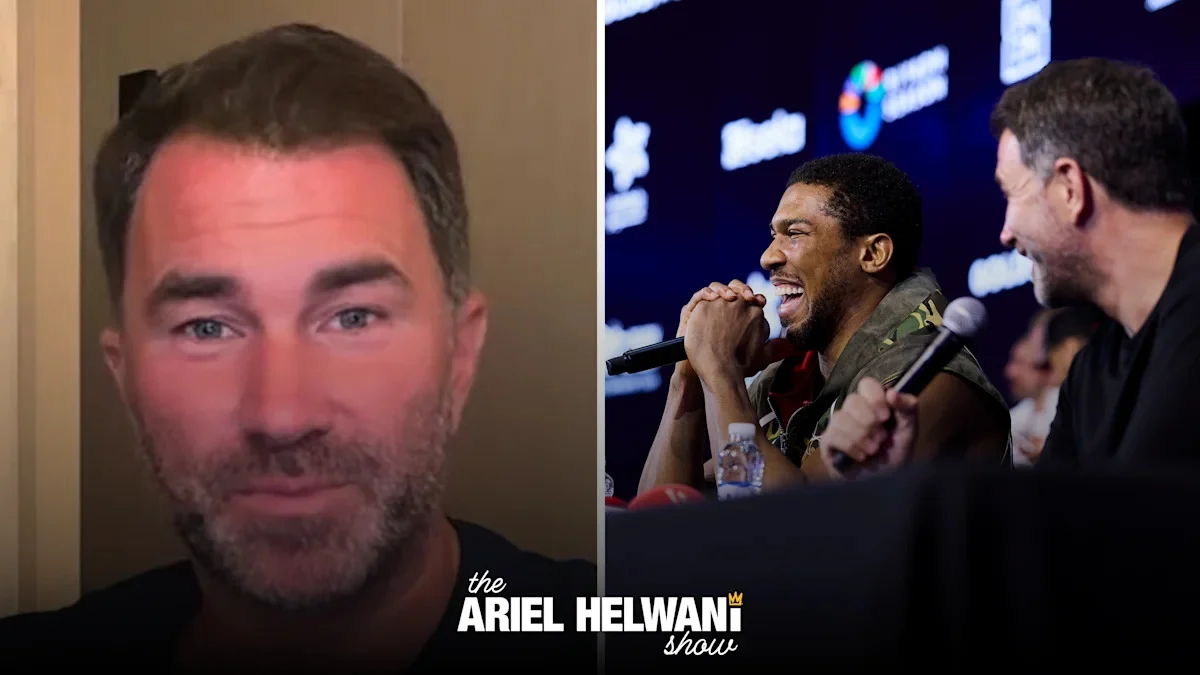
Central to the discussion is the perennial question of Anthony Joshua versus Tyson Fury, a bout that has loomed over world boxing for the better part of a decade. While the matchup has experienced multiple breakdowns, shifting title landscapes, and varying career trajectories for both former champions, interest in an all-British spectacle remains at an all-time high. Recent remarks from Dana White, who asserted that his promotional outfit would be the one to produce and execute a Joshua-Fury clash, injected a new wave of intrigue and skepticism into the proceedings.

Hearn dismissed the notion that White or his promotional arm could simply take command of an encounter rooted so deeply in traditional boxing ecosystems. For years, White has teased the arrival of Zuffa Boxing, promising to overhaul the sport’s infrastructure and eliminate the fractured promotional rivalries that historically slow major fights from materializing. Yet, as Hearn pointed out, the trajectory of Zuffa Boxing has thus far struggled to materialize into a dominant, standalone power inside the squared circle. Navigating the sanctioning bodies, autonomous promotional banners, competing broadcast contracts, and specialized management structures of professional boxing has proved to be vastly different from operating a centralized, single-entity entity like the Ultimate Fighting Championship.
Despite the occasional barbs exchanged through the media, Hearn acknowledged ongoing discussions regarding a potential face-to-face sit-down with White. The two high-profile executives, each possessing distinct philosophies on athlete management and event presentation, have maintained a rivalry characterized by professional respect punctuated by sharp public disagreements. Hearn indicated that while a direct meeting could clear the air regarding promotional boundaries and collaborative possibilities, the production of an event as monumental as Joshua versus Fury would inevitably remain governed by the parties that have built, invested in, and guided those fighters throughout their professional careers.

Addressing the negotiations themselves, Hearn emphasized that the structural foundations for a Joshua-Fury contest require rigorous transparency and direct commercial alignment. Chief among these requirements is the implementation of uncompromised, year-round anti-doping protocols. Given the profile of the bout and the history of modern heavyweight boxing, Hearn made it clear that comprehensive drug testing must be established at the absolute forefront of any contractual agreement. Both fighters, according to Hearn, must be subject to stringent independent testing from the moment pen meets paper, ensuring that the legacy of such a defining event is shielded from controversy and maintained to the highest athletic standards.
The long-term bond between Hearn and Joshua remains one of the foundational partnerships in the modern sport. Since Joshua turned professional in the wake of his gold-medal triumph at the London 2012 Olympic Games, Hearn and Matchroom have overseen his rise from prospect to two-time unified world heavyweight champion and global commercial powerhouse. That standing has naturally made Joshua a perennial target for competing entities seeking to secure his signature or disrupt his established business network. Hearn confirmed that discreet, behind-the-scenes offers have routinely been directed toward Joshua, with various suitors attempting to test the waters of his promotional loyalty.

However, Hearn reiterated that the loyalty between fighter and promoter cuts both ways. Despite dramatic shifts in the sport’s economic landscape, Joshua has consistently maintained his allegiance to Matchroom, an alignment reinforced by their shared commercial triumphs and shared setbacks. Hearn noted that external bids to wedge themselves into Joshua’s career often fail to account for the decade-long trust, personal chemistry, and integrated business infrastructure that underpin his operations. Joshua’s trajectory has never been solely about short-term financial guarantees; it has been built around a deliberate, long-term brand legacy that Hearn intends to steer through to the end of the heavyweight’s active career.
Beyond the heavyweight landscape, Hearn also touched on the continued ascent of Ben Whittaker following his latest victory inside the ring. The Olympic silver medalist has rapidly established himself as one of the most polarizing and entertaining prospects in world boxing, blending exceptional hand speed and defensive reflexes with audacious showmanship. Whittaker’s theatrical antics have ignited debate across the boxing community, drawing both widespread praise for his ability to capture mainstream digital engagement and criticism from purists who caution against excessive flair against ascending tiers of competition. Hearn defended Whittaker’s approach, noting that his natural charisma, coupled with elite technical fundamentals, makes him a generational asset for Matchroom. As Whittaker steadily moves up the light heavyweight rankings, Hearn underlined the importance of balancing his larger-than-life presentation with deliberate matchmaking to prepare him for eventual world title contention.

Whittaker’s rise aligns directly with Hearn’s broader strategy of raising Matchroom’s footprint and profile across the United States. For decades, American boxing was controlled by domestic promotional stalwarts, but Matchroom’s sustained efforts to stage high-profile cards on US soil, partner with prominent streaming platforms, and sign elite North American talent have established the British promoter as a fixture in the territory. Hearn spoke about the necessity of maintaining a visible, energetic presence across the Atlantic, arguing that true global dominance in fight promotion requires commanding the attention of the American sports consumer just as effectively as the fervent audiences that fill British stadiums.
The dynamic between Hearn and Dana White is further complicated by Matchroom’s ventures outside the perimeter of boxing. Through the Matchroom Talent Agency, Hearn has established direct professional ties with several premier mixed martial artists competing on White’s own UFC roster, most notably interim UFC heavyweight champion Tom Aspinall and surging welterweight contender Ian Machado Garry.

Managing the commercial and career interests of top-tier UFC fighters places Hearn in a unique position. While he often battles White in the media over the virtues, philosophies, and pay scales of boxing versus mixed martial arts, he simultaneously serves as a direct representative for athletes whose primary income is generated under White’s promotional banner. Hearn highlighted the exceptional talent and championship credentials of Aspinall, who has captured the imagination of the combat sports world with his clinical finishing ability and calm demeanor atop the heavyweight division. Similarly, Machado Garry’s undefeated trajectory and undeniable self-belief make him one of the most commercially viable prospects coming out of Europe.
Hearn noted that navigating the representation of Aspinall and Machado Garry requires clear professionalism, particularly when advocating for their value in negotiations that inevitably involve White’s executive team. The dual role of being both an antagonistic rival promoter in the boxing sphere and a trusted managerial advocate within the UFC highlights the complex, interconnected nature of modern combat sports. Rather than allowing promotional friction to derail business, Hearn pointed out that elite athletes recognize the power of having an experienced, globally connected agency handling their commercial opportunities, brand partnerships, and career logistics.
As the fight industry continues to evolve under shifting financial landscapes and cross-disciplinary collaborations, Hearn’s comments portray an executive operating simultaneously across multiple high-stakes battlegrounds. Whether defending his foundational heavyweight star from outside suitors, planning the next career leap for an eccentric young light heavyweight, managing the interests of UFC champions, or parrying public challenges from Dana White, Hearn remains steadfast in his determination to shape the parameters of the fight game on his own terms.