
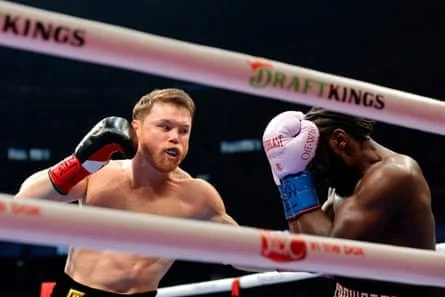
Canelo Álvarez intends to proceed with his scheduled world title fight in Saudi Arabia later this month despite a series of deadly missile and drone strikes on the kingdom’s critical transportation infrastructure, according to Turki al-Sheikh, the influential Saudi official overseeing the Gulf state’s aggressive expansion into elite international sports.
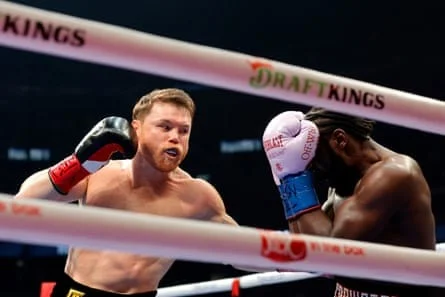
The Mexican superstar is booked to challenge the undefeated Christian Mbilli for the WBC super-middleweight championship in Riyadh on October 31. The high-profile sporting event remains on track despite a major cross-border attack over the weekend, when a missile strike on the Saudi capital’s primary international gateway killed at least 12 people and wounded more than 300. The lethal bombardment was followed by further aerial attacks that have shuttered commercial aviation facilities and raised acute international security concerns across the region.
Al-Sheikh, who serves as chairman of Saudi Arabia’s General Entertainment Authority and has rapidly established himself as the premier power broker in global boxing, took to social media on Sunday to confirm that Álvarez had reached out directly to reaffirm his commitment to the fixture. According to Al-Sheikh, the former undisputed champion made it clear that the deteriorating regional security landscape would not deter him from traveling to the Gulf state to compete.
“Canelo reached out and told me he’ll still fight in Riyadh this October, no matter what happens,” Al-Sheikh wrote in a public post. “He fears nothing. My country is home to the two Holy Mosques, land of peace, safety, rich civilization, deep history and kind-hearted people. Thank you to everyone who checked in and showed support. Hard times reveal true friends.”
The personal pledge from boxing’s biggest commercial draw arrived during one of the most volatile security escalations inside Saudi Arabia in years. Yemen’s Iran-backed Houthi rebel movement has dramatically expanded its campaign of cross-border strikes targeting sensitive urban and economic infrastructure throughout the kingdom. The Houthis claimed direct responsibility for Saturday’s devastating attack against King Khalid International Airport, an assault that marked the single deadliest strike on a Gulf Arab state since the outbreak of the wider war with Iran.
The initial casualty figures from that strike continued to climb over the weekend. India’s embassy subsequently reported that an Indian national had succumbed to severe wounds sustained during the airport blast, potentially lifting the official death toll to 13, alongside the hundreds of travelers and airport personnel who sustained injuries.
Rather than subsiding, the military assault intensified twenty-four hours later. On Sunday, a second incoming projectile struck a passenger terminal within the sprawling King Khalid International Airport complex, according to statements released by the Saudi-led military coalition currently engaged in combat operations against the Houthis in Yemen. Coalition authorities confirmed that the secondary strike caused additional casualties and damage within the terminal facilities, though an exact updated casualty figure was not immediately made public.
In the immediate aftermath of the renewed bombardment, the capital’s flagship airport remained completely closed to civilian traffic on Sunday. International flight operations were thrown into disarray as several major foreign commercial carriers took emergency measures to suspend scheduled service into the kingdom, citing the severe and immediate risks posed to civil aviation.

The security crisis also drew an urgent advisory from Washington, with the United States government warning American citizens in Saudi Arabia to strictly avoid the airport and its immediate perimeter as air defenses remained on high alert.
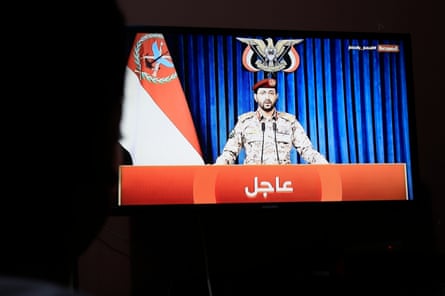
The cross-border offensive was officially acknowledged by Houthi military spokesman Yahya Sarea, who delivered a televised address from the Yemeni capital of Sana’a claiming responsibility for coordinated waves of ballistic missile and drone operations directed against targets inside Saudi borders. The rebel group declared that commercial airports and critical energy infrastructure throughout the kingdom remain active military targets, issuing explicit warnings urging international commercial airlines, flight crews, and civilian travelers to steer clear of Saudi airspace entirely.
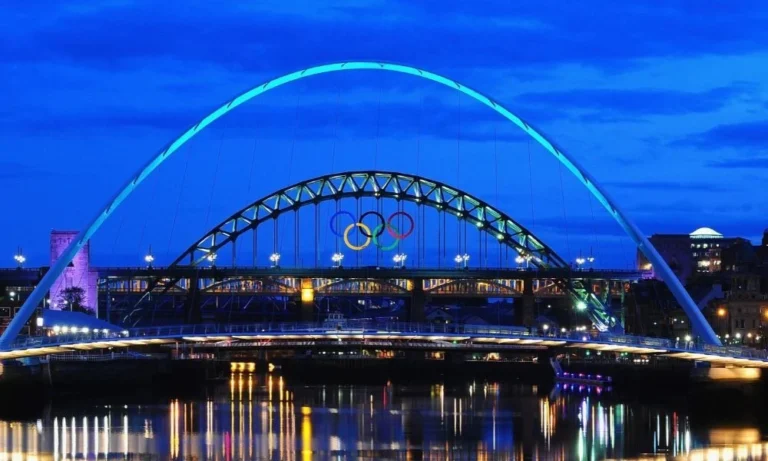
This severe military escalation arrives at an extraordinarily delicate juncture for Saudi Arabia, threatening to undermine the kingdom’s multi-billion-dollar initiative to transform its global standing. Under the governance of Crown Prince Mohammed bin Salman, Riyadh has embarked on an ambitious national campaign to establish itself as a primary international hub for world-class sports, entertainment, culture, and high-level commerce. Substantial state capital has been deployed to lure global attention, diversify the domestic economy, and reposition the country on the international stage.
Those rapid investments, however, have simultaneously attracted intense scrutiny from international observers and human rights groups, who have repeatedly accused the kingdom of engaging in "sportswashing"—leveraging prestige sports and celebrity athletic spectacles to obscure its domestic human rights record and burnish its overseas reputation.
Nowhere has Saudi Arabia’s financial muscle been felt more keenly in recent years than within professional boxing. Directed by Al-Sheikh, the kingdom has spent heavily to consolidate the fractured sport under its umbrella, assembling blockbuster multi-belt unification cards, uniting rival promotional stables, and offering financial purses that have proved irresistible to the sport’s most decorated competitors.
Yet the sudden vulnerability of the capital’s airspace highlights the precarious reality of staging massive entertainment spectacles against the backdrop of regional warfare. The current wave of attacks strikes at the heart of Riyadh’s public diplomacy efforts at a week when the kingdom is scheduled to host an international energy conference, alongside several other major commercial summits that rely entirely on the seamless movement of international business leaders and foreign dignitaries.
The widening regional conflict has also heightened expectations of foreign military intervention. Following the weekend carnage in Riyadh, United States President Donald Trump announced on Saturday that his administration was actively weighing retaliatory military measures against Houthi positions. Trump stated that he intended to speak directly with Crown Prince Mohammed bin Salman to coordinate a response to the escalating threats facing Gulf infrastructure and international navigation.
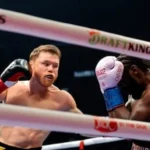
Despite the geopolitical tensions and physical hazards enveloping the host city, Álvarez appears determined to maintain his competitive calendar. For the 36-year-old Mexican icon, the October 31 encounter against Mbilli represents a pivotal crossroads in an illustrious career that spans more than two decades.
Holding a professional record of 63 victories, three defeats, and two draws, with 39 wins coming by way of knockout, Álvarez is seeking redemption and renewed momentum. The bout against Mbilli marks his first ring appearance since September 2025, when he dropped a clear unanimous decision to pound-for-pound star Terence Crawford. That defeat stripped Álvarez of his status atop the division and prompted intense analysis regarding his standing among boxing’s elite.
The scheduled match with Mbilli will mark Álvarez’s second career ring appearance in Saudi Arabia, having previously competed in Riyadh in May 2025 as part of the kingdom’s expanding boxing calendar.
Addressing the media during a Zoom press conference with the Guardian and other international outlets on Tuesday, Álvarez displayed a reflective demeanor regarding the setback against Crawford, acknowledging that his mental preparation had fractured in the final stretch leading up to that bout.
“When you lose, you always look back and look at your mistakes,” Álvarez explained. “I did a very good preparation for the Crawford fight, but in the fight week, my mind wasn’t there.”
Determined to prevent a repeat of those lapses, Álvarez has designed a meticulous training regimen for his upcoming championship bid. The veteran champion has been conducting his preparations along the Mediterranean coastline of Spain, working out of the high-performance training facility utilized by undisputed heavyweight king Oleksandr Usyk.
Beyond conditioning and tactical work, Álvarez has placed particular emphasis on physiological adaptation. Having experienced acute difficulties acclimatizing to the Middle Eastern climate and time differences during his first excursion to Riyadh in May 2025, the Mexican fighter has completely restructured his travel and preparation itinerary. Álvarez revealed that he now factors in a full 21-day timeline to allow his body to properly synchronize with the Gulf time zone prior to fight night.
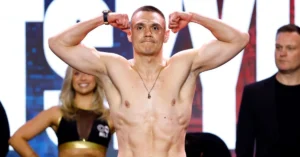
The opponent awaiting him in Riyadh poses a formidable physical test. The 29-year-old Mbilli enters the championship clash with an unblemished professional slate of 29 victories, having dispatched 24 of his opponents inside the distance. Known for his punishing physical pressure, relentless forward movement, and high punching output, the WBC titleholder presents the exact stylistic archetype capable of testing an aging champion’s durability over twelve rounds. Álvarez acknowledged the danger posed by the unbeaten contender, characterizing Mbilli as a relentless, high-volume puncher whose aggressive ring philosophy will almost certainly produce an intense, fan-friendly battle.
Despite having competed at the championship level since turning professional at the tender age of 15, Álvarez dismissed suggestions that the grueling nature of the sport or his recent defeat might prompt an imminent exit from the ring.
When pressed on how much longer he envisioned himself trading punches at the sport’s highest level, the Mexican veteran maintained that his competitive hunger remained undiminished by the years.
“I don’t know how many more fights,” Álvarez said. “I don’t know because I feel really good.”