


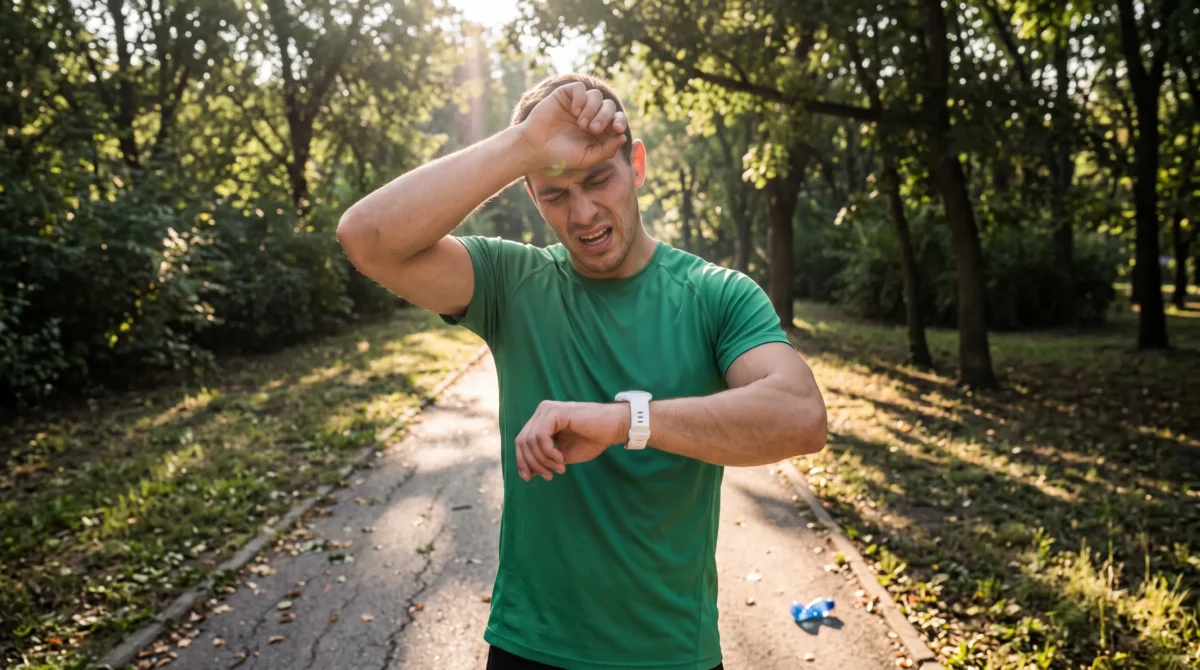
Aging does not wait for retirement to begin its work. For decades, conventional wisdom suggested that physical decline was a distant hurdle, something to worry about only after decades of adulthood had passed. However, a groundbreaking Swedish study spanning nearly five decades has pinpointed the exact age when physical decline quietly begins: around 35 years old.
Even more surprising to researchers and fitness enthusiasts alike, this biological decline occurs even among people who exercise regularly. Yet before anyone begins to panic about crossing their mid-30s milestone, there is genuinely good news tucked into the data: starting exercise at any age can still produce meaningful improvements in strength, endurance, and overall fitness.
The Study That Changed How We View Aging
To arrive at these insights, researchers at the Karolinska Institutet in Sweden embarked on an ambitious scientific undertaking, following 427 people for an incredible 47 years. The study began when the participants were just 16 years old and continued faithfully through age 63.
This was not a typical cross-sectional aging study, which typically compares different groups of people of varying ages at a single point in time. Instead, scientists repeatedly tested the very same individuals as they aged year after year, decade after decade. That specific design choice proved critical to the validity of the findings because physical abilities naturally vary dramatically from one person to another. By tracking identical individuals across decades, researchers could observe precisely how fitness changed within each person rather than making flawed assumptions based on generational differences.
The research team focused on measuring three key areas of physical capability: aerobic fitness, which measures how effectively the body uses oxygen during sustained exercise; muscular endurance, which tracks how long muscles can keep working before exhaustion sets in; and muscle power, defined as the ability to produce force quickly. Their findings, published in the Journal of Cachexia, Sarcopenia and Muscle, revealed a consistent developmental and degenerative pattern that applies to nearly everyone regardless of lifestyle.
Peak Performance Arrives Earlier Than Expected
According to the data, physical performance reached its highest levels between the ages of 26 and 36 across most measured categories. Once participants crossed that window, the process of physical decline began in earnest around the mid-30s.
Certain abilities, particularly explosive muscle power—the specific kind of physical force needed for jumping, sprinting, or quickly catching yourself from a sudden fall—peaked even earlier in life. Once the decline started, it began modestly but accelerated progressively with age. By the time participants reached age 63, average performance across all measurements had dropped roughly 30 to 48 percent from their individual peak levels.
Both men and women demonstrated this exact pattern. While individual fitness levels differed significantly from person to person at every age, the overall rates of age-related physical decline were remarkably similar between the sexes.
Exercise Can’t Stop Aging—But It Makes a Huge Difference
This is where the findings get particularly interesting, and perhaps a bit humbling for dedicated fitness enthusiasts. Regular physical activity did not entirely prevent the physical decline associated with aging. Even people who remained highly active throughout their lives showed evidence of diminishing performance as they grew older.
However, exercise made a massive difference in how well people maintained their baseline abilities. Participants who became physically active later during adulthood experienced improvements in physical capacity of approximately 5 to 10 percent. Meanwhile, those who were already active during their adolescent years maintained noticeably better fitness, endurance, and muscle power throughout their adult lives compared to their sedentary peers.
Maria Westerståhl, a lecturer at the Department of Laboratory Medicine and lead author of the study, offered an encouraging perspective on the findings. She noted that it is never too late to start moving, explaining that physical activity can successfully slow the decline in performance even if it cannot completely stop it. Researchers are now looking closer at the biological mechanisms behind why everyone reaches their peak performance around age 35 and why physical activity can blunt performance loss without fully halting it.
These findings suggest that physical decline is not simply the byproduct of becoming less active with age. Underlying biological changes appear to contribute independently, although targeted exercise can substantially reduce their ultimate impact.
What This Means for Your Fitness Goals
Reaching an average physical peak in the mid-30s does not mean that every individual suddenly becomes weaker or less capable the moment they blow out their 35th candles. People can continue improving their personal fitness and strength through dedicated training, even after the chronological age when population averages begin to decline.
The study essentially describes what happens on average across a broad population, not what must inevitably happen to any single person. A sedentary 30-year-old who decides to take up serious training at age 40 will likely become significantly stronger and fitter than they were at 30, even though their broader biological peak may have technically passed years prior.
Early Fitness Protects Your Heart Decades Later
The importance of maintaining physical fitness throughout adulthood extends well beyond mere muscle strength. In a 2026 follow-up study published in Scientific Reports, researchers examined additional health outcomes using the exact same Swedish cohort.
They discovered that people who maintained better aerobic fitness at ages 34 and 52 tended to have significantly less arterial stiffness by the time they reached age 63. Arterial stiffness occurs when blood vessels become less flexible over time, making it harder for them to expand and contract smoothly as blood moves through the body. Greater stiffness is strongly associated with an increased risk of cardiovascular disease.
Notably, the relationship between earlier fitness and later artery health remained statistically significant even after researchers accounted for several established cardiovascular risk factors, including obesity, smoking, and blood pressure. While the results do not definitively establish that better fitness directly prevented arterial stiffening, they strongly suggest that maintaining aerobic capacity during early and middle adulthood provides protective cardiovascular benefits that extend far into later life.
Older Athletes Still Decline—But Stay Far Ahead
Other parallel research has reinforced the broader idea that exercise remains deeply valuable even when physical performance inevitably declines with age. A 2026 study published in GeroScience followed 82 older adults who continued cycling consistently over a nine-year period.
Despite maintaining active lifestyles, these participants experienced an average 19.7 percent decline in peak aerobic capacity over the study period. Yet their absolute fitness remained remarkably high. Nearly all participants who completed the rigorous exercise testing performed at or above the 90th percentile for their age when compared with standard reference populations.
The findings reinforce the notion that although regular exercise cannot eliminate biological aging entirely, it can help people maintain unusually high levels of physical function and autonomy as they grow older.
Starting Exercise After 60 Still Builds Strength
Another 2026 study published in The American Journal of Medicine looked at 49 men aged 60 to 82 who had not previously participated in structured exercise training programs. Over a four-year period, participants who performed weekly resistance exercises successfully improved both their upper and lower body strength.
Those who combined resistance training with aerobic exercise also saw measurable improvements in their overall aerobic fitness. Although the study was relatively small, its findings support the idea that meaningful physical improvements remain entirely possible well into older adulthood.
As the original Swedish research continues, investigators are already planning another round of comprehensive assessments when the participants reach age 68. This next stage aims to explore how long-term changes in physical performance relate directly to lifestyle, overall health, and the underlying biological processes responsible for human aging.
Ultimately, the collective findings point to an important distinction between simply getting older and becoming physically inactive. Some loss of fitness and strength appears to be a natural part of aging, but the extent of that decline varies substantially based on personal choices. While the body may begin losing some of its physical capabilities around age 35, those biological shifts do not eliminate the profound benefits of exercise.