If you were to rank the world’s elite athletes by social media followers alone, the top three positions would be entirely predictable. A quick glance at global follower counts would immediately point to the usual behemoths of the internet age, long before anyone even opened a spreadsheet to check.
However, the release of this year’s SportsPro 50 Most Marketable Athletes (50MM) list offers a remarkably different lens through which to view modern sports influence. Instead of crowning the individual with the highest aggregate follower count, the index evaluates brand equity, market momentum, and future growth potential.
The resulting standings challenge conventional wisdom about digital reach. Aryna Sabalenka claims the number one spot, followed by freestyle skiing phenomenon Eileen Gu at number two, and NBA star Giannis Antetokounmpo at three. Meanwhile, Cristiano Ronaldo—the single most-followed individual on Instagram—appears down at number 14, with fellow football icons Neymar and Lionel Messi landing at 24 and 27, respectively.
This disparity is by no means a critique of some of the most universally recognized people on the planet. Securing any position on a competitive index drawn from a pool of more than a thousand evaluated athletes is an extraordinary achievement. Rather, these rankings suggest a fundamental truth about the digital sports landscape: a massive raw audience is merely a starting point, not the entire narrative.
For professionals working daily with footballers, clubs, and leagues across the men’s and women’s games in Europe, the most common inquiry remains rooted in growth. When organizations ask how they can expand, they are usually translating the question into how they can accumulate more followers.
Yet, reviewing this year’s 50MM list prompts a much more productive inquiry: how athletes can effectively show up for the audiences they already have. The index ultimately reflects how adeptly sports stars use their digital platforms to foster genuine human connection, rather than simply measuring how many passive eyes are fixed upon them. Across the board, four distinct behavioral patterns consistently stand out among the most marketable figures.
Something Beyond Sport
Most dedicated sports fans select a team or a discipline during childhood and rarely switch allegiances afterward. Consequently, true, organic audience growth for an athlete almost always originates from an external source—a crossover moment where an individual with no prior interest in a specific sport suddenly finds a compelling reason to care about the athlete as a human being.
Eileen Gu serves as the clearest case study on this year’s list. As an Olympic champion, she moves seamlessly between worlds as a Stanford University student and a prominent fashion cover star, successfully building a digital profile that bridges cultural audiences in the United States and China.
Rayssa Leal, who ranks 42nd and stands as the youngest athlete on the list at just 18 years old, competes in a discipline where athletic competition and subculture have always been inextricably linked. Skateboarding arrives complete with its own distinct music, aesthetic style, and vernacular, and Leal is entirely fluent in all of them.
Alysa Liu occupies the 6th position as a third compelling example. Having stepped away from competitive figure skating as a teenager before returning entirely on her own terms, her narrative resonates as powerfully around personal agency as it does athletic prowess. This personal journey successfully engages demographics that have never previously watched a figure skating event.
In each of these instances, the sport functions as the initial entry point, but it merely opens the door. It fails to explain why digital consumers choose to stay.
A Recognizable Voice
The highest-performing athlete social media accounts reliably pass a simple diagnostic test: if you cover the name and handle on the post, you should still immediately recognize whose voice is speaking.
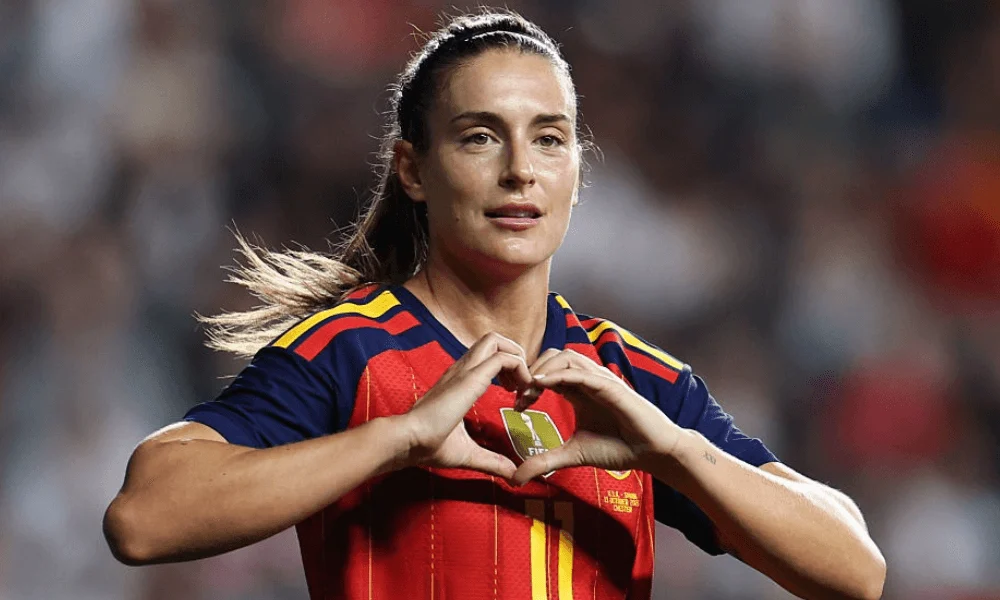
Alexia Putellas, positioned at number 47, is a prime example of this authenticity. Having spent years establishing herself as one of the definitive voices of women’s football, her published content consistently reads like her genuine thoughts rather than a manufactured marketing campaign. This distinct lack of corporate gloss is precisely why her words carry substantial weight far beyond the confines of association football.
Ilia Topuria, ranked 41st, represents a different register of the exact same phenomenon. His striking self-confidence and vocal pride in his dual Spanish and Georgian roots are unmistakable. Consequently, sports enthusiasts across Spain instantly recognize him, regardless of whether they actively follow mixed martial arts.
Max Verstappen passes this exact test in his own signature style. Characterized by a blunt, dry delivery that remains entirely uninterested in sounding polished for public relations purposes, his communication is unmistakably his own. That unfiltered quality is notoriously difficult to manufacture, which explains why digital audiences place such high levels of trust in it.
Consistency
If there is a single operational habit that separates the names featured on the list, it is the willingness to show up and publish content on the quiet days when nothing competitive is happening.
Most major sports leagues offer roughly 50 matchdays throughout a season, leaving more than 300 days when nobody is actively competing. The athletes who steadily rise in marketability tend to be the ones who actively fill those quiet stretches with the mundane realities of training, travel, family time, and the small moments in between.
Erling Haaland, positioned at number four, provides a striking illustration of this dynamic. Consider the widespread pop-culture moment sparked by his recent haircut. It triggered days of online debate, viral memes, and copycat styles that traveled far outside the sports ecosystem—all stemming from a player simply letting everyday followers into a personal moment of his life.
Haaland is notably the sole current Premier League player featured on the 50MM list. This distinction is worth pausing on, given the extraordinary global reach and financial power of the English top flight. There is certainly no shortage of elite talent or dramatic narratives within English football, yet a clear opportunity remains for clubs and players alike to share more of the everyday material that occupies the vast space between weekend matchdays.
Alphonso Davies, ranked 34th, serves as another successful example of this approach in action. His digital audience has been constructed just as much around his personality as his on-field performances, cultivated through years of inviting followers into his life away from the pitch. Because of this personal foundation, his follower engagement holds steady even when injuries temporarily interrupt his playing appearances.
Across both examples, the underlying pattern remains identical: dramatic moments on the field may draw people in, but authentic, everyday material is what ultimately convinces them to stay.
Genuine Two-Way Conversation
Ask almost anyone how they discovered the most recent social media clip that genuinely made them laugh, and the answer is rarely the public algorithmic feed. More frequently, the content arrives via a trusted peer—a friend who understood their specific sense of humor and sent the media file directly. The private group chat, rather than the public grid, is increasingly where digital content actually lands and resonates.
The athletes who achieve the greatest reach understand this mechanism instinctively. They produce media worth sharing, and crucially, they respond when people interact with them, transforming a traditional one-way broadcast into something resembling a genuine interpersonal relationship.
At just 19 years old, and prior to playing a single minute of his professional career, AJ Dybantsa sits comfortably inside the top ten of the list at number 10, a remarkable achievement. An audience of that immense scale, built before a single professional minute has been logged, does not rest solely on athletic performance. Instead, it relies on direct communication—speaking directly with people rather than broadcasting at them.
Coco Gauff, positioned at number 32, is another prominent example. Observers frequently highlight the earnestness with which she speaks to her followers, utilizing direct replies that read less like formal public statements from a global sports star and more like conversational text messages from a close friend.
Both Dybantsa and Gauff succeed in their respective approaches not simply because they capture fleeting attention in the immediate moment, but because they craft content that remains authentic to who they are, ensuring it feels inherently worth passing along to others.
What the List is Really Measuring
It remains essential to understand the underlying metrics supporting the rankings. The SportsPro 50 Most Marketable Athletes list captures far more than who commands the largest raw numbers today; it measures the underlying brand equity an athlete has successfully constructed, the tangible momentum behind their career, and the headroom they still possess for future expansion.
Viewed through this analytical framework, the distinct behavioral patterns exhibited by these marketable athletes cease to look like mere coincidences.
Consistency serves as a direct route to building equity, because showing up consistently across the 300 non-competitive days compounds in a way that matchdays alone never could. A recognizable voice generates crucial momentum, because a fan who recognizes a post before checking the author’s name is a fan who will actively seek out the next piece of content. Meanwhile, two-way conversations and a visible life beyond sport create essential headroom, opening doors to broader audiences who never came for the athletic results in the first place.
Athletes who master these foundational principles will undoubtedly continue to anchor the list for years to come.