Mike Tyson remains one of the most iconic, polarizing, and feared heavyweights in the history of professional boxing. Known worldwide for his explosive power, blistering hand speed, and a terrifying aura that often paralyzed opponents before the opening bell even rang, "Iron" Mike carved his name into sports immortality when he became the youngest heavyweight champion in boxing history at just 20 years old. During his prime, Tyson was an unstoppable force who systematically unified the division, dominating the landscape with a ruthless efficiency not seen since the days of a young Muhammad Ali or Rocky Marciano.
However, the trajectory of a combat sports career can be unforgiving. By the mid-2000s, years of tumultuous personal struggles, well-documented legal battles, prison time, and persistent fights with addiction had taken a visible, devastating toll on the legendary champion. The aura of invincibility had long since faded, replaced by the reality of a fading athlete desperately trying to recapture ghosts of the past inside a squared circle that no longer belonged to him.
In June 2005, a past-prime Mike Tyson stepped into the ring at the MCI Center in Washington, D.C., for what was intended to be a routine step on a comeback trail—putting aside for a moment the much-discussed exhibition and professional return against Jake Paul years later. His opponent that evening was Irish-American journeyman Kevin McBride. At that stage of his career, Tyson was still a massive box-office attraction and a household name, while McBride was largely unknown to the general public, widely expected by promoters, analysts, and fans to serve as little more than a stepping stone and a comfortable opponent for the former king.
McBride brought few accolades into the ring that night. He had no major wins on his professional record of note and had already accumulated several losses against unremarkable competition. Yet, what the towering Irishman lacked in elite technical skill, he made up for in sheer size, durability, and stamina. Standing significantly taller and heavier than Tyson, McBride represented a stylistic and physical nuisance for a fighter whose aging body was no longer accustomed to grinding out long, ugly affairs in the later rounds.
The bout began in a manner that felt comfortingly familiar to longtime followers of the sport. Tyson started the fight strong, demonstrating flashes of his once-fearsome self by aggressively bullying McBride in the early rounds. Utilizing his trademark head movement, crouching angles, and sudden bursts of powerful punches, Tyson looked for a brief moment as though he might blast through the journeyman and put on a vintage display. But boxing is a sport unforgiving to fighters lacking championship endurance, and as the rounds ticked away, the former undisputed heavyweight champion of the world visibly began to fade.
Fatigue set in rapidly, robbing Tyson of his crispness, timing, and defensive responsibilities. As his conditioning deserted him, the fight devolved into a ragged, exhausting spectacle. Tyson grew increasingly sloppy, resorting to leaning heavily on McBride—who would ultimately retire from the sport in 2011 with a modest career record of thirty-five wins, ten losses, and one draw, having never once fought for a major world title. In a sign of mounting frustration and desperation, Tyson even attempted to bend the rules during a messy clinch, trying to pull and leverage McBride’s arm in a manner more suited to a street fight than a professional boxing match.
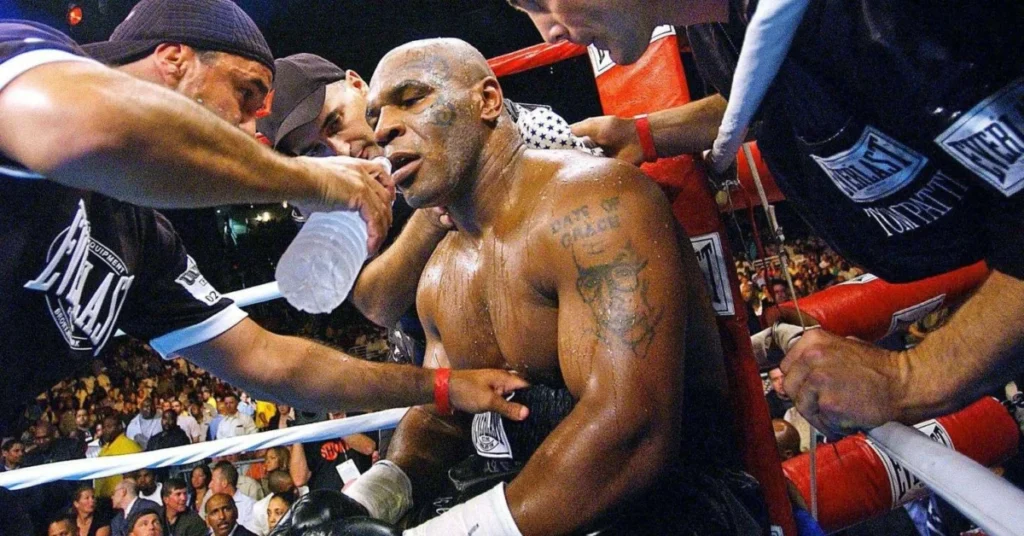
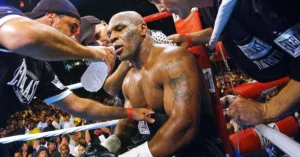
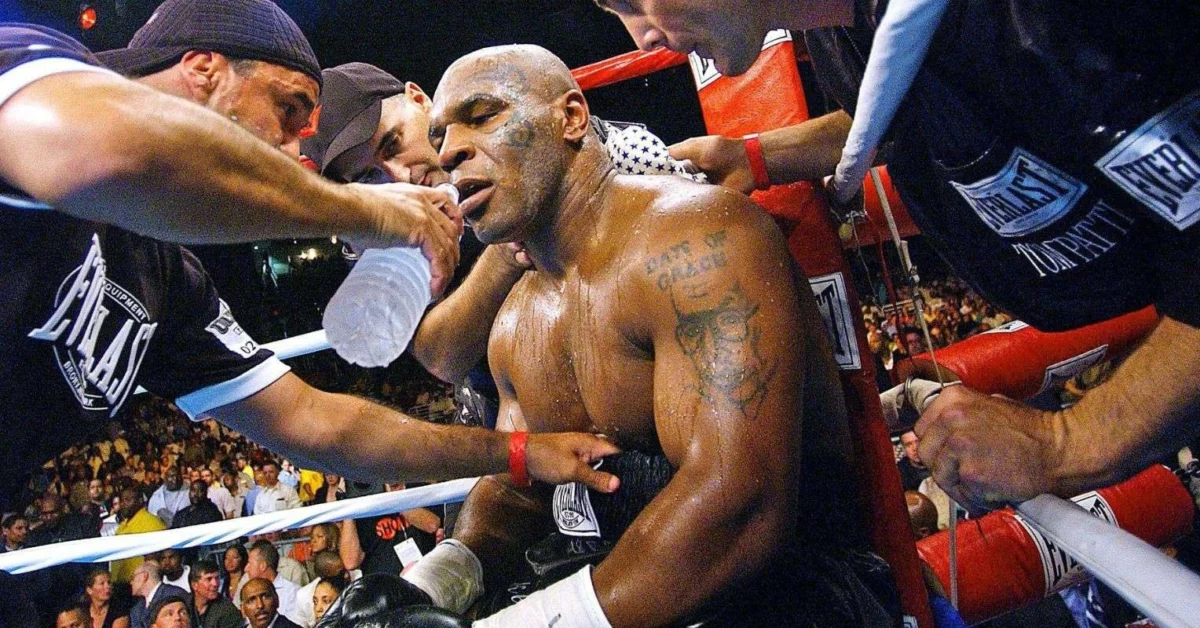
The physical and psychological exhaustion reached its definitive breaking point at the conclusion of the sixth round. When the bell sounded to signal the end of the frame, Tyson returned to his corner, sat down heavily on his stool, and firmly refused to answer the bell for the seventh round. It was a shocking, surreal conclusion to an illustrious career, marking an abrupt surrender that left the arena in stunned silence.
In the immediate aftermath of the fight, standing in the center of the ring under the blinding television lights, Tyson offered brutal, unguarded honesty about where his mind and spirit were. He openly admitted to the media and the stunned crowd that he no longer possessed any desire to continue fighting, acknowledging that he had stepped into the ring solely out of financial necessity to settle mounting debts rather than any lingering competitive hunger.
Reflecting on his internal state, Tyson delivered an emotional and stark post-fight assessment that laid bare the reality of a legendary combatant realizing his journey had reached its natural end.
"I got the ability to stay in shape, but I don’t got the fighting guts I don’t think anymore… I’m just sorry I let everyone down, I don’t have this in my heart anymore," Tyson confessed to reporters and broadcasters in the ring.
Continuing his candid evaluation, the former champion explained the fundamental shift in his perspective regarding the sport, his family, and his own identity as a fighter.
"I’m just fighting to take care of my bills basically, I don’t have the stomach for this anymore, I’m more conscious of my children and those guys, I’m looking at my opponents, I just don’t have that ferocity, I’m not an animal anymore."