
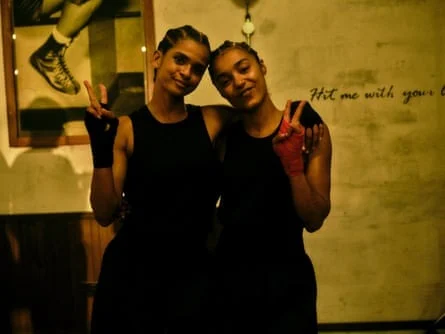
Wearing a frothy dress anchored by a massive skirt of cascading black feathers, boxer Ramla Ali swept into the green room of a West End cinema, making a dramatic entrance following the premiere of a new feature film detailing her life. The cinematic showcase, titled In the Shadows, drew an extraordinarily high-profile crowd, with Ali’s phone lighting up with messages from audience members including adventurer Bear Grylls and Nobel laureate Malala Yousafzai. Yet, amidst the star-studded attention, the person whose opinion weighed heaviest on the athlete was sitting quietly in the cinema: her mother, who was viewing the project for the fourth time. Asked how her mother felt about the movie, Ali softly noted that she loves it.
Directed by Anthony Wonke and starring Top Boy actor Jasmine Jobson, In the Shadows chronicles Ali’s extraordinary personal journey culminating in her historic appearance at the 2021 Olympic Games in Tokyo. It is a story rooted in profound hardship, survival, and relentless ambition. Born in Somalia, Ali was merely a baby when her family experienced unimaginable tragedy: her older brother, Abdulkadir, was killed in an explosion while playing outside. In the wake of his death, the family fled the war-torn country, undertaking a perilous voyage by boat to Kenya before eventually securing sanctuary as refugees in the United Kingdom.
Settling in East London, Ali faced a different set of challenges growing up. After experiencing severe bullying at school regarding her weight, she decided to sign up for a boxercise class at a local gym. What began as a means of self-defense and physical fitness soon transformed into a serious athletic pursuit. However, when her training intensified, Ali was forced to keep her passion completely hidden from her family. As a young Muslim woman, taking up the sport was seen as culturally unacceptable. Beyond societal expectations, Ali understood the deep emotional trauma her mother carried; having moved heaven and earth to shield her children from violent conflict in Somalia, seeing her daughter willingly step into harm’s way in a boxing ring would have caused her immense distress. Years later, that dynamic has transformed dramatically, with her mother now being the very first person Ali speaks to on the phone following any competitive bout.
The concept of converting Ali’s life into a feature film first emerged eight years ago. Sitting alongside Ali, her husband Richard Moore—who previously served as her boxing coach and holds an executive producer credit on the film—recalled that the decision to pitch the story back in 2018 was largely driven by immediate financial necessity. At the time, the couple was down to their last hundred pounds and survived through the generous hospitality of close friends who offered them shelter. Among those saviours were actor Idris Elba and his wife, Sabrina, who housed the couple in one of their properties. The stay ended up lasting much longer than anticipated when Ali and Moore contracted COVID-19 and were forced to isolate there for an extended period.

Despite the necessity of the project, Ali admitted to feeling significant hesitation about bringing her story to the screen. She acknowledged the immense vulnerability required to sit down with a screenwriter and reveal deeply personal details about her life that she had never previously shared publicly. Furthermore, the prospect of revisiting the family’s past raised difficult ethical questions about shared trauma. Ali recalled questioning how the process would impact her mother, recognizing that while the narrative centered on her own life, it was inextricably tied to her mother’s lived reality. Initially, her family expressed little enthusiasm for the film. However, in an unexpected turn, it was her mother who became the project’s earliest champion within the family circle. Her mother also insisted on maintaining historical accuracy regarding the narrative’s central tragedy, adamantly demanding that the scene depicting Abdulkadir’s death be retained in the final script. Moore noted that for her mother, ensuring the tragedy was depicted served as a powerful way of honoring his memory and giving his untimely death a broader significance.
Taking a quiet pause, Ali reflected on how that tragic loss reshaped the trajectory of her entire existence. She emphasized that Abdulkadir’s death created a profound ripple effect across her family’s timeline. Had he not been killed, the family would never have departed Somalia, meaning she would never have relocated to the United Kingdom, discovered boxing, or met her husband.
While the resulting film tackles complex migratory themes, Ali clarified that In the Shadows was not crafted as a formal political statement on immigration. Instead, she views it as a vital humanization of the migrant narrative, offering a necessary counterweight to hostile political rhetoric surrounding boat arrivals and refugee integration in Britain. Ali emphasized that immigration has frequently been weaponized for political gain to foster domestic division, noting that inspiring migrant stories rarely receive mainstream media coverage because positive narratives do not drive newspaper sales in the same manner. She expressed her belief that these positive experiences are far more representative of the millions of individuals who arrive in new countries to build meaningful lives, families, and professional careers. For Ali, if audience members leave the theater viewing refugees as individual human beings rather than media headlines, the film will have succeeded in its core objective.
Ali’s own life serves as a clear testament to that potential. In 2015, she made history as the first Muslim woman to claim an English amateur boxing title. By 2021, she achieved another milestone as the first athlete to represent Somalia in boxing at the Olympic Games. Beyond the ring, Ali has built an expansive public profile, gracing the cover of British Vogue when the publication was guest-edited by the Duchess of Sussex. She has also committed herself to philanthropy, establishing the Sisters Club in 2018—a charitable initiative offering free boxing training to vulnerable women—and serving as an ambassador for UNICEF.
Her commitment to In the Shadows extended far beyond merely licensing her life rights. Ali actively worked behind the scenes throughout the entire production, thoroughly reviewing every draft of the screenplay, remaining present on set every single day of shooting, and performing as a body double during the intricate boxing choreography. She emphasized that unlike executive producers who simply attach their names to a title, she put in rigorous labor to earn her credit.
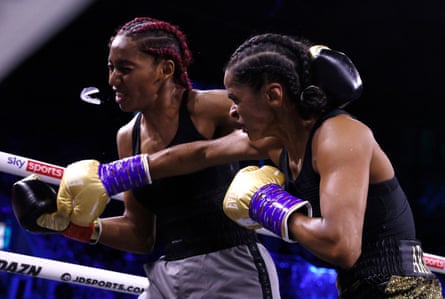
Looking ahead, Ali has begun contemplating her transition out of competitive combat sports. Recognizing that an athletic career is inherently time-limited, she and Moore have already written and directed a comedy feature titled Not Like Us, while Ali has also begun exploring acting. Drawing parallels between the two disciplines, Ali noted that the level of dedication required in filmmaking directly mirrors the preparation needed for a fight, as the hard work invested behind the scenes inevitably manifests on screen. Moving forward, she expressed a strong desire to focus her creative energy on developing cinematic projects that illuminate the Black British experience, pointing out that while American media frequently produces content focused on Black stories, similar representation in British cinema remains an area ripe for growth.
The dedication required to bring Ali’s story to life on screen was equally matched by lead actor Jasmine Jobson, who stepped into the starring role after actor Letitia Wright was forced to depart the project. Meeting at the BFI Southbank, Jobson arrived accompanied by her professional team, stepping effortlessly across the room in Louboutin heels.
Jobson, who remains in peak physical condition, clarified that she did not maintain a regular boxing regimen following the conclusion of filming, focusing instead on physical therapy for a long-standing shoulder injury sustained years earlier while studying to become a personal trainer at college.
Despite the physical demands of the role, Jobson adapted quickly to the athletic requirements. Drawing on her childhood background in karate and kickboxing, she plunged into intense physical preparation, having been given just two weeks to transition into an elite boxer. Her training regimen consisted of grueling eight-hour daily sessions. While Jobson developed a deep appreciation for the sport during the process, she lightheartedly noted her strict boundary regarding contact, joking that her face is her primary asset and must remain protected.
To prepare for the performance, Jobson met with Ali over coffee, where the two quickly established a strong personal connection. Jobson expressed deep admiration for Ali’s resilience, noting how she overcame profound adversity to achieve international prominence and challenge societal perceptions. For Jobson, Ali’s life demonstrates that individuals can achieve exceptional success regardless of their origins or the perceived obstacles in their path, provided they possess genuine passion and talent.
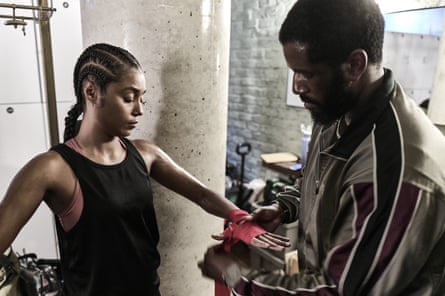
Jobson was entirely unfazed by the pressure of portraying a living, high-profile figure, explaining that her approach to acting always involves infusing elements of her own lived experience into her characters. Like Ali, Jobson’s journey to success was shaped by significant personal hardship. During her secondary school years, social services became involved with her family, leading Jobson to leave her mother’s household to reside with her grandmother. At age 14, Jobson took the difficult personal step of placing herself into foster care, recognizing the need to distance herself from negative environmental influences and regain control of her future.
Her path shifted dramatically after a family friend encouraged her to audition for The Big House, a North London theatre organization dedicated to supporting care leavers. It was through her work with the company that Jobson secured professional talent representation. Demonstrating a level of work ethic that mirrored Ali’s own, Jobson dedicated herself fully to the role in In the Shadows, including learning her dialogue in Somali. Recalling one of her lines, Jobson translated the phrase as an expression of wanting to make one’s family proud—a sentiment she identified as the fundamental driving force behind her own career and life choices.
Reflecting on the shared bond between herself and the woman she plays on screen, Jobson noted that while their specific life paths differed, both she and Ali share a common narrative arc defined by early struggle, unyielding ambition, and the relentless drive to overcome the odds.