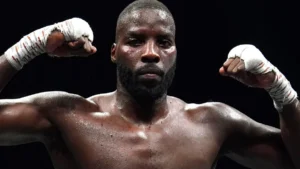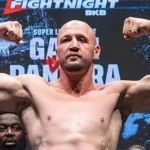
In this edition of the boxing mailbag, we take a close look at the emerging rivalries and tactical dynamics in the super welterweight and middleweight divisions, examine the operational friction surrounding Shakur Stevenson’s split from Zuffa Boxing, address the future of heavyweight fighter Fabio Wardley following his recent setback, and analyze why major streaming platforms are reshaping boxing distribution.
Q: Any early thoughts on a potential fight between Jaron "Boots" Ennis and Sebastian Fundora? How do you see the 154 and 160-pound landscape taking shape between Fundora, Boots, and Vergil Ortiz Jr., and who stands as the king of those weight classes?
A potential matchup between Jaron "Boots" Ennis and Sebastian Fundora stands out as one of the most compelling stylistic clashes that could be made in combat sports today. Ennis possesses supreme technical skill and fluid offensive talent, though he remains human inside the ring. He absorbs more clean shots than defensive purists might prefer, but that slight defensive vulnerability is precisely what introduces genuine drama whenever he shares the ring with high-caliber opposition.
Fundora, on the other hand, comes with his own set of structural flaws, yet his physical dimensions and fighting style present a uniquely difficult puzzle for anyone in the 154 or 160-pound divisions. As Fundora has refined his skill set, that puzzle has only become more complex to solve. A bout between Ennis and Fundora promises high-level action and sustained tension from the opening bell. Should the contract ever be finalized, the decisive factor could very well come down to attitude and instinct: Ennis possesses a slightly meaner, more ruthless edge in heated exchanges.
Regarding Vergil Ortiz Jr., his standing in the immediate title conversation at super welterweight appears to be sidelined, likely extending through the end of 2026. A proposed matchup against veteran Keith Thurman at 160 pounds fails to generate significant momentum or move the needle for the division at large. Ortiz remains an exceptionally gifted fighter, but the recurring delays and stalled periods throughout his career raise legitimate concerns. The primary worry is that fight fans may have been deprived of seeing Ortiz at his absolute physical and technical apex in the high-stakes matchups that would have best defined his capabilities.
Q: With news reporting that Shakur Stevenson has been released by Zuffa Boxing, which party emerges from the situation looking worse? Did Stevenson hinder negotiations with demands, or does this highlight Zuffa’s structural limitations in dealing with established boxing promoters?
The narrative surrounding Shakur Stevenson’s departure from Zuffa Boxing reflects poorly on everyone involved. Neither side comes away from this outcome looking particularly favorable. From Stevenson’s perspective, a cursory look at the promotional roster should have made it clear early on that the top-tier opponents he sought were simply not available within that ecosystem. At the same time, Stevenson did little to help his own cause by publicly calling out fighters in the 147-pound welterweight division while simultaneously insisting on negotiating catchweight limits and strict rehydration clauses rather than committing to moving up in weight full-time.
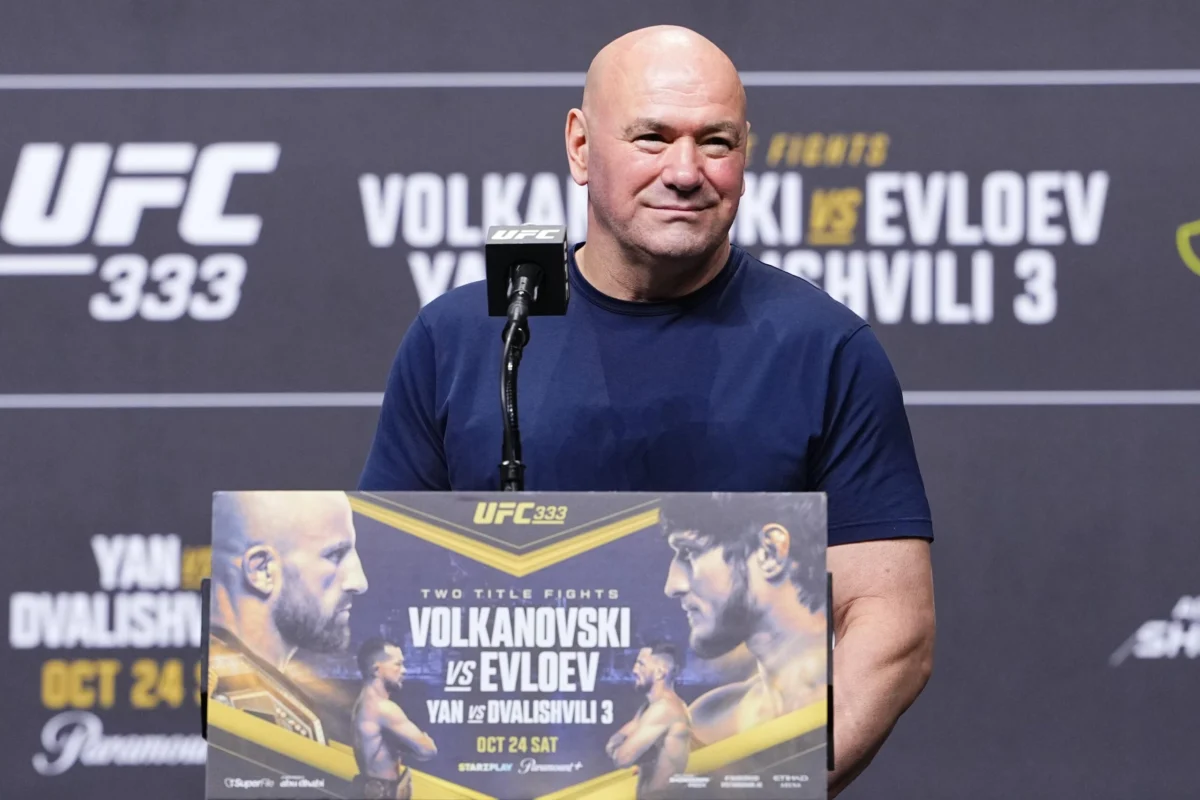
Conversely, Zuffa Boxing and Dana White bear significant responsibility for the breakdown. White has repeatedly assured the public that Zuffa would seamlessly secure the sport’s biggest bouts, promising that all top fighters would eventually line up under their banner. Yet, that rhetoric mirrors previous unfulfilled claims, such as White repeatedly insisting he was co-promoting a heavyweight blockbuster between Tyson Fury and Anthony Joshua—a fight that he ultimately was not involved in promoting.
The reality of the situation is that Dana White is discovering that building a boxing promotion is far more complicated and resistant to outside disruption than he initially anticipated. The challenges he is encountering were entirely predictable. "Zuffa Boxing" simply does not hold the intrinsic brand allure or leverage among professional boxers that the UFC brand commands within mixed martial arts. Convincing elite boxing talent to sign contracts has proven far more difficult than expected.
Navigating the boxing landscape requires competing against deeply entrenched, veteran promoters who operate as established sharks in a complex industry. While Zuffa could theoretically force its way into dominance through pure financial capitalization and brute force, doing so will take considerably longer than initially advertised. Furthermore, Zuffa’s substantial expenditure on Conor Benn yielded minimal tangible returns, leaving current IBF cruiserweight champion Jai Opetaia as one of their few landmark competitive assets. White is discovering that traditional promoters retain significant defensive teeth, forcing him to fight off the back foot in a sport where he lacks operational control.
Furthermore, the persistent assumption that MMA fan bases will automatically transition into boxing audiences overlooks fundamental market realities. The audiences for the two sports have historically maintained distinct identities, and the actual fan crossover between boxing and mixed martial arts is far less substantial than industry executives frequently claim.
Q: Following his recent defeat, what should heavyweight Fabio Wardley do next? Should he target opponents like Johnny Fisher, Guido Vianello, or Otto Wallin, or are calls for his retirement premature for a 31-year-old fighter?
Calling for a professional athlete to retire at 31 years old is generally a premature reaction driven more by public perception than athletic reality. Sports fans often judge a fighter’s career trajectory based on immediate memory rather than a balanced assessment of their long-term potential.
However, Wardley’s situation requires a nuanced analysis. Most elite combat sports athletes devote their entire lives to perfecting their craft from early childhood. Achieving national or international prominence in professional boxing typically demands decades of foundational development. Wardley represents a rare exception: he picked up the sport relatively late in life without an extensive amateur background.
When a fighter enters the sport late, their competitive prime is often compressed. They frequently experience a sharp, sudden decline once they reach the upper echelon of the sport, as the absence of early-life fundamentals begins to manifest against elite competition.
Wardley deserves immense credit for his achievements. He has conducted himself with commendable class following defeat and has progressed much further in the heavyweight ranks than observers initially anticipated. Ultimately, any decision regarding his career remains his personal choice. While a second run at a world title cannot be ruled out, the physical hazards of elite heavyweight boxing are severe. Unlike many lifelong boxers, Wardley possesses viable options outside the ring, which makes weighing the risks and rewards of continuing his career a crucial consideration moving forward.
Q: If you had access to a time machine, which iconic historical fight would you choose to attend live in person?
Selecting just one event from boxing history is a difficult task given the sport’s rich library of historic atmospheres. Major events like Floyd Mayweather vs. Ricky Hatton and Kostya Tszyu vs. Ricky Hatton stand out immediately for their legendary crowd energy. Other classic battles, such as Manny Pacquiao vs. Juan Manuel Marquez IV, Marvelous Marvin Hagler vs. Thomas Hearns, Hagler vs. Sugar Ray Leonard, and the initial clash between Sonny Liston and Muhammad Ali, represent pinnacle moments in fight history. Even Ali’s rematch against Liston in Lewiston, Maine—a surreal event staged before a sparse crowd of just 2,400 spectators—holds a unique historical appeal.
If forced to pick a single fight, the choice would be the first heavyweight championship battle between Evander Holyfield and Riddick Bowe in 1992. That fight served as a personal milestone, marking the first heavyweight championship bout that felt fully impactful and memorable during childhood. While figures like Mike Tyson were massive global celebrities, the 1992 Holyfield-Bowe contest resonated on a deeper athletic level. Combined with the relentless, hall-of-fame action inside the ring that night, attending that event live stands as the ultimate historical choice.
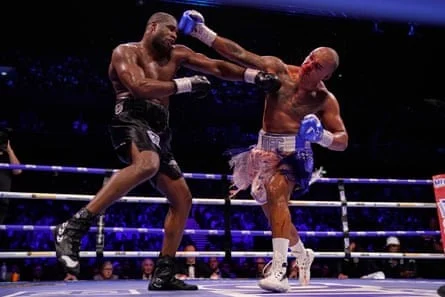
Q: In a purely hypothetical scenario, how would current heavyweight contender Daniel Dubois fare against 20 middle-aged fathers at a backyard barbecue?
The outcome of this hypothetical matchup depends entirely on the operational rules of the engagement. If the opponents approach individually in a sequential fashion—resembling classic video game wave mechanics—Dubois would dismantle all 20 participants with relative ease.
However, if all 20 participants attack simultaneously in an unstructured brawl, physical numbers and leverage would favor the group. That said, the psychological impact of Dubois landing a single, devastating knockout on the first participant could easily prompt the remaining 19 to reconsider their participation entirely.
Q: Why have boxing events broadcast on streaming platforms like Netflix generated broader mainstream interest compared to traditional cable broadcasts on networks like FOX, ESPN, or TNT?
The primary advantage held by platforms like Netflix comes down to market penetration and low barriers to entry. Unlike traditional cable packages, premium sports add-ons, or specialized digital streaming subscriptions, Netflix maintains an established footprint across millions of households globally. For the overwhelming majority of potential viewers, accessing an event requires no additional technical setup or paywall navigation beyond their existing household account.
Beyond accessibility, success is heavily dictated by event selection. Netflix has deliberately focused its sports broadcasting strategy on events with built-in, crossover pop-culture appeal—such as high-profile showcase bouts featuring figures like Jake Paul and Mike Tyson, or established global attractions like Canelo Alvarez and heavyweight title clashes.
If a platform were to broadcast a niche, purist matchup such as Sebastian Fundora vs. Ermal Hadribeaj, digital accessibility might encourage casual browsing for a few rounds, but it would not replicate the massive viewership numbers generated by globally recognized attractions. The combination of friction-free accessibility and targeted event selection remains the driving force behind their mainstream visibility.