

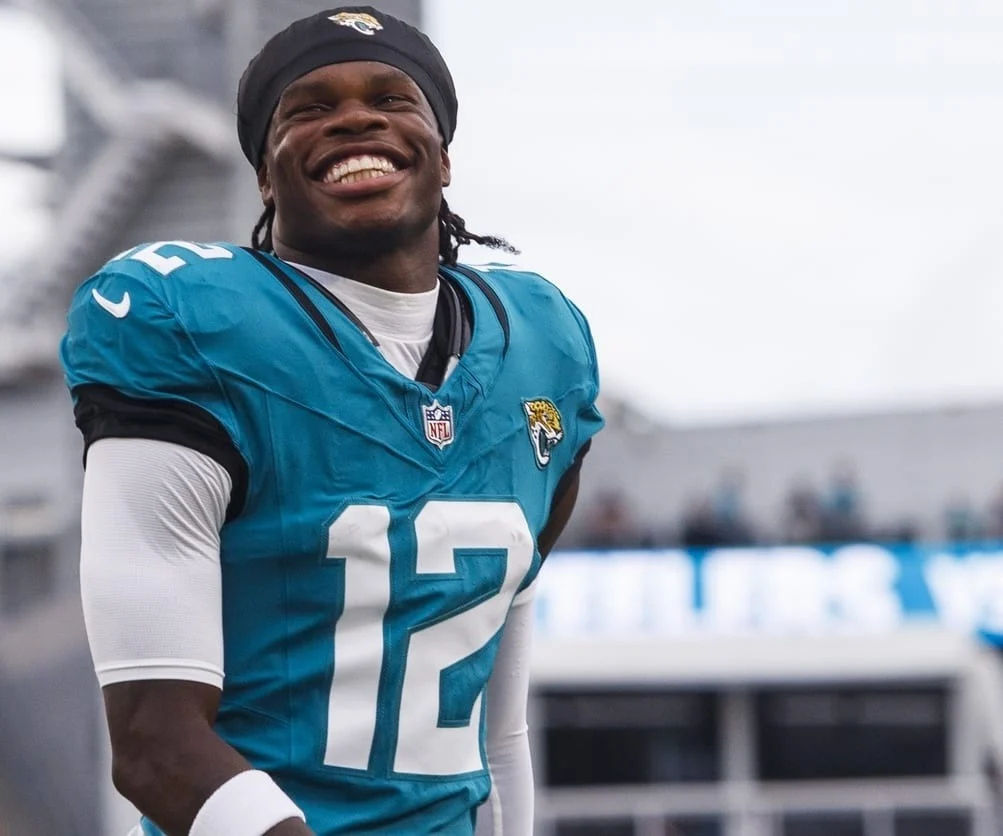
As the professional football calendar marches toward another grueling season, wide receiver A.J. Brown remains firmly established as one of the premier playmakers in the National Football League. Since arriving in Philadelphia via a blockbuster draft-night trade from the Tennessee Titans that yielded a lucrative four-year, $100 million contract extension, the powerful wideout has consistently delivered at an elite level. Averaging 83 to 88 receiving yards and between 16.7 and 17.9 PPR fantasy points per game across each of his three campaigns with the Eagles, Brown has proven himself to be a low-end WR1 who commands the utmost respect from every defensive coordinator he faces.
While many other offenses around the league might funnel a higher volume of targets toward a receiver of his caliber, the system in Philadelphia has proven remarkably friendly for big plays and high efficiency. Year after year, Brown has averaged at least 9.2 yards per target while finding the end zone no fewer than seven times per season. Alongside fellow wide receiver DeVonta Smith, the duo reliably accounts for more than half of the team’s total target share. Behind them, tight end Dallas Goedert operates as a distant third option in the passing game, leaving the rest of the roster to fight for whatever scraps remain.
Despite the heavy concentration of opportunities at the top, there has been no sign of a reliable third pass-catcher emerging within head coach Nick Sirianni’s offensive scheme. Nor has there been any indication that Brown is slowing down, save for the occasional knee or hamstring ailment. Standing at an imposing 6-foot-1 and weighing 225 pounds, Brown ranks among the most physically imposing wide receivers in the entire league. Crucially, that immense size and strength have come without any sacrifice to his speed, having clocked a 4.49-second 40-yard dash at the 2019 NFL Combine, paired with exceptional on-field agility.
Approaching his 28th summer, Brown continues to excel at beating opposing cornerbacks downfield or turning short, routine catches into substantial gains after the catch. If there is any minor drawback to his statistical ceiling, it stems from the team’s overall pass volume rather than his individual skill set. That dynamic often positions him as a remarkably safe floor pick during fantasy drafts rather than a pure ceiling chase, making him a stellar target in the second round rather than the late first round where he frequently drafted in previous years.
Philadelphia’s past two seasons have resulted in the two largest receiving yardage totals in franchise history, yet the 2023 campaign ultimately carried a bittersweet undertone. A massive chunk of that production arrived during a blistering start through September and October before the Eagles hit a rough patch down the stretch. During a blistering stretch from Weeks 3 through 8, Brown rattled off six consecutive games with at least 127 receiving yards. However, the production cooled considerably over the remainder of the year, netting just two touchdowns and a single 100-yard performance the rest of the way, despite averaging 9.4 targets per game from Weeks 9 through 17.
The challenging finish culminated in Brown missing Philadelphia’s postseason matchup against the Tampa Bay Buccaneers due to a knee injury—marking his first missed game since 2021. Fortunately, the ailment was not expected to disrupt his offseason preparations. The veteran receiver actively addressed swirling media speculation during the winter, calling into a Philadelphia radio station in February to firmly shut down outside trade rumors before inking a three-year contract extension in April.
As he enters his age-27 season, Brown will be operating under newly hired offensive coordinator Kellen Moore. Following a difficult 2023 season with an injury-riddled Los Angeles Chargers squad, Moore is expected to handle play-calling duties in Philadelphia, much like former coordinator Brian Johnson did previously. Moore will likely look to keep DeVonta Smith more heavily involved, especially after the target gap between Brown and Smith widened significantly between 2022 and 2023. Any adjustment in distribution, however, is more likely to come at the expense of secondary options rather than cutting into Brown’s established slice of the pie.
The combination of Brown’s prime age, elite natural talent, and established rapport with quarterback Jalen Hurts solidifies his standing as one of the safest investments for managers selecting in the late first or early second rounds of fantasy drafts. This sustained excellence marks a continuation of the trajectory that began once he escaped the run-heavy confines of Tennessee.
During his initial three seasons in Nashville, the dominant physical skills that would later define his career were somewhat constrained by a conservative offensive philosophy. Once he transitioned to a more balanced, spread-out attack in Philadelphia, those traits translated directly into dominant statistical output. Not only did Brown rack up a slew of career highs, but he shattered his previous personal bests by massive margins, including 39 more targets for a total of 145, 18 more catches for 88, and an astounding 421 additional receiving yards to finish with 1,496.
That breakout campaign was bolstered not just by Brown and Smith, but also by Hurts and former running back Miles Sanders, all operating behind an offensive line widely regarded as the finest in professional football. While Sanders and former offensive coordinator Shane Steichen have since moved on—replaced by Rashaad Penny and internal promotion Brian Johnson, respectively—the Eagles managed to avoid the massive roster turnover that frequently plagues Super Bowl participants.
The offensive core of Brown, Smith, and Goedert has retained ample time and continuity to run their routes efficiently, supported by an elite offensive line and a highly dynamic, mobile quarterback. While the inherent run-heavy tendencies of the system mean Brown may not match the raw target volume accumulated by other elite receivers across the league, his ability to generate massive plays and frequent trips to the red zone ensures he remains a perennial threat for top-tier production.
Even before arriving in Philadelphia, Brown had established himself as a player who commanded total respect from opposing defenses. Selected in the second round of the 2019 NFL Draft out of Ole Miss, where he posted back-to-back 1,200-yard seasons as the primary weapon ahead of future star DK Metcalf, Brown wasted no time making an impact. He topped 1,000 receiving yards as a rookie despite limited playing time early in the year, quickly cementing his reputation as one of the most dangerous yards-after-catch threats in the league.
Though his physical measurables do not quite match Metcalf’s, Brown combines the size and raw power of a workhorse running back with the fluidity, body control, and hand-eye coordination of an elite wide receiver. Those physical gifts were tested during his final year with the Titans, where he missed four full games, nearly all of a fifth, and played through visible limitations in several others. Despite finishing just shy of the 1,000-yard mark that season, he still delivered multiple explosive performances, including three separate games with at least 133 yards and a touchdown, plus another stellar outing in the playoffs.
The transition to Philadelphia brought a welcome change of scenery following unsuccessful contract extension talks in Tennessee, leading to the draft-night trade that sent him to the Eagles and secured his long-term future. Joining forces with Smith and Goedert within an evolving offensive scheme, Brown quickly demonstrated that his rookie flashes were merely the prelude to a sustained career at the pinnacle of the sport.
Looking back at his earliest days in the league, Brown was arguably the most efficient per-play wide receiver in the NFL as a 22-year-old rookie. Despite drawing just 84 targets split between Marcus Mariota and Ryan Tannehill, he led all first-year pass-catchers in receiving yards and tied for the rookie lead with eight touchdown receptions. His 12.5 yards per target ranked first among all 52 wide receivers who saw at least 80 targets that season, and his eight receptions of 40 yards or more tied for the league lead.
Defensive backs quickly learned that tackling Brown in the open field was a daunting assignment. His wide, strong frame and explosive acceleration made initial contact a mere suggestion, while his reliable hands were highlighted by a mere two dropped passes throughout his entire rookie campaign. While the conservative nature of Tennessee’s offense under head coach Mike Vrabel and coordinator Arthur Smith placed a natural ceiling on his raw target volume—ranking near the bottom of the league in total pass attempts—Brown maximized every single opportunity that came his way.
As he prepares for the upcoming challenges of another grueling NFL season, A.J. Brown stands as the undisputed anchor of the Philadelphia passing attack. Backed by a lucrative long-term commitment, an elite supporting cast, and a proven history of overcoming physical and tactical limitations, the star wide receiver remains poised to dictate terms on the field and reward managers across the fantasy landscape for years to come.