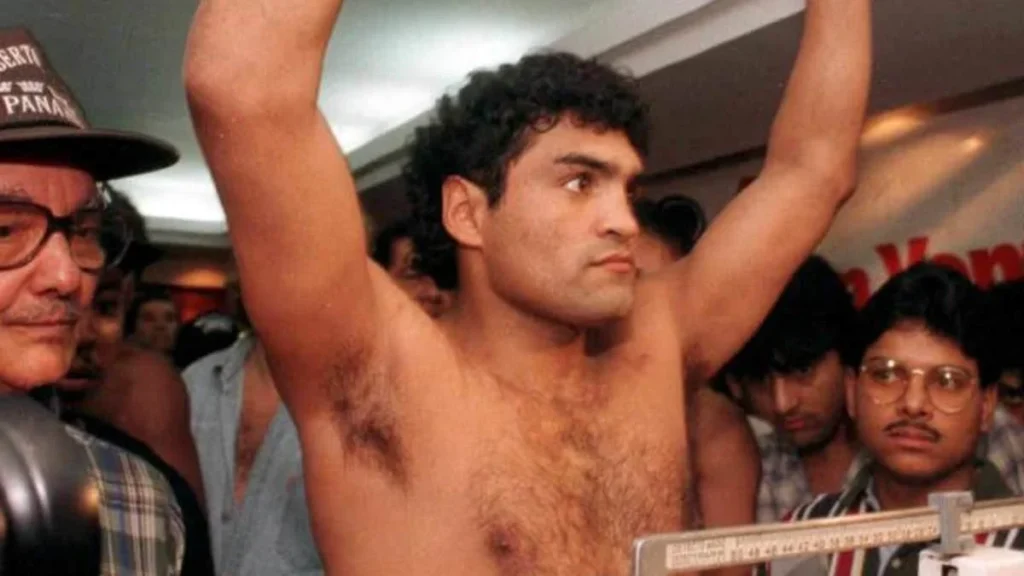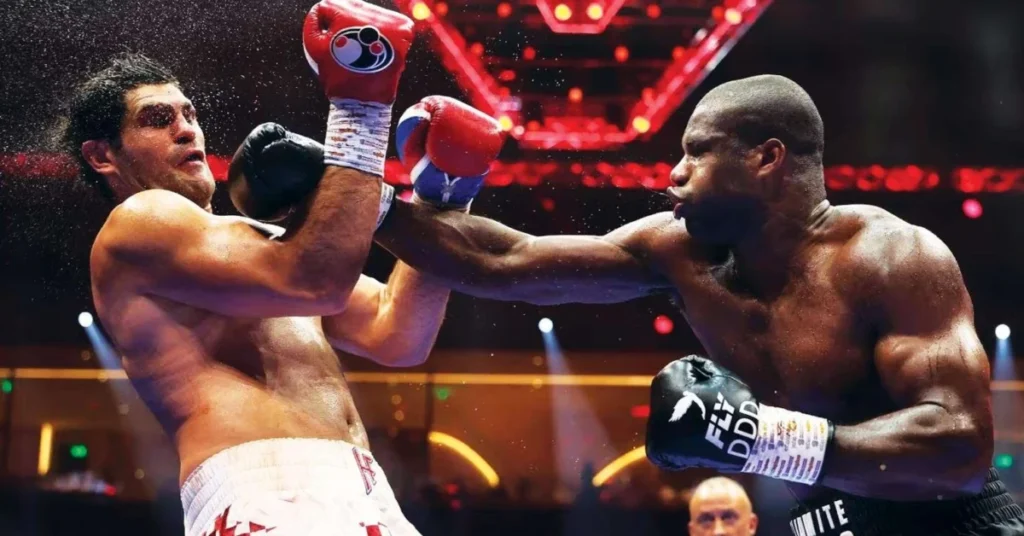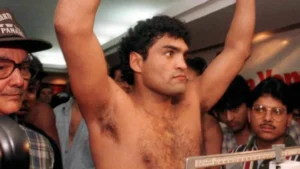
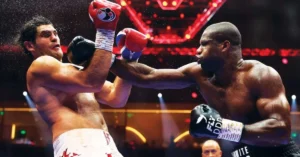

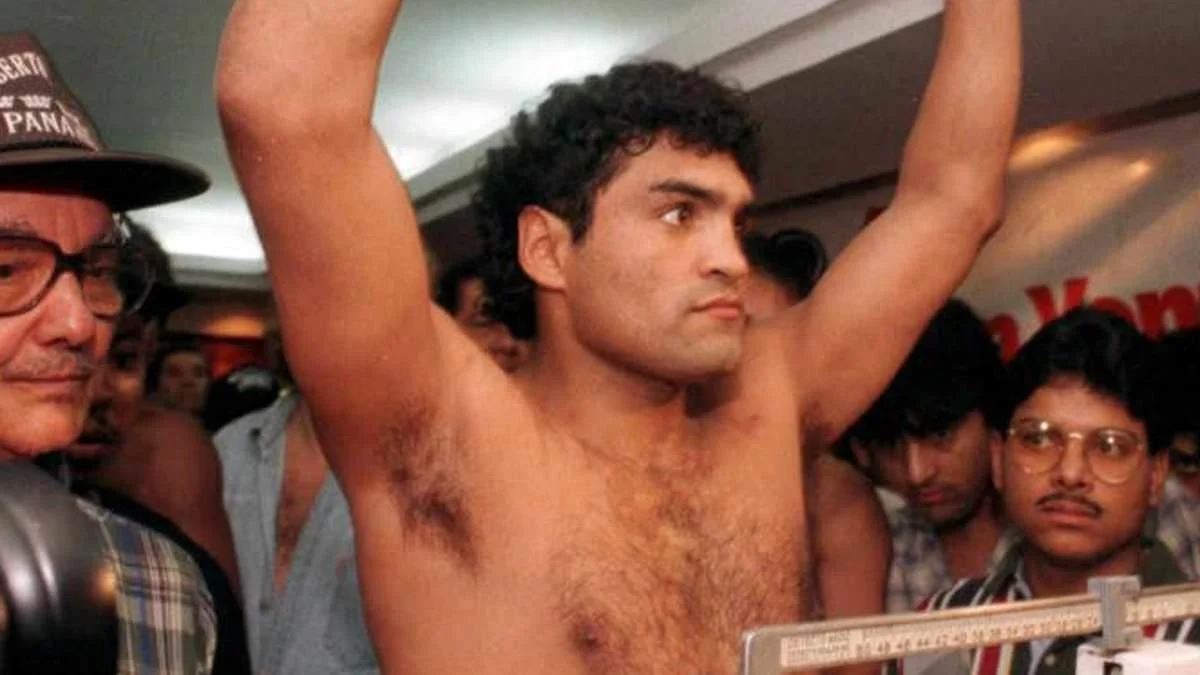
The international boxing community is in mourning following the sudden death of former middleweight world champion Jorge ‘Locomotora’ Castro, who passed away on Wednesday at the age of 59. The Argentine sports icon, widely revered as one of the most prolific and entertaining fighters of his era, suffered a fatal heart attack during a routine family afternoon at a local bingo hall. Over a celebrated 20-year professional career that began in the late 1980s, Castro compiled an astonishing record of 130 victories across 144 bouts, capturing world titles and securing an indelible place in boxing history with his ferocious inside-fighting style and extraordinary resilience.
The tragic news of his passing was confirmed by his daughter, Quimely Castro, who was by her father’s side during his final moments. In an emotional interview with Argentine media outlets, she provided a devastating, first-hand account of the rapid medical emergency that unfolded, emphasizing that her father’s passing was entirely due to sudden natural causes despite the frantic efforts of bystanders and medical responders to revive him.
According to Quimely, the afternoon had started out as an ordinary family gathering. Castro was spending quality time with her and her mother, an outing that had long been part of their established routine. Although Castro and his former partner had not been a couple for 15 years, the two had preserved a deep, supportive friendship that remained central to their family dynamic. The trio had gathered together at the venue to enjoy each other’s company, with no initial warning of the tragedy that was about to occur.
Quimely explained that her father’s health deteriorated with shocking speed over the span of roughly a quarter of an hour. The former world champion had excused himself briefly to use the restroom, but upon his return, he indicated that he was experiencing physical distress in his chest. Initially trying to make sense of the complaint, his daughter gently teased him about his heavy smoking habit, suggesting that his lifestyle choices might be the cause of his discomfort. However, Castro quickly clarified the severity of what he was experiencing, telling her directly that the pain was intense and unbearable.
Recognizing the gravity of the situation, the family immediately alerted staff and security authorities at the venue. Staff members quickly moved the distressed boxer into a private, separate room away from the public floor and initiated emergency cardiopulmonary resuscitation (CPR) in a desperate attempt to stabilize him. Despite their immediate intervention and the swift response of emergency personnel, Castro could not be revived. Quimely noted that from the onset of the symptoms to his passing took only about 15 minutes, leaving the family in profound shock. She confirmed that local authorities, including the Scientific Police, subsequently conducted standard procedures and verified that the former champion’s death had occurred entirely from natural causes brought on by the massive cardiac arrest.
The sudden loss of Castro marks the end of a life defined by fierce courage, relentless grit, and a competitive spirit that captivated boxing enthusiasts across the globe. Known throughout his career by the fitting moniker "Locomotora" (The Locomotive), Castro fought with the unstoppable momentum of a freight train. He rarely took a step backward inside the squared circle, choosing instead to crowd his opponents, cut off the ring, and unleash heavy artillery at close quarters. His aggressive style and granite chin made him a beloved fan favorite, while his extraordinary durability allowed him to maintain one of the busiest fight schedules of the modern boxing era.
Castro officially entered the paid ranks in 1987, embarking on a professional campaign that would ultimately stretch across two full decades. In an era when top-tier fighters were increasingly limiting their appearances to two or three carefully chosen dates per year, Castro operated like a throwback to boxing’s golden age. He fought with remarkable frequency, taking on challengers across Argentina and around the world, steadily building a reputation as one of the most dangerous and avoided punchers in the middleweight and light-middleweight divisions. Of his 130 career victories, 89 came by way of knockout, a testament to his devastating concussive power and his ability to wear down even the most durable adversaries.
His journey to the pinnacle of world boxing was not without adversity. Castro received his first opportunity at a major world championship in December 1991, when he traveled to Paris, France, to challenge American sensation Terry Norris for the WBC light-middleweight crown. Norris, who was in the prime of his Hall of Fame career and widely considered one of the sharpest pound-for-pound boxers on the planet, proved to be an elusive target, defeating Castro by unanimous decision over 12 hard-fought rounds. Rather than allowing the setback to derail his ambitions, Castro used the defeat as motivation to rebuild, returning to the gym and continuing his relentless climb up the rankings.
His perseverance was finally rewarded seven years after his professional debut. In August 1994, Castro squared off against the formidable American southpaw Reggie Johnson in San Miguel de Tucumán, Argentina, with the vacant WBA middleweight championship on the line. In a grueling, tactical, and physically punishing encounter that pushed both men to their limits, Castro earned a split-decision victory over Johnson. The hard-earned triumph fulfilled his lifelong dream of bringing a world championship belt back to Argentina, cementing his standing among the elite champions in his country’s storied pugilistic history.
While winning the world title was a career-defining achievement, it was Castro’s first title defense just a few months later that would forever immortalize him in the annals of combat sports lore. In December 1994, Castro defended his WBA middleweight belt against American contender John David Jackson in Monterrey, Mexico. The bout quickly turned into a one-sided masterclass by Jackson, who utilized his superior hand speed, sharp southpaw jab, and slick defensive movement to thoroughly outbox the Argentine champion. Round after round, Jackson inflicted severe punishment on Castro, opening deep, gruesome cuts above both of his eyes and causing massive swelling that left the champion virtually unable to see.
By the ninth round, Castro was hopelessly behind on all three judges’ scorecards, bleeding profusely, and on the verge of having the fight stopped by the ringside physician due to the severe facial trauma he had sustained. What followed is widely celebrated as one of the most miraculous and dramatic comebacks in boxing history. Backed against the ropes and absorbing a barrage of punches from an advancing Jackson, who was attempting to secure a stoppage, Castro summoned a desperate, perfectly timed left hook from the hip. The punch landed squarely on Jackson’s jaw, instantly dropping the challenger heavily to the canvas. Although Jackson managed to struggle to his feet, Castro pounced with a follow-up flurry, sending Jackson down two more times before the referee intervened to halt the contest. The astonishing turnaround earned widespread honors, with the dramatic encounter being hailed universally as the 1994 Fight of the Year.
Throughout the peak of his career, Castro shared the ring with some of the greatest legends the sport has ever produced. He engaged in memorable clashes with the legendary Panamanian multi-division icon Roberto ‘Manos de Piedra’ Duran, trading leather with one of his childhood heroes in high-profile bouts that generated massive excitement across Latin America. Castro also tested his mettle against pound-for-pound superstar Roy Jones Jr., stepping into the ring against one of the fastest and most gifted athletes in modern boxing history. Win or lose, Castro commanded the respect of every elite opponent he faced, earning a reputation as an unyielding competitor who never backed down from a challenge regardless of the odds.
Outside of the ropes, Castro lived a life that was just as colorful, expansive, and unconventional as his pugilistic career. A larger-than-life figure who retained his down-to-earth charm and charismatic presence long after his retirement, he was married six times throughout his life. He took immense pride in his vast family, which included 15 children and 14 grandchildren. Despite the complexities that often accompany such a large and extended family, Castro remained dedicated to his children and maintained warm, enduring friendships with his former partners, as evidenced by his close bond with Quimely’s mother during the final chapter of his life.
Tributes have begun pouring in from across Argentina and the wider sports world, honoring a man whose fighting heart and working-class authenticity made him a national treasure. Fellow boxers, promoters, and longtime fans have expressed their sorrow at the untimely passing of a fighter who embodied the rawest, purest elements of boxing. With his passing at 59, the sport loses not only a decorated former world champion and a relentless warrior inside the ring, but also an unforgettable personality whose historic triumphs and extraordinary courage will continue to be remembered for generations to come.