

It is late on Sunday afternoon when SportsPro pulls into Lausanne on a train from Geneva, leaving only one destination on the itinerary: the lake. Even as the late-afternoon sun begins to dip below the horizon, the waterfront remains a hub of vibrant activity. As this correspondent enjoys a gentle jog along the path—periodically checking Google Maps to ensure the route is trending loosely toward Saint-Sulpice—locals are still out on paddleboards, returning from tennis courts, and tossing a rugby ball back and forth along the shore.
They certainly do not call this the Olympic Capital for nothing. Nearly 60 international sports organisations and federations are stationed here in Lausanne and throughout the surrounding Canton of Vaud, most notably the International Olympic Committee (IOC).
Leaders from many of those influential bodies assembled at the iconic Olympic Museum from 5th to 7th October for the SportAccord Forum. Rebranded this year from the traditional IF Forum to reflect a broader and more inclusive range of delegates, the milestone 20th edition of the event also welcomed host cities, destinations, and critical service providers. As the exclusive content partner of the event, SportsPro spent three intensive days sitting in on sessions, conducting interviews, and capturing essential industry insights. Following a productive gathering in Switzerland, several critical takeaways have emerged regarding the future trajectory of international sport.
Decentralized Winter Olympics Offers Lessons for the Future
The opening panel of the Forum placed winter sports firmly front and centre, evaluating the landscape in the wake of the most geographically dispersed Olympic Games in history.
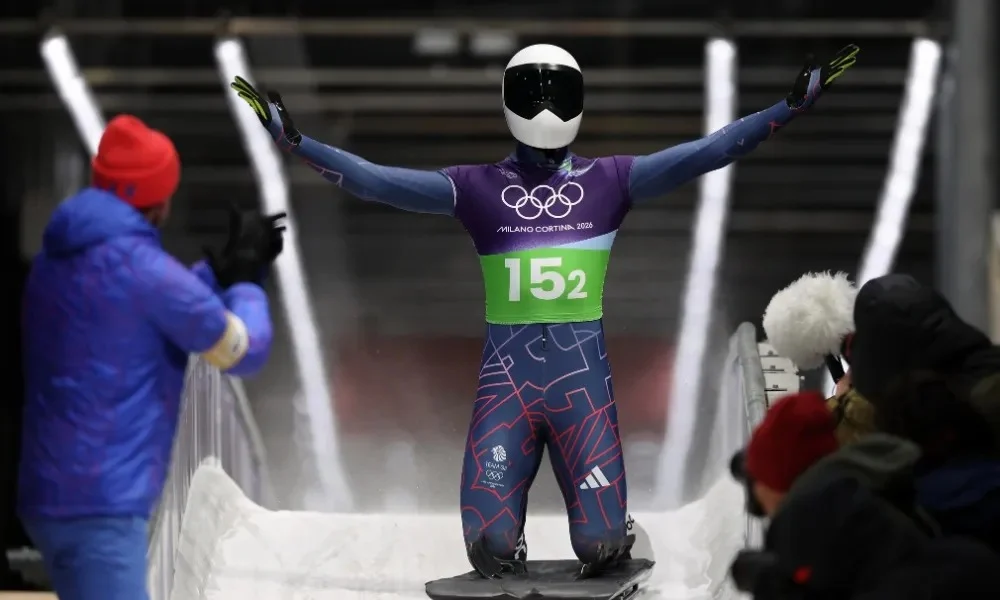
Held in February, the Milano Cortina 2026 Winter Games saw competition spread extensively across existing venues and localized clusters throughout Northern Italy. The decentralized approach was deliberately designed to minimize the massive financial and environmental costs associated with constructing new, permanent infrastructure from scratch. While that strategic choice successfully kept capital expenditures down, it also delivered a radically different operational and cultural experience for athletes, fans, media, and other key stakeholders.
After seeing her sport stationed in the historic mountain hub of Cortina alongside alpine skiing and curling, International Bobsleigh and Skeleton Federation (IBSF) President Heike Größwang looked back on the experiment with a largely positive perspective. However, she was quick to stress the critical importance of ensuring that everyone attending the Games still feels intimately connected to the beating heart of the action. That philosophy extended to encouraging officials to walk rather than drive back from the sliding centre, allowing them to fully immerse themselves in the local atmosphere.
“It didn’t matter if it was 10:30, 11 o’clock at night, we walked through Cortina and there were fans outside,” she reflected during the session. “So we all could feel what makes the Olympics special, which is this feeling of people coming from all over the world.”
Change Afoot for the Olympic Programme
There was not a spare seat in the house as two senior IOC officials—Executive Director of the Olympic Games Christophe Dubi and Sports Director Pierre Ducrey—took to the stage. The pair shed vital light on the organization’s sweeping “Fit for the Future” strategy, leaving international federations eager to understand the practical ramifications for their respective disciplines.
Published in June following the 146th IOC Session, the strategy introduces a revolutionary new methodology to determine the composition of the Olympic programme. This governance overhaul is of paramount interest to international federations, many of which remain heavily dependent on the IOC’s lucrative revenue distributions generated by the Games. Speaking on the opening day of the Forum, IOC President Kirsty Coventry noted that the modernized approach provides a much more precise and evidence-based way to evaluate the programme over time.
Beginning with the Brisbane 2032 Olympic Games, the core programme will be officially confirmed a full seven years out from each event. Under the new framework, individual disciplines rather than entire sports will be rigorously assessed against global appeal, operational costs, financial complexity, and athlete representation. Meanwhile, sports that cycle off the programme will retain a pathway for potential reinstatement in subsequent cycles, supported by accompanying measures designed to soften the financial blow for affected federations.
While some of the finer operational details are still being finalized, Coventry’s previous remarks—noting that Brisbane will feature fewer than the 36 sports scheduled for Los Angeles—reinforced a prevailing sense across the room that profound change is imminent.
AI is the Car, But Data is the Fuel
Prior to the opening of the Forum, the IOC published its Trustworthy AI Framework for the Olympic Movement. The document establishes clear ethical principles, guardrails, and practical tools designed to support responsible innovation across the global sports ecosystem, with a particular focus on safeguarding, data protection, and technological reliability.
That timely release set the tone for three days of discussions in Lausanne, where delegates universally acknowledged that artificial intelligence is no longer an emerging trend that federations can afford to ignore. Consequently, a dedicated technology session offered international federations pragmatic advice on how to approach digital transformation strategically.
While many sports leaders are already embracing AI tools for personal productivity, the pace of organization-wide adoption varies wildly across different federations. Yet a central question dominated the debate: What if an effective AI strategy does not actually start with AI at all?

That provocative argument was championed by Sanjit Atwal, co-founder of the sports data agency Halfspace. Drawing on his extensive background in ecommerce, Atwal delivered a blunt assessment of how the sports industry has historically managed its digital assets.
“If AI is the car, data is the fuel,” Atwal told delegates. “AI doesn’t work without data. There is nothing for it to generate. There is nothing for it to reference against. So AI is not your strategy. It is an output of your strategy towards a defined outcome.”
When asked whether sport has effectively exploited its data reservoirs in the past, Atwal did not mince words, arguing that the industry in general has done “an atrocious job” and currently lags well behind other commercial sectors. He advised that federations will never harvest the true benefits of artificial intelligence unless they first establish a robust, foundational data strategy. Once those building blocks are securely in place, AI can seamlessly assume complex analytical burdens that would otherwise require arduous manual labor.
“Data collection now shouldn’t be a scary thing to any IF, whatever size,” Atwal added. “It’s cheaper than ever to collect data. We have fantastic frameworks on which to do this. Then, what AI is fantastic at is educating you in how you can use that, and how you can start to drive up your organisation.”
Participation is the Prize
SportsPro Chief Executive Nick Meacham opened the second day of the Forum by delivering a series of hard truths, outlining nine distinct challenges and six major opportunities facing the international sports community. He saved what he described as the single greatest opportunity until the very end of his presentation.
Highlighting staggering global figures, Meacham noted that more than 1.3 million people applied for the ballot for the 2027 London Marathon, an event preparing to expand across two days to accommodate 100,000 runners next year. Elsewhere, Gothenburg’s half marathon sold out 48,000 participant places in just 48 hours, while fitness phenomenon Hyrox recorded approximately 1.5 million race entries during its most recent season.
For Meacham, these phenomenal metrics serve as undeniable proof that grassroots sports participation is surging on a global scale.
“People want community,” Meacham emphasized. “People want a goal. They want a reason to come back.”
Everyday participants are increasingly willing to pay out of pocket for meaningful, immersive sporting experiences. Crucially, a significant portion of this explosive growth is happening entirely outside traditional, legacy sporting structures. Citing research from Two Circles which indicates that nearly half of all lifelong sports fans are cemented in their fandom by the age of 14, Meacham offered a vital warning to federations: the people actively participating in sports today represent your core broadcast audience and consumers ten years from now.
The End of Transactional Hosting
The SportAccord Forum concluded with a historic milestone: the very first City Forum. Designed to foster transparent dialogue, the session brought together international federations, event rights-holders, and the municipal destinations that bid to host them.
A powerful, unifying theme echoed throughout the afternoon, establishing that the traditional, purely transactional hosting model of the past belongs to a bygone era. Under the old paradigm, an international federation would package a finished event product and a destination would simply decide whether or not to pay the rights fee. Today, that dynamic has completely shifted.
Modern cities now initiate negotiations by asking fundamental questions about what an event will tangibly deliver for their local communities and who will be demonstrably better off as a result. The release of public funding is increasingly contingent on strict alignment with a destination’s broader socio-political priorities, which can range from urban inclusion and gender equality to long-term sustainability and public health initiatives.
Consequently, the strongest modern hosting partnerships must originate from a shared strategic vision. One panellist suggested that the initial step in any successful bid process should involve defining mutual objectives for success, followed by the collaborative design of the contract, event delivery model, and civic legacy around those goals—rather than leading primarily with financial terms.
As the landmark 20th edition of the Forum drew to its close in the heart of the Olympic Capital, the overarching consensus was clear. Modern sports administration and hosting partnerships must be constructed upon enduring shared goals rather than isolated, transactional arrangements—a structural evolution that promises a healthier, more sustainable future for international sport.