

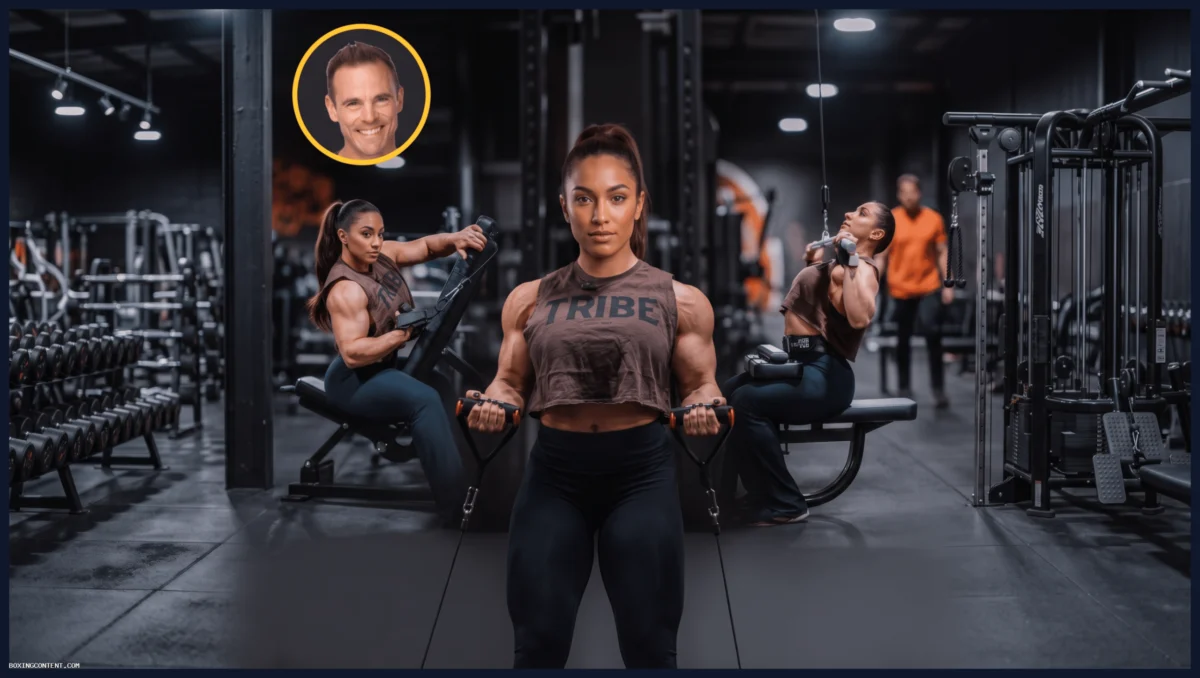
In the ever-evolving world of competitive bodybuilding, the difference between mediocre gains and elite development often comes down to execution, microscopic adjustments, and mechanical discipline. A prominent women’s bodybuilding content creator recently offered a comprehensive, behind-the-scenes look at her offseason training regimen by walking her audience through a complete back and bicep day, exercise by exercise. Rather than simply demonstrating standard movements, the athlete focused heavily on mechanical cues—minor shifts in posture, grip, and leverage designed to fundamentally alter how resistance is felt by the target muscles.
Throughout the session, which featured specialized equipment like lifting straps, weight belts, and ergonomic specialty handles, the creator emphasized the mental and physical connection required to maximize hypertrophy. From her persistent reminder to lift the chest on every single repetition to a quirky visualization technique borrowed from a stage posing routine, the video provided a masterclass in modern bodybuilding biomechanics. For athletes looking to optimize their own pull sessions, examining these specific adjustments reveals how small changes in form can protect overworked joints, eliminate compensatory momentum, and direct maximum tension straight to the lats, rear delts, and biceps.
Straps Protect Your Back’s Workload
One of the most common pitfalls in heavy pulling movements is premature grip failure. When the forearms give out before the lats are fully fatigued, the back fails to receive the mechanical stimulus necessary for optimal growth. To combat this issue, the bodybuilder relies on a straightforward rule for her training: lifting straps are utilized for every single rowing movement throughout the workout.
By taking the grip out of the equation, she ensures that her forearms do not prematurely dictate the success of a heavy set. Maintaining multiple high-intensity sets in a row naturally accelerates forearm fatigue, making external gripping aids essential for keeping the target muscles in charge. This strategic deployment of straps allows her to push deeper into sets without worrying about her fingers slipping, thereby preserving the structural integrity of the back’s workload over the course of a gruelling session.
Lat Pulldown: Build the Base Before Pulling
The execution of the lat pulldown serves as a foundational element of the workout, starting from the lower half of the body. Proper pulling power, according to the athlete, begins well below the waist. She meticulously sets the machine’s thigh pad into a snug position, plants her feet firmly flat on the floor, and actively presses upward into the pad. This counterbalancing action drives her glutes securely into the seat, ensuring that her torso remains completely stable and isolated during the movement. The primary objective is to prevent the heavy resistance from lifting her out of the seat between repetitions, a common form breakdown that introduces unwanted momentum.
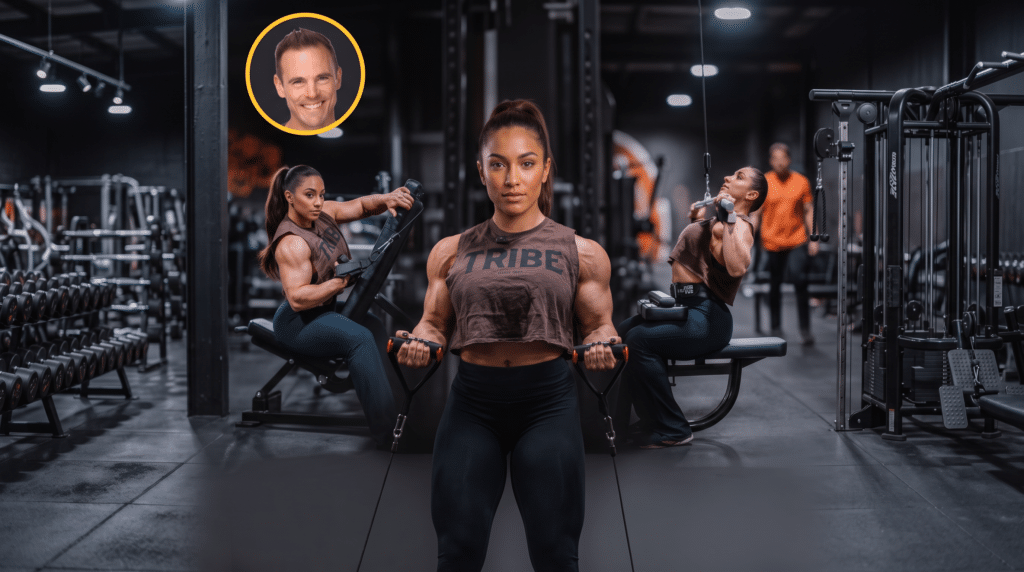
Once the lower body is locked into position, attention shifts to the upper body mechanics at the top of the movement. With her arms fully extended overhead, she incorporates a subtle internal rotation of the shoulders—a movement pattern mirroring her pull-up technique—to achieve a deep, maximum stretch in the latissimus dorsi. To initiate the pull, this shoulder rotation is reversed, followed immediately by a deliberate retraction of the scapulas while visualizing her rear delts pointing downward toward the floor.
Rather than allowing the shoulders to roll forward and the chest to collapse—a frequent mistake observed in commercial gyms—she overemphasizes a lifted chest throughout the concentric phase. Her mental cue is to actively bring her chest up to meet the bar, driving her elbows behind her body and guiding the handle straight toward her sternum. To assist with spinal alignment and core bracing, she also integrates a weight belt, which serves as a tactile reminder to maintain a controlled, supportive arch without loosening her form.
Cable Row Variations With Torque D-Handles
Transitioning to horizontal pulls, the athlete introduced a piece of equipment she described as an absolute game changer: specialized D-handles manufactured by Torque. These ergonomic handles distribute the resistance evenly between the wrist and the hand, functioning similarly to traditional wrist straps while maintaining an active grip.
Utilizing these handles, she alternated through variations of iliac-style rows designed to target the mid and lower back. By altering her arm path and incorporating a slight upward hip rotation as her arm passes the torso, she is able to contract the lower lat fibers more deeply. This nuanced torque management ensures that the resistance curve remains aligned with the natural architecture of the back muscles, maximizing tension at the point of peak contraction.
Cable Pullover: Press, Don’t Row
Cable pullovers are frequently misinterpreted by recreational lifters who inadvertently turn the isolation movement into a compound row. Using a V-bar attachment with an inward-facing palm grip, the bodybuilder emphasizes a pressing motion rather than a pulling one. She explains that she uses the handles primarily to press downward toward the floor with a relatively flat palm before guiding the weight in toward her body.
To finalize the posture at the bottom of the movement, she employs a memorable visual cue: mimicking a wellness stage pose by placing her hands near her thighs while lifting and slightly arching her upper chest. Beyond the contraction itself, she places heavy emphasis on controlling the negative, or eccentric, portion of the exercise. She warns that allowing the weight to snap back without resistance causes a lifter to miss out on a significant percentage of the potential muscle fatigue and growth stimulus available from the movement. Her guiding philosophy is to actively resist gravity on the return phase, spending just as much time lowering the weight as it took to contract it.
Reverse Peck Deck: Small Muscle, Small Range
Training the rear delts requires a distinct approach compared to larger muscle groups due to their diminutive size. Chasing an excessively large range of motion often compromises the movement, leading other muscles to take over. The bodybuilder keeps her execution concise, stopping just shy of a lateral position and avoiding the temptation to pull her arms excessively far behind her torso. By respecting the anatomical limitations of the rear delts and keeping the range of motion focused, she maintains continuous tension on the targeted fibers without involving the upper traps or rhomboids.
Three Biceps Flavors for Complete Arms
Concluding the upper body session, the athlete focused on complete arm development through three distinct bicep variations: a cable drag-style curl, an incline cable curl, and a single-arm dumbbell preacher curl.
In the cable drag-style curl, her arms remain positioned behind the torso so that tension is never lost at any point in the range of motion. Rather than locking her elbows rigidly in place, she deliberately keeps them drifted backward to allow for a deeper stretch and a more forceful contraction at the top. For the incline curl, she opts for cables over free-weight dumbbells to maintain continuous resistance throughout the movement. Her legs are extended slightly forward to prevent her body weight from generating momentum, and her wrists remain actively curled toward her forearms to ensure the work stays localized in the bicep.
Her final exercise, the single-arm dumbbell preacher curl, benefits from a meticulously designed bench setup where the pad aligns directly beneath her armpit, eliminating any guesswork regarding seat height. Because natural human anatomy tends to pull a dumbbell inward during a curl, she intentionally overrotates her wrist outward to keep the mechanical stress aligned across her joints and directly on the bicep. The final cue for this movement is pulling the wrist directly toward the front deltoid.
As day one of a two-part back and arm split concluded, the creator encouraged viewers to test individual mechanical cues during their own upcoming training sessions to observe how subtle adjustments can profoundly impact muscle engagement.