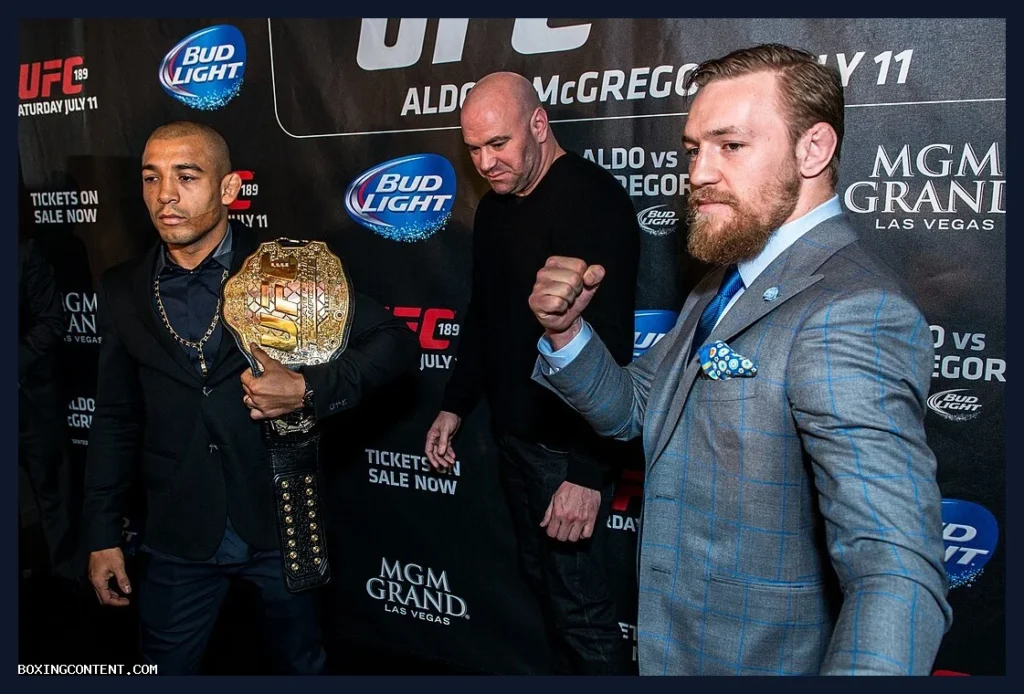


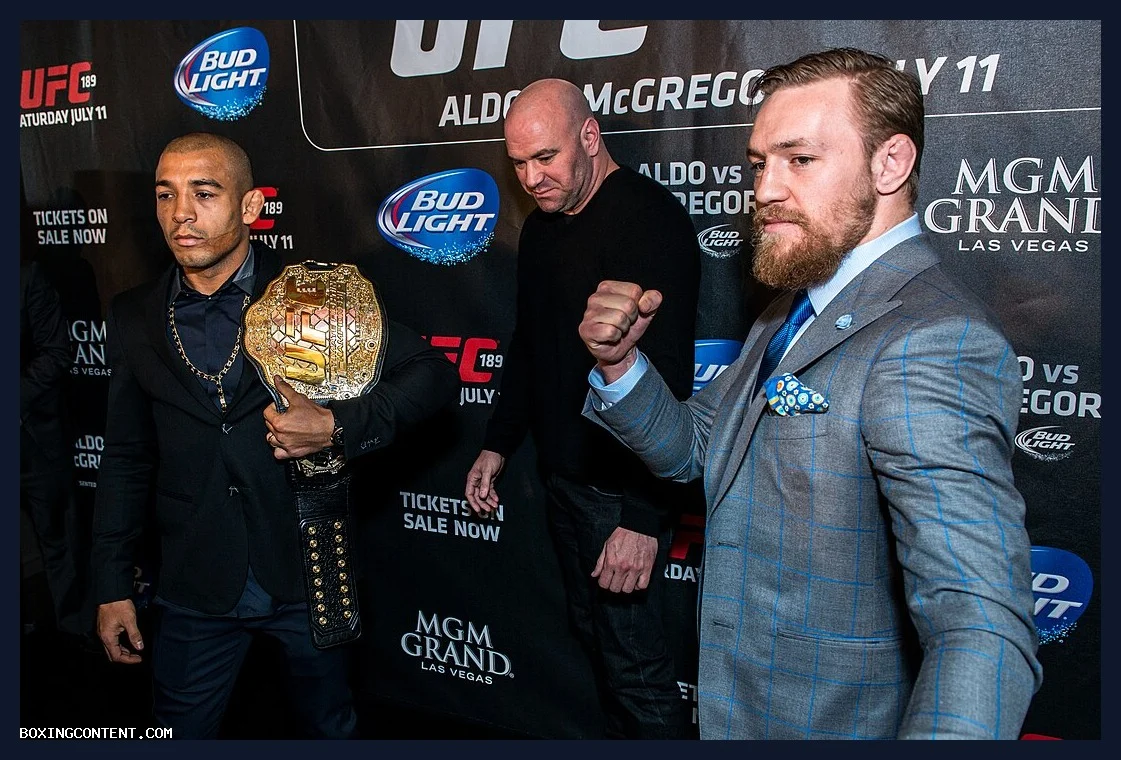
Dana White put the UFC 329 gate at $25 million during fight week, before a single punch had even been thrown. But on Saturday, July 11, at the T-Mobile Arena in Las Vegas, Nevada, the main event was over in about a minute after Conor McGregor’s knee gave out.
The tickets, however, were sold either way, and so were the digital and physical logos plastered across the canvas. Yet, even a record-breaking live gate was ultimately overshadowed by a striking economic reality: that single event’s live ticket sales were still less than what the Ultimate Fighting Championship took in from corporate sponsors in an average month last year.
Where the Money Comes From
Media rights continue to be the biggest financial engine driving the organization forward. Until the blockbuster Paramount deal took effect this year, however, much of the rapid growth was coming from unexpected corners of the enterprise. According to TKO Group Holdings’ 2024 annual report, total UFC revenue reached $1.406 billion. Within that massive financial footprint, sponsorships accounted for $251.4 million—a remarkable 28 percent jump from the $196.3 million generated a year earlier—while live events contributed $220.4 million to the bottom line.
That upward trajectory continued when TKO released its full-year 2025 results. Total company revenue climbed to $1.502 billion, with the sponsorship category—now reported under partnerships and marketing—surging to $314.3 million. The momentum showed no signs of slowing down into the following year. In the first nine months of 2026 alone, the UFC pulled in $1.456 billion, already eclipsing its total revenue for the entire 2024 calendar year, a massive surge heavily propelled by the influx of new capital from the Paramount media agreement.
The Non-Sports Brands Buying In
The corporate brands lining up to associate themselves with the world’s premier mixed martial arts promotion look very different from the traditional beer and apparel companies that once dominated combat sports advertising. Today, major tech giants and enterprise software leaders are securing high-profile partnerships. IBM signed on to become the UFC’s official artificial intelligence partner in November 2024, followed closely by Meta, which came aboard as the fan technology partner the following April.
The integration of corporate branding into the broadcast has also reached unprecedented levels. This January, Total Wireless acquired the exclusive branding rights for the commentators’ headsets, a prime real estate space that had never been sold commercially before. The physical canvas and surrounding equipment are similarly monetized; this April, Supersure, a small-business insurance agency, placed its company logo directly on the ring ropes during Zuffa Boxing cards.
Automotive partnerships have likewise leaned into unique, high-visibility activations. Ram co-presented the high-profile UFC Freedom 250 event at the White House in June. The relationship extended beyond simple co-branding when, in September, Dana White placed a winning $1.5 million bid for two Ram trucks at a charity auction. TKO later reported that partnerships revenue for that specific quarter leaped from $85.8 million to $144.8 million, driven largely by the high-profile White House card—a unique spectacle that incidentally sold zero tickets to the general public, proving that modern combat sports economics rely far more heavily on corporate backing and media distribution than traditional live gate receipts.
The Digital Business Around the Card
The landscape of how fans consume fights underwent a seismic shift when the UFC’s landmark seven-year deal with Paramount, valued at an average of $1.1 billion annually, officially brought an end to traditional U.S. pay-per-view broadcasts in January. Under the previous model, dedicated fans had to purchase the biggest numbered cards individually. Today, subscribers receive access to all major events as part of a standard Paramount+ subscription. The transition proved immediately successful in drawing massive audiences, with the very first card under the new agreement, UFC 324, drawing an average audience of 4.96 million viewers.
This shift toward continuous digital engagement aligns with broader consumer habits identified by corporate partners. IBM surveyed more than 20,000 sports fans across 12 countries in 2025 and discovered that 90 percent of respondents consume sports content well beyond simply watching live events. Kameryn Stanhouse, IBM’s vice president of sports and entertainment partnerships, noted that modern sports fans are remarkably comfortable consuming digital content around the clock. Naturally, as an official UFC sponsor, IBM has a vested commercial interest in validating this always-on consumer behavior.
Beyond media broadcasts and sponsorships, the promotion continues to monetize its intellectual property through strategic licensing agreements. TKO reports this income stream as consumer products licensing, which stood as the smallest of the UFC’s four primary revenue lines at $47.3 million in 2025. Since May 2024, a single studio has held exclusive rights to develop and distribute official UFC-branded slot games. Given the soaring mainstream popularity of mixed martial arts, such gaming partnerships represent a lucrative avenue, though these digital games are strictly restricted to jurisdictions where online gambling is legally regulated, with the UFC’s initial rollout limited to seven U.S. states.
What Fans Do With the Second Screen
The evolution of viewing habits has turned the living room into a multi-device ecosystem, with the clearest empirical data on second-screen utilization originating from the United Kingdom. A December 2024 survey conducted by ad-tech firm Nexxen sampled 1,062 British adults who watch live sports at least on a monthly basis. The research revealed that an overwhelming 76 percent of viewers actively use a secondary device while watching live events. Among those multitasking fans, 42 percent use their second screen to look up live statistics or game scores, while 29 percent use the opportunity to place live sports bets.
While mixed martial arts was not explicitly listed among the survey’s tracked disciplines, boxing was featured prominently, ranking alongside soccer and tennis as one of the top three sports driving wagering activity. This intersection of live broadcasting, instant data consumption, and digital betting underscores the modern commercial value of combat sports properties in capturing sustained attention across multiple screens.
What Comes Next
For U.S. audiences, nearly every major UFC event now sits behind a single digital subscription, forcing fans who were already juggling multiple streaming platforms to adapt once again. However, this consolidation has not entirely eliminated consumer friction. IBM’s follow-up 2026 global survey, which once again polled sports fans across 12 international markets, found that 39 percent of respondents expressed clear frustration over having to manage an increasingly complex array of separate subscriptions just to watch the sporting events they care about.
At the same time, TKO’s footprint in combat sports continues to diversify. The company’s boxing division is still in its infancy, having launched in January alongside its own dedicated Paramount distribution agreement, with TKO reporting boxing-related income under management and promotional fees.
Looking forward, the financial battleground for hosting major fight cards is also shifting beneath the surface. Host cities and regional tourism boards increasingly compete to bring premier events to their local arenas by offering substantial financial incentives. Reflecting this changing commercial strategy, TKO’s quarterly earnings reports have phased out the traditional terminology of "site fees," replacing it instead with "financial incentive package revenue"—a category that corporate filings show has increased in each of the last two quarters.