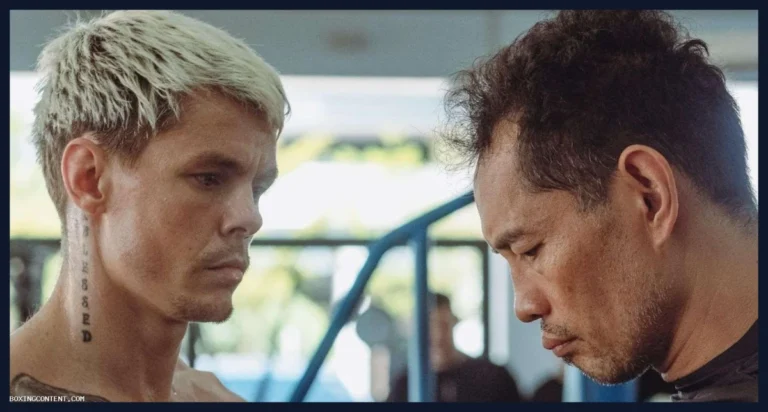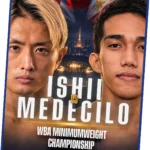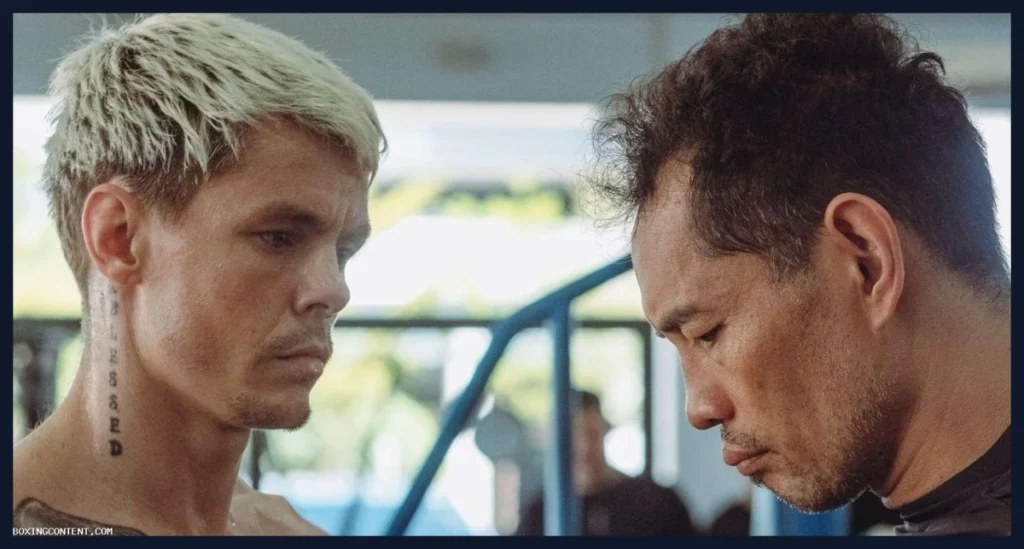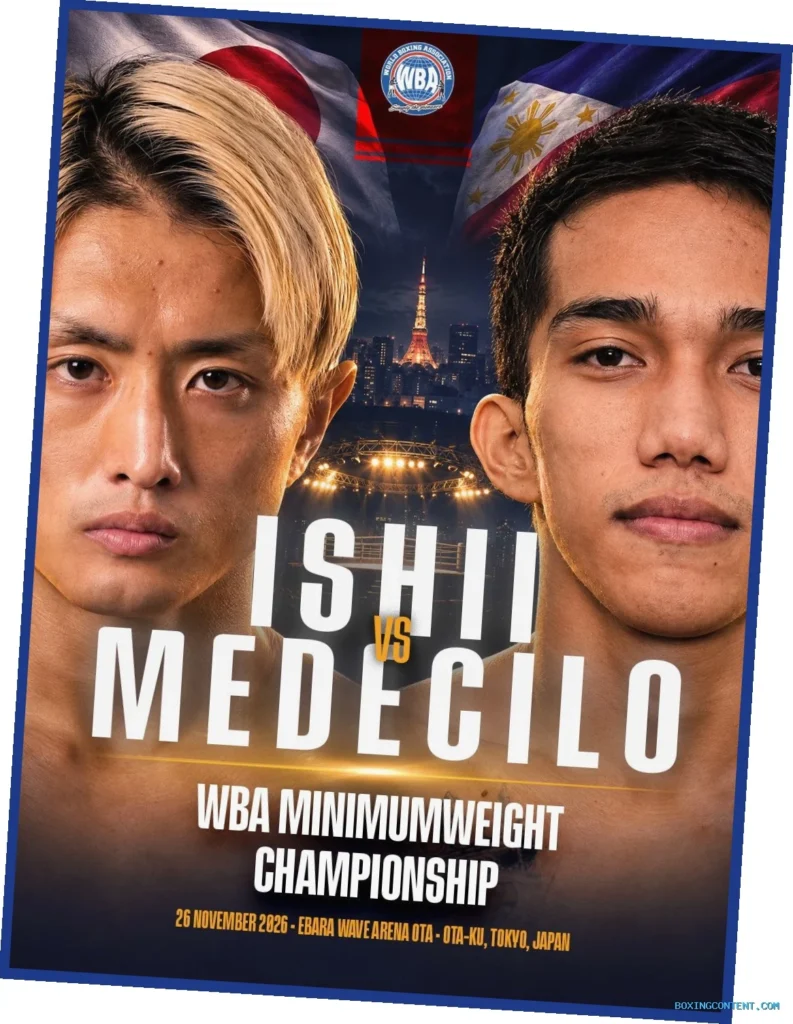

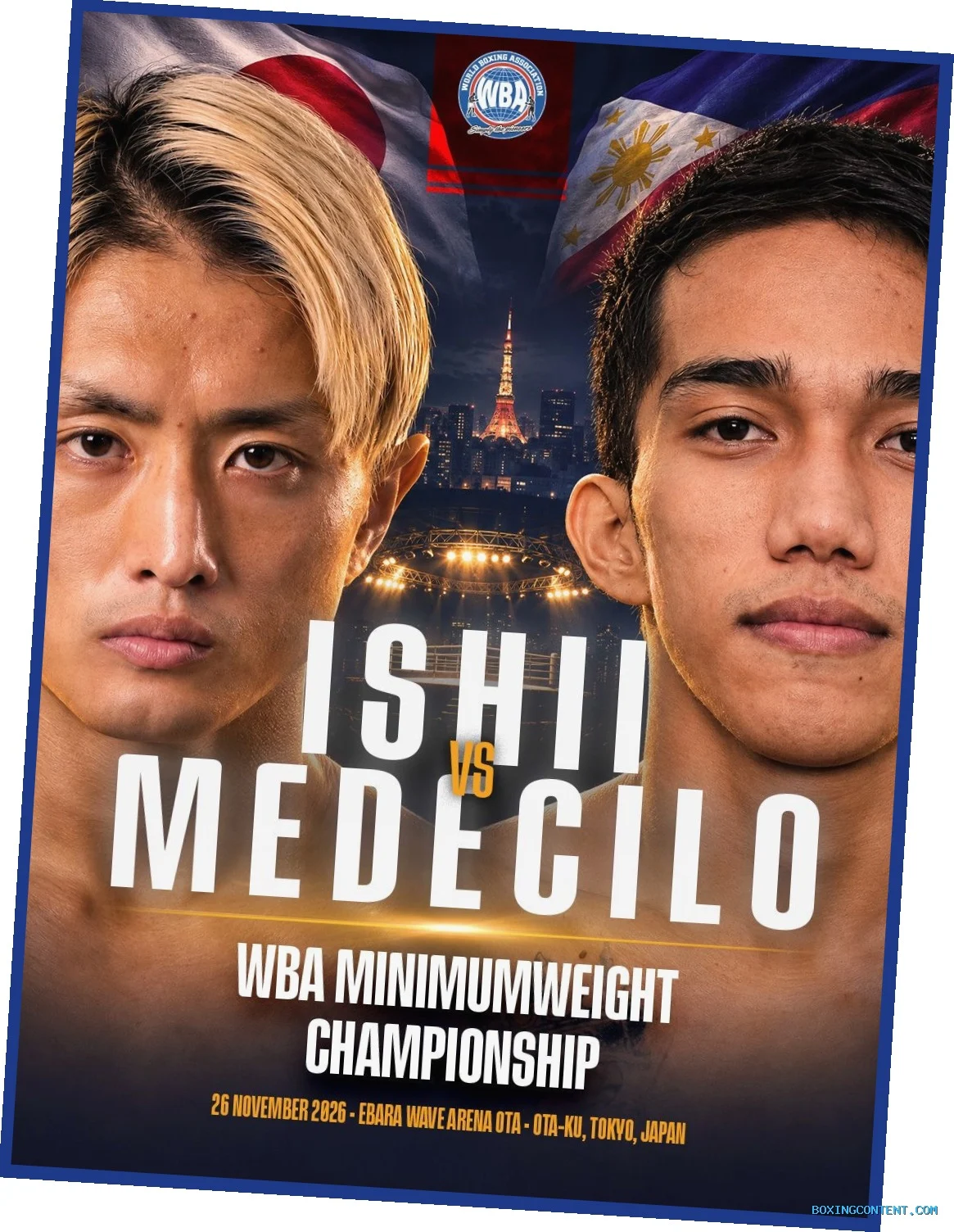
The international boxing spotlight is turning its full focus back to Tokyo, where the fast-paced, high-octane world of the lighter weight classes will take center stage in an extraordinary championship duel. In a matchup that promises an electrifying blend of tactical nuance and relentless action, local contender Takeshi Ishii will take on the hard-nosed Filipino challenger Zyvyr Medecilo. The two combatants will compete for one of the sport’s most coveted prizes: the World Boxing Association (WBA) Minimumweight World Championship, fought at the precise limit of 105 pounds. Hosted in the Japanese capital, the event highlights Tokyo’s historic standing as a premier global hub for lower-weight championship boxing, setting the stage for a memorable encounter between two fighters operating at the peak of their physical and mental capabilities.
The 105-pound minimumweight division has long been celebrated by boxing purists for its blistering speed, extraordinary stamina, and continuous ring action. Unlike heavier weight divisions where single-punch knockout power often dictates strategy, minimumweight bouts are typically decided by relentless work rates, razor-thin timing, and meticulous tactical adjustments executed at breakneck speeds. Bringing this championship showdown to one of boxing’s most iconic venues in Tokyo guarantees an atmosphere charged with intensity. Japanese combat sports fans are renowned worldwide for their deep appreciation of technical craft, ring discipline, and generalship—qualities that local favorite Takeshi Ishii will aim to showcase in abundance as he steps into the ring on home soil.
For Takeshi Ishii, fighting in front of his home crowd in Tokyo represents a golden opportunity to reaffirm his standing on the global stage and ensure the championship belt remains in Japan. Competing in his home country provides not only the comforting familiarity of a local preparation environment and passionate fan support, but also the formidable responsibility of defending home turf against a dangerous foreign adversary. Ishii enters this high-stakes contest knowing that keeping the world championship title on home soil requires absolute composure and disciplined execution. The pressure of headline status in Tokyo can often weigh heavily on fighters, yet it can equally serve as a powerful catalyst, driving a contender to elevate his performance under the bright lights of a major championship night.
Central to Ishii’s strategy for this championship bout is a disciplined, tactical approach designed to assert command over the squared circle from the outset. From the opening moments, Ishii will look to establish firm control of the middle of the ring, utilizing calculated footwork and spatial awareness to dictate where the action takes place. By occupying the center, Ishii aims to force Medecilo to work along the perimeter, effectively neutralizing the challenger’s ability to trap him against the ropes or cut off the ring. Establishing center-ring authority allows a fighter to regulate the rhythm of the contest, ensuring that energy is conserved while keeping the opponent constantly reactively adjusting to established range.
A key component of Ishii’s blueprint is patience in the early stages of the fight. Rather than rushing into dangerous, unpredictable firefights during the opening rounds, Ishii’s game plan relies on avoiding reckless exchanges when both fighters are at their freshest and most potent. By staying composed and maintaining defensive structure early on, Ishii can dissect his opponent’s tendencies, gauge his distance, and identify subtle defensive openings. Once those flaws are detected, Ishii plans to capitalize with precise counter-punches and sharp single strikes, gradually dictating the pace of the contest and wearing down his adversary through superior ring generalship and spatial control.
Standing across the ring in direct opposition to Ishii’s calculated home-ring defense is Zyvyr Medecilo, a determined challenger who travels to Tokyo with the singular objective of spoiling the host nation’s plans. Medecilo represents the rich, storied tradition of Filipino boxing—a combat lineage celebrated globally for producing fearless, explosive fighters who thrive when performing in hostile environments away from home. Traveling to foreign territory presents inherent obstacles, from acclimating to a foreign fight week routine to facing an arena overwhelmingly backing the local contender. However, Medecilo enters enemy territory unbothered by the surroundings, driven by the chance to claim world championship glory on the big stage.
Medecilo’s fighting identity is built upon relentless aggression, rapid hand speed, and dangerous punching power that belies the small weight class. In close-range exchanges, the Filipino challenger operates with devastating efficiency, combining rapid-fire combinations with targeted attacks designed to sap an opponent’s mobility and energy reserves. Carrying on the tradition of explosive Filipino warriors who embrace physical battles, Medecilo possesses the ability to turn technical boxing matches into high-tempo slugfests. His strategy relies on forcing his opponent into uncomfortable exchanges where sheer volume, kinetic power, and relentless forward momentum take precedence over defensive distance.
Fully aware of the challenges that come with fighting away from home, Medecilo understands that leaving the outcome in the hands of the judges can be a risky endeavor for a visiting fighter on foreign soil. Consequently, his strategic mandate is clear: press the action from the very first sound of the bell. Medecilo will seek to close the distance immediately, refusing to give Ishii the space needed to settle into a comfortable rhythm. By stepping inside Ishii’s long range and unleashing quick, blistering combinations in rapid succession, Medecilo aims to create immediate chaotic pressure, transforming the championship fight into a grueling, physically demanding battle where his power can be fully felt.
The matchup between Takeshi Ishii and Zyvyr Medecilo offers a classic boxing study in stylistic contrasts. In one corner stands the poised, tactical technician aiming to maintain range, control the center of the ring, and pick his moments with clinical precision. In the opposite corner stands the explosive, forward-marching pressure fighter seeking to shorten the distance, wage war on the inside, and break his opponent’s resolve through sheer physical output. The battle for ring geometry will likely determine the outcome of the contest: if Ishii can keep Medecilo at the end of his jab and navigate the early rounds without engaging in wild brawls, his tactical control could prove decisive. Conversely, if Medecilo succeeds in breaching Ishii’s defense and forcing sustained close-quarter warfare, the dynamic shifts dramatically in favor of the challenger.
At the 105-pound minimumweight limit, stamina and endurance are tested to their absolute limits over the twelve-round distance. The extreme pace characteristic of lower-weight championship bouts means that even a minor lapse in physical conditioning or mental focus can yield fight-altering consequences. Both Ishii and Medecilo face a grueling physical test that will demand maximum cardiovascular output alongside relentless psychological composure. As the rounds mount, the ability to absorb heavy punishment, maintain sharp reflexes, and stick to tactical game plans under intense physical fatigue will separate the victor from the vanquished in Tokyo.
Beyond the grueling physical nature of the fight, the contest will serve as a profound test of mental adaptability. World championship boxing rarely unfolds entirely according to a fighter’s pre-arranged strategy. Ishii must be prepared for moments when Medecilo successfully penetrates his perimeter and forces high-stress exchanges, requiring the local contender to stay calm under fire without abandoning his defensive discipline. Simultaneously, Medecilo must demonstrate the patience and intelligence to reset his attacks if Ishii succeeds in neutralizing his initial rushes with sharp counter-punching and lateral movement. The fighter who adapts more efficiently to the unfolding realities of the ring will hold a decisive advantage.
This championship match also adds another exciting chapter to the historic and highly competitive boxing rivalry between Japan and the Philippines. For decades, these two Asian boxing powerhouses have produced world-class champions across the lighter weight divisions, engaging in unforgettable battles that have shaped the history of the sport in the region. Japanese fighters are renowned for their technical precision, ring discipline, and stoic determination, while Filipino boxers are celebrated for their explosive athletic power, heart, and offensive creativity. When representatives from these two proud boxing traditions meet with a world title on the line, combat sports fans are invariably treated to world-class ringcraft and unwavering courage.
The championship belt at stake carries immense historic weight. As boxing’s pioneering sanctioning body, the World Boxing Association (WBA) holds a distinguished place in the sport’s tradition, and its minimumweight crown represents the pinnacle of achievement at 105 pounds. Winning the WBA title not only solidifies a fighter’s position at the top of the global rankings but also opens the door to unifying bouts, major international exposure, and a lasting legacy in combat sports. For Ishii, claiming the crown in Tokyo would validate years of dedicated preparation and elevate him to the upper echelon of world champions. For Medecilo, taking the belt home to the Philippines would mark a triumphant crowning achievement in his career.
As fight night approaches in Tokyo, the stage is fully set for a captivating clash of styles, mentalities, and regional pride. Inside one of boxing’s most respected venues, Takeshi Ishii and Zyvyr Medecilo will enter the ring knowing that only one man can emerge with the WBA Minimumweight World Championship wrapped around his waist. Whether determined by twelve rounds of tactical mastery and ring control from Ishii or a dramatic, power-driven assault from Medecilo, this minimumweight championship duel promises to deliver an unforgettable spectacle of high-speed action, physical endurance, and world-class boxing craft.