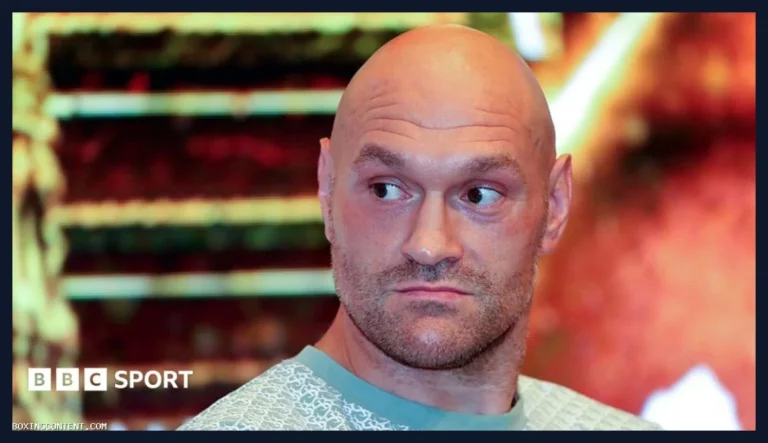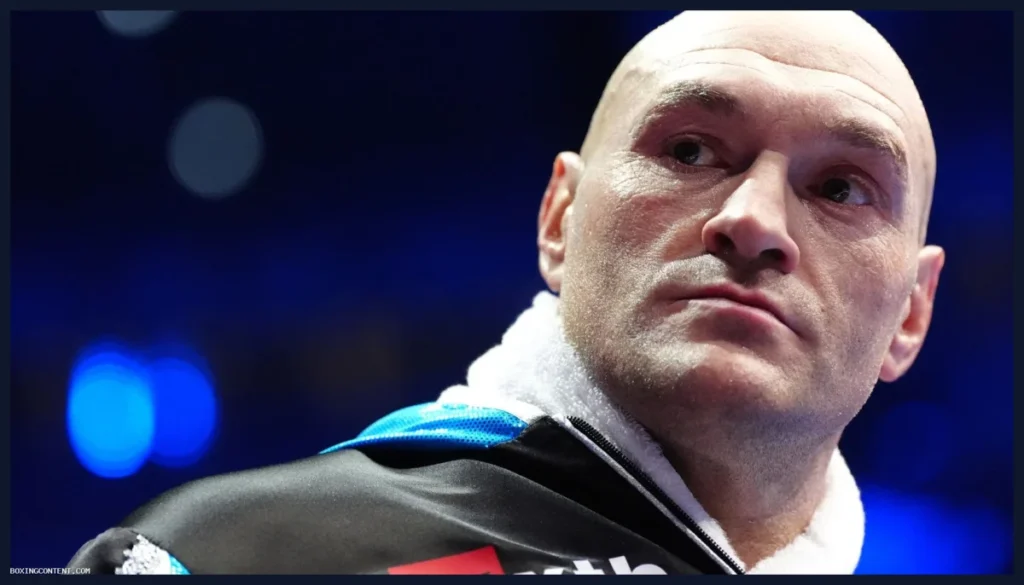


Paris Fury has officially retracted a claim that her husband, unified heavyweight boxing champion Tyson Fury, was diagnosed with schizophrenia, clarifying that while he has exhibited certain symptoms associated with the condition in the past, he has never received an official medical diagnosis. The public clarification arrives at a pivotal moment, following revelations that the British Boxing Board of Control (BBBoC) had initiated a review into the initial comments made in an upcoming Netflix documentary detailing the fighter’s life. The regulatory authority had indicated that a confirmed diagnosis of schizophrenia could potentially call into question Fury’s medical fitness to compete, putting his highly anticipated December 11 showdown against Anthony Joshua in Cardiff at risk of license denial. In response to the clarification provided by the family, Netflix has confirmed that it has updated the documentary footage ahead of its official global launch to reflect an accurate account of Fury’s medical history.
The controversy originated from footage in the original cut of the Netflix documentary, which offers an unvarnished look into Tyson Fury’s well-documented battles with severe depression, anxiety, and bipolar disorder. During an interview segment in the initial version of the film, Paris Fury referenced a past diagnosis of schizophrenia when describing her husband’s complex psychological struggles. However, following growing scrutiny over the statement and its potential regulatory ramifications for his professional boxing career, Paris issued a comprehensive statement setting the record straight regarding Tyson’s mental health status.
In her statement, Paris Fury explained the context behind her original remarks and underscored the difficulties non-medical professionals face when describing intricate psychological conditions. She clarified that she was recalling a conversation from many years ago while discussing Tyson’s mental state, during which she informally used the word "schizophrenic." While acknowledging that Tyson had displayed some symptoms that are frequently associated with schizophrenia during the most acute phases of his mental health struggles, she emphasized that he does not suffer from the condition and has never been formally diagnosed with it by a medical professional.
Paris went on to reflect on the broader challenges of supporting a spouse through profound psychological distress, noting that mental health is immensely complex and that finding the correct diagnostic language is not always easy, particularly when living through those experiences alongside a loved one. She expressed her immense pride in Tyson for opening up so candidly about his personal battles within the documentary and extended her gratitude to the public and fans for the overwhelming support their family has received throughout his career and ongoing recovery.
The streaming giant behind the project, Netflix, also addressed the situation, confirming that it took immediate action upon receiving the updated information from the Fury family. A spokesperson for Netflix stated that following the new details shared by the family regarding Tyson’s official medical diagnosis, the production team worked directly alongside them to update the documentary content prior to its public release. The platform’s decision ensures that the final release provides an accurate portrayal of the heavyweight champion’s mental health journey without disseminating inaccurate medical terminology.
The timing of the initial comments had created significant regulatory uncertainty surrounding one of the biggest events in modern British sports. Earlier on Thursday, the British Boxing Board of Control (BBBoC)—the governing body responsible for licensing professional boxers and overseeing medical safety standards in Great Britain—indicated that it was looking into the comments regarding a potential schizophrenia diagnosis. The board’s primary directive is to protect the health and safety of combatants, and regulatory guidelines mandate that fighters undergo strict physical and psychological evaluations to determine their fitness to enter the ring.
Given the demanding and dangerous nature of professional boxing, an unmanaged or severe psychiatric condition such as schizophrenia could lead regulatory officials to withhold or revoke a fighter’s licence. The prospect of such action threatened to derail Fury’s scheduled fight against Anthony Joshua, set for December 11 at the Principality Stadium in Cardiff. The fight represents one of the most eagerly anticipated heavyweight contests in boxing history, with both fighters currently immersed in intensive training camps and promotional face-offs ahead of the winter bout. Following Paris Fury’s explicit retraction and clarification, Sky Sports News contacted the BBBoC to ascertain whether its formal inquiry into Fury’s licensing status remains ongoing or if the updated medical clarification satisfies the board’s health standards.
The documentary itself provides a deep and emotional exploration of Tyson Fury’s mental health challenges, which escalated dramatically following his historic victory over Wladimir Klitschko in November 2015. On that night in Düsseldorf, Fury defeated the long-reigning Ukrainian champion to claim the unified WBA, WBO, and IBF heavyweight titles, reaching the absolute pinnacle of professional boxing. However, in the months following his greatest athletic triumph, Fury experienced a severe mental health breakdown that led to a prolonged absence from the sport.
As detailed in the documentary narrative, the post-Klitschko era saw Fury spiral into deep clinical depression, severe anxiety, and substance abuse involving drugs and alcohol. The severe emotional turmoil was accompanied by dramatic physical changes, including substantial weight gain, as the undefeated champion stepped away from the ring to navigate his personal crisis. The psychological strain reached a critical point in June 2016, when Fury was rushed to the hospital with a suspected heart attack. While undergoing evaluation in the hospital, Fury experienced acute auditory hallucinations, later revealing that he was hearing voices in his head during the ordeal.
Reflecting on that dark period in his life during his interviews for the Netflix documentary, Fury offered a raw and vivid description of his internal state. He recounted how words could barely explain the profound darkness he experienced, describing it as a living version of the pits of hell. Fury admitted that he was consumed by intense fear that his condition would worsen to the point where he would end up confined to a padded room with a locked door. He explained that his anxiety became entirely crippling, preventing him from functioning normally until he finally sought specialized psychiatric help.
That turning point came when Fury scheduled a comprehensive evaluation with a London-based psychiatrist. Describing the thorough clinical process, Fury recalled how the specialist asked him an exhaustive series of questions to evaluate his mental state. Following the assessment, the psychiatrist determined that Fury met the clinical criteria for multiple interlinked conditions, formally diagnosing him with clinical depression, generalized anxiety disorder, and bipolar disorder. This formal diagnosis marked the beginning of a structured management plan that eventually allowed Fury to rebuild his life, regain his physical fitness, and execute one of the most remarkable comebacks in sporting history.
To provide broader context to the medical distinctions involved in Fury’s case, public health bodies such as the National Health Service (NHS) offer clear definitions regarding these psychological conditions. According to the NHS, schizophrenia is classified as a severe, long-term mental health condition that is recognized as a form of psychosis. Individuals living with schizophrenia may at times experience episodes where they are unable to distinguish their own internal thoughts from external reality. Common symptoms associated with the condition include hallucinations—such as hearing voices or seeing things that others do not—and deeply held delusions that are not grounded in reality.
In contrast, the NHS defines bipolar disorder as a distinct mental health condition characterized by significant and extreme fluctuations in a person’s mood. Individuals with bipolar disorder experience severe shifts that alternate between emotional highs, known as mania or hypomania, and profound lows, marked by deep clinical depression. While both conditions can be severe and require ongoing clinical management, the diagnostic boundaries are distinct, particularly within the framework of athletic licensing where psychotic disorders undergo unique regulatory scrutiny.
As the December 11 fight date in Cardiff approaches, the focus remains firmly on Tyson Fury’s readiness both inside and outside the ring. Training camp footage and promotional face-offs leading up to the Anthony Joshua fight highlight the immense physical preparation required for the event, even as public attention briefly shifted to the administrative and medical details of his past health struggles. Fury’s willingness to publicly discuss his battle with depression, anxiety, and bipolar disorder has been widely recognized for raising awareness around athlete mental health, even as his family works to ensure his medical record is represented with precision.
With Paris Fury’s clarification now on the public record and Netflix finalizing its updated edit of the documentary, the boxing community awaits final administrative confirmation regarding the regulatory status of the Cardiff fight. For now, the focus shifts back to the ring, where Fury continues his preparations for the December 11 showdown.
If you have been affected by any of the mental health issues or themes discussed in this article, support and confidential advice are available. Readers in the UK can access resources through Sky Viewer Support, consult their local GP, or call the NHS health services directly on 111.