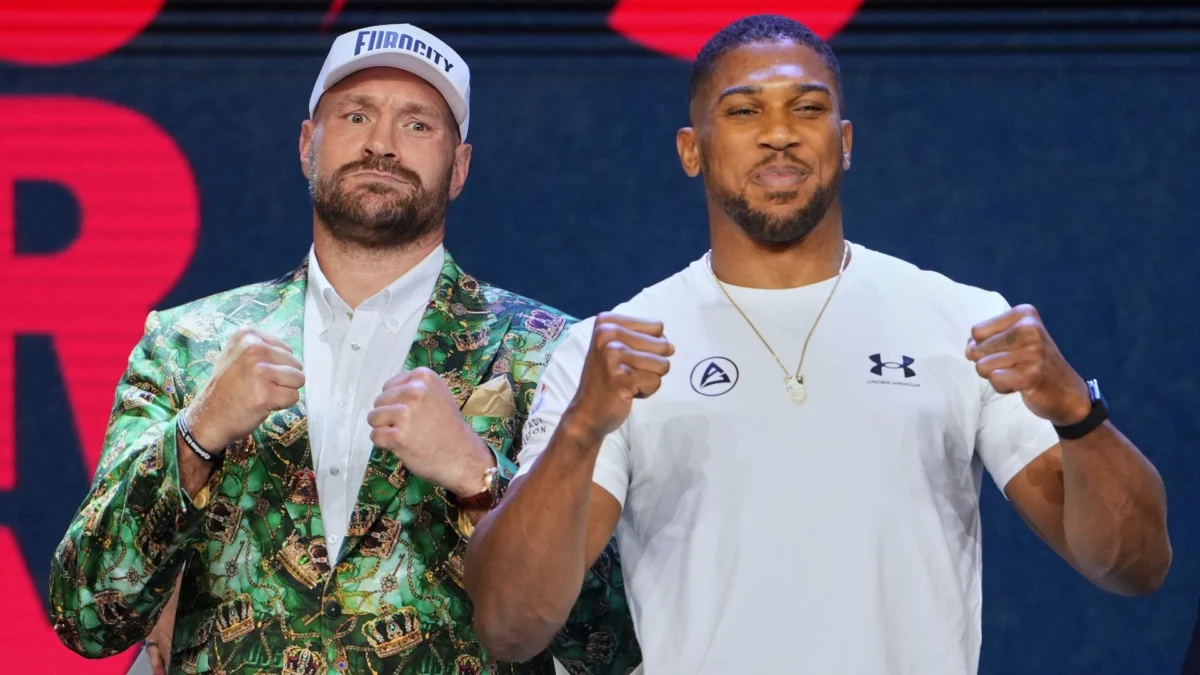
The World Boxing Council has formally signaled its willingness to sanction a major heavyweight unification contest in 2027, confirming that it will fully support a prospective clash between its reigning heavyweight champion, Agit Kabayel, and the victor of the upcoming high-profile fight between Tyson Fury and Anthony Joshua.
The decision places the WBC firmly behind the pursuit of consolidated titles in boxing’s glamour division, offering a clear path forward for the top big men in the sport as the calendar turns toward 2027. Before any prospective unification can materialize, however, current champion Kabayel must first navigate his own title defense later this month. Kabayel is scheduled to put his WBC heavyweight championship on the line against Nelson Hysa on November 28. Should Kabayel emerge victorious from that defense, the sanctioning body has made it clear that it will stand fully behind a marquee matchup against whoever raises their hand in victory following the all-British blockbuster on December 11.
The upcoming clash between Fury and Joshua carries enormous weight across the boxing landscape, serving as one of the most anticipated events of the era. Interestingly, the fight between the two British stars had originally possessed all the ingredients to serve as a mandatory final eliminator under the WBC banner. With Fury and Joshua positioned as the number one and number two contenders in the WBC heavyweight rankings, a matchup between them represented a text-book eliminator to determine the official mandatory challenger for the sanctioning body’s world title.
However, the promotional entities behind Fury and Joshua ultimately elected to head in a different direction for the December 11 event. Rather than petitioning the WBC to sanction the fight as a formal mandatory eliminator, the promoters chose to make the contest a championship bout for the World Boxing Association ‘super’ heavyweight title. That promotional choice diverted the fight away from being an official WBC eliminator, though it did not diminish the sanctioning body’s interest in working with the winner down the line.
WBC president Mauricio Sulaiman clarified the situation regarding the ranking dynamics and the decision made by the promoters ahead of the December blockbuster. Sulaiman noted that while the matchup naturally aligned with the WBC’s structure for determining a mandatory contender due to the fighters’ positions at the very top of the sanctioning body’s ratings, the organization was content to respect the promotional strategy put forward by the fighters’ teams.
"It was a natural final elimination for the mandatory, one against two in the rankings, but the promoters did not request the fight to be a final elimination and they chose to do it for another organisation’s title," Sulaiman told Sky Sports.
Despite the fight being contested for the WBA ‘super’ belt rather than functioning as an official WBC eliminator, Sulaiman emphasized that the WBC has no intention of creating roadblocks for a future unification fight. In modern boxing, cross-promotional and multi-sanctioning body unifications often face political hurdles, but the WBC executive underscored his organization’s desire to facilitate bouts that bring single, undisputed champions to the sport.
"The industry likes unifications, people like to see undisputed and we don’t get in the way. We like to support that," Sulaiman explained, reaffirming the council’s commitment to accommodating major unifications whenever feasible.
By giving its prospective blessing to a 2027 unification fight, the WBC is also offering champion Kabayel significant tactical flexibility in how his career proceeds following his defense against Hysa. Rather than imposing an immediate, rigid mandatory obligation upon Kabayel after the November 28 contest, the WBC is choosing to leave the champion’s schedule open, creating room for high-stakes negotiations once the outcome of Fury vs. Joshua is settled.
Sulaiman confirmed that the sanctioning body intentionally avoided placing an immediate mandatory constraint on the winner of Kabayel’s upcoming fight, preferring instead to assess the landscape after both late-year heavyweight events have concluded. This approach ensures that the sanctioning body does not prematurely tie up its title when a historic unification opportunity might be on the immediate horizon.
"Kabayel is going to defend at the end of the month and then he is free – we did not mandate any fight for the winner because we believe the mandatory contender must be the highest available real mandatory," Sulaiman stated.
This principle of ensuring that any designated mandatory represents a genuine, top-tier contender gives the WBC room to evaluate its rankings dynamically after November 28 and December 11. The sanctioning body intends to wait until the dust settles from both events before determining whether to order a formal final elimination contest, sanction a unification bout, or pursue alternative options that benefit the division.
"We will see if we’re going to order a final elimination or if there’s a unification or if there’s something else that can be done," Sulaiman added, maintaining that the WBC’s final decision will depend heavily on how the upcoming bouts unfold and what requests are brought forward by the respective promotional camps.
The broader heavyweight landscape remains exceptionally fluid, with several major storylines operating concurrently alongside Kabayel’s title defense and the Fury vs. Joshua event. Promoters across the sport are actively planning for early 2027, with multiple high-stakes matchups under consideration depending on the outcomes of the remaining 2026 fight calendar.
Among those potential storylines is the ongoing narrative surrounding former unified heavyweight champion Oleksandr Usyk. Veteran promoter Frank Warren has dropped hints regarding the possibility of a trilogy fight between Tyson Fury and Usyk, suggesting that Usyk could potentially be tempted to remain active at heavyweight for a third encounter with Fury should the business and sporting conditions align. A third fight between Fury and Usyk would add yet another layer of intrigue to the top of the division, potentially impacting the timeline for any proposed unification with Kabayel.
In addition to discussing the veteran superstar landscape, Warren also highlighted the career trajectory of rising heavyweight prospect Moses Itauma. As part of the long-term planning for the division, Warren indicated that discussions are underway regarding Itauma’s immediate future, with expectations pointing toward a confirmed fight for the young contender in early 2027. The development of emerging talents like Itauma ensures that the division maintains a steady pipeline of contenders as the title picture resolves itself at the highest level.
Meanwhile, attention in the immediate lead-up to December 11 has also focused on the physical condition of Tyson Fury. In the weeks building up to the massive clash with Joshua, rumors and media speculation surfaced suggesting that Fury might be carrying an injury into his training camp. Such reports naturally generated concern given the scale and commercial importance of the December event.
However, those concerns were publicly addressed and downplayed by Dana White, co-founder of Zuffa Boxing, which is involved in promoting the mega-event. White firmly dismissed rumors of any physical setbacks for Fury, insisting that there is no cause for concern regarding the former champion’s health or his readiness for December 11. White’s reassurances have helped maintain focus on the competitive merits of the fight itself, keeping the event firmly on track.
As the heavyweight division approaches a crucial stretch at the end of the year, the WBC’s stance provides a clear framework for what could prove to be an explosive 2027. With Kabayel preparing for Hysa on November 28 and Fury preparing to square off against Joshua for the WBA ‘super’ crown on December 11, the sanctioning body’s willingness to step aside in favor of a massive unification bout ensures that boxing fans could see a single champion crowned in the near future. The WBC’s open-door policy toward unification fights underscores a pragmatic approach to governance, balancing regulatory duties with the broader market demand for definitive, division-defining championship fights.