


Published: 19:02 EST, 24 November 2026 | Updated: 19:14 EST, 24 November 2026
Tyson Fury has revealed that he experienced terrifying auditory hallucinations telling him to take his own life as he prepared to orchestrate a comeback to professional boxing.
In a remarkably candid and harrowing interview on The Louis Theroux Podcast, the 38-year-old heavyweight boxing star detailed the depth of his psychological turmoil, explaining how the ‘voices’ in his head went so far as to convince him that his wife, Paris, was actively plotting against him.
The champion boxer, widely known as the ‘Gypsy King,’ described a complete detachment from reality during his darkest moments away from the sport, painting a picture of profound isolation and paranoia that he admitted left him fearing he would spend the rest of his life confined to a psychiatric ward.
Reflecting on the terrifying delusions that plagued him, Fury shared the extent of his distrust during the height of his breakdown, which consumed his thoughts and fractured his relationships with those closest to him.
‘I thought me dad was in on it,’ Fury told Theroux during the podcast recording. ‘I thought me best friend Dave was in on it. I lost it completely, gone.’
When pressed by the interviewer about the precise nature of the internal voices and what they were instructing him to do, Fury elaborated on the psychological torture he endured on a daily basis, characterizing it as an experience rooted in an extremely dark and menacing space.
‘The voices were telling me to kill meself. Very, very dark, demonic place I never ever wanna return to, ever,’ Fury said.
‘That was what I was living with constantly. And I thought that I would end up in a padded room and nowhere else or, or dead. Dead was an easy option really, but I thought I was gonna end up in a straightjacket. I was horrified of it.’
This profound mental health crisis follows a well-documented and severe breakdown that struck Fury immediately after achieving what had been his lifelong athletic obsession: defeating long-reigning heavyweight king Wladimir Klitschko in November 2015. That monumental upset in Dusseldorf, Germany, which saw Fury claim the WBA, IBF, WBO, and IBO world titles, should have marked the pinnacle of his professional and personal life. Instead, it served as the catalyst for a devastating psychological descent during which he suffered from acute psychosis and began experiencing the severe auditory hallucinations he has now described.
Medical disclosures surrounding the British fighter’s health indicate that Fury suffers from schizophrenia, a lifelong and complex mental health condition that can profoundly disrupt an individual’s thoughts, perceptions, and emotional responsiveness, frequently leading to hallucinations, severe delusions, and a profound loss of touch with shared reality. Alongside schizophrenia, the boxer has received formal diagnoses for several other psychological conditions, including bipolar disorder, clinical depression, severe anxiety, obsessive-compulsive disorder, and attention deficit hyperactivity disorder.
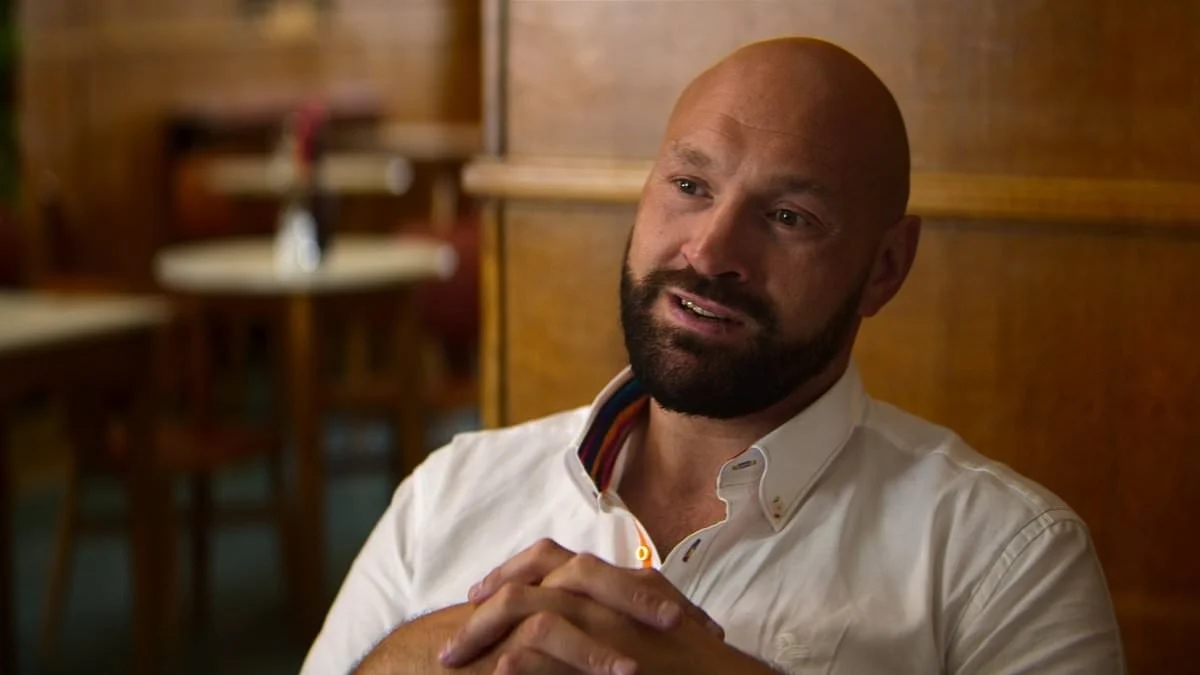
The broader context of Fury’s lifelong battle with his mental health is also explored extensively in a new feature-length documentary titled Tyson Fury, which is scheduled to premiere and stream globally on Netflix. In the documentary, Fury’s wife, Paris, opens up about her own perspective on her husband’s lifelong struggles, noting that with the benefit of hindsight and maturity, the warning signs were visible even during their teenage years.
Paris, 36, recalled noticing distinct variations in how her husband processed the world around him compared to others of their age group, pointing to emotional fluctuations that hinted at underlying psychological complexities.
‘When we were going out I saw differences in his brain pattern to other people,’ Paris recalled in the documentary feature. ‘He didn’t just have that level, one-tier personality. It was highs, it was lows, it was always like a different kinda person, you know?’
Elaborating further on the roots of his devastating post-championship depression during his conversation with Louis Theroux, Fury explained how the realization of his ultimate ambition stripped away his psychological safety net, leaving him entirely unmoored. Rather than experiencing elation or deep satisfaction after dethroning Klitschko, the fighter found himself plunged into an immediate sense of emptiness.
‘Where I should have been the happiest moment of my life, I’ve become world heavyweight champion, the childhood dream had happened, I was almost depressed straight away,’ he explained to Theroux.
‘Deflated, didn’t care, and it was like, "Mm, I beat my man now, and that’s it. There’s nothing else." And it was everyone saying, "Oh, let’s move the goalposts and keep going and keep doing," but it’s very difficult.’
Fury likened the psychological phenomenon he experienced to a recognized mental health condition, explaining how pinning his entire existence on a singular professional objective left him entirely vulnerable once that objective was secured.
‘I spoke to a few people who experienced the same thing, and they called it paradise syndrome. It’s where you put all your eggs in one basket, and everything you do in your life is for that one moment in time,’ Fury said.
‘And people make a lot of mistakes where they think I was interested in the belts or that. I only ever wanted to beat Wladimir.’
For confidential support, call Samaritans on 116 123, visit samaritans.org or visit https://www.thecalmzone.net/get-support