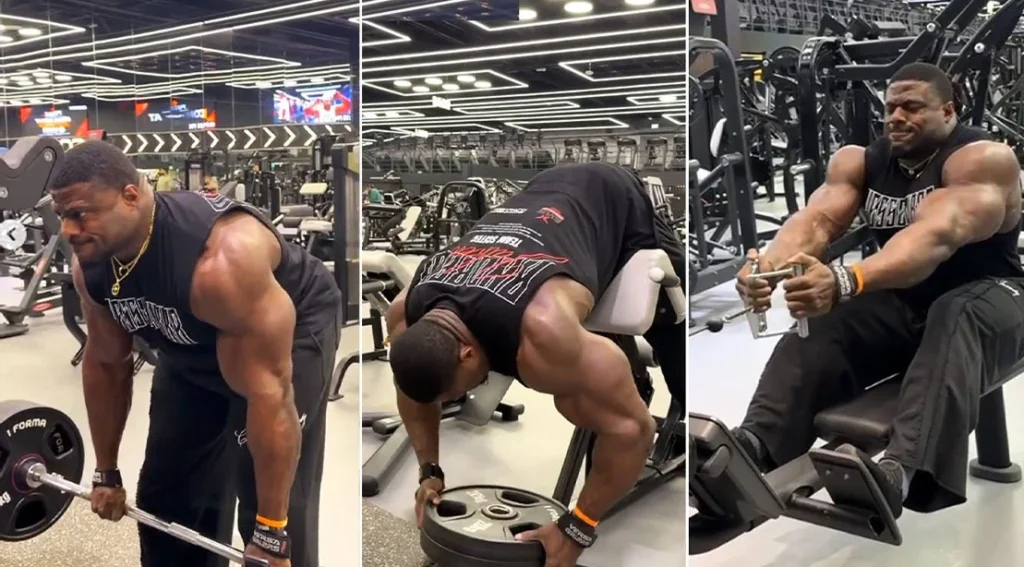



In the modern era of fitness culture, millions of gym-goers regularly copy the workout routines, set schemes, and exercise selections of their favorite social media influencers. However, according to Dr. Mike Israetel of Renaissance Periodization, a routine that yields extraordinary results for an online personality could very well be mediocre—or even counterproductive—for the average person sitting in the audience.
In a recent deep-dive video breaking down the mechanics of hypertrophy, exercise science, and physiological individuality, Israetel outlined ten crucial differences that dictate whether a borrowed training plan will actually work. Ignoring these fundamental variations can lead straight to burnout, chronic joint pain, and completely stalled progress. Conversely, recognizing and adapting to these personal traits can unlock the most significant physical gains of an individual’s lifting career. One of these core differences even highlights why chasing a specific influencer’s physical muscle shape is a fundamentally flawed pursuit from the very beginning.
The overarching premise of Israetel’s philosophy relies on a master rule that governs almost every variable of strength training: begin with a low workload and gradually climb upward. Instead of blindly diving into the highest volume possible, lifters should select a baseline workload they know they can comfortably recover from and then build upward incrementally based on tangible results. Israetel emphasizes that his guidelines serve as practical coaching rules of thumb rather than rigid, universal laws. Every suggested metric should be treated as an initial hypothesis that is ultimately tested and verified by how the individual’s body responds over time.
To understand why a borrowed routine can fall short, lifters must first examine how their own bodies handle the physiological stress of training. The first major factor is training sensitivity, which describes the degree of muscle growth an individual achieves from a given number of hard sets. Low responders may require significantly more weekly sets to stimulate growth compared to what a standard influencer program prescribes. If a lifter finishes a session barely tired, minimally sore, and healing with remarkable speed, they are likely dealing with low training sensitivity and can benefit from adding sets gradually over time.
The second factor is work capacity, which measures the overall volume of training a person can complete while still performing productively and finishing within a reasonable timeframe. Some individuals possess the genetic and physiological traits required to crush multiple high-rep sets across numerous heavy compound lifts without missing a beat. Others find themselves completely depleted after just a handful of demanding sets. Israetel advises lifters to be brutally honest about what they can realistically finish. If a program calls for an excessive number of sets that stretches a standard one-hour session into a three-hour marathon requiring extended rest periods, it is a glaring red flag that something in the schedule has to give.
Recovery ability represents the third critical pillar of how the body handles training stress. This capacity can be gauged by how many hard sets a person can handle in a single session while still bouncing back effectively in time for the next workout. Israetel refers to this upper threshold as maximum recoverable volume, or MRV. Copying a training program built for someone with a substantially higher MRV can quickly lead to overtraining, burnout, or injury. On the flip side, following a routine designed for a lower MRV means a lifter may be leaving substantial growth on the table. Finding this exact threshold requires careful, personalized tracking in the gym.
Beyond functional recovery and capacity, a major set of differences is deeply rooted in human genetics and structural anatomy. Body proportions, often referred to in science as anthropometry, play a massive role in how exercises target specific muscle groups. Israetel, for instance, notes that his own long torso and short femurs mean that barbell squats heavily target his quads. Conversely, individuals built with a short torso and long femurs will naturally find that their squat resembles a good morning movement, placing the primary burden on the glutes and lower back rather than the quads. When technique tweaks fail to fix these structural mismatches, swapping the exercise entirely for one of the dozens of viable alternatives is often the most sensible solution.
Rep range response is another genetic variable where lifters diverge sharply. While some athletes thrive on heavy sets of five repetitions, others respond much better to high-rep metabolic stress. Rather than jumping blindly to the extreme end of an influencer’s preferred rep range, Israetel suggests making gradual adjustments. If a lifter typically performs 15 repetitions while their preferred online personality favors a grueling 30, bridging the gap by aiming for 20 to 22 repetitions first is a far more sustainable approach.
Muscle shape is perhaps one of the most misunderstood concepts in modern fitness, frequently leading to unrealistic expectations. Legendary bodybuilders like Kevin Levrone and Ronnie Coleman both built gigantic biceps, yet Levrone’s arms maintained a smoother appearance while Coleman’s featured a prominent peak. Israetel stresses that muscle shape is largely inherited and changes very little over time; only muscle size changes significantly through dedicated training. Any program that promises to deliver a specific influencer’s unique pectoral or quadricep shape is selling an illusion. Lifters will ultimately develop bigger versions of their own anatomically unique muscles, which naturally grow rounder as they expand.
Closely related to overall shape are muscle-by-muscle genetics. It is common for an individual to possess an elite, fast-growing chest while simultaneously battling stubborn, lagging calves, and fitness influencers face the exact same genetic limitations. A viewer admiring an influencer’s heavily developed triceps may not realize how large those muscles were before serious training even began, or how uniquely sensitive they were to growth. A routine featuring 15 weekly triceps sets may simply reflect gifted genetics rather than superior programming. Furthermore, Israetel notes that smaller, slower-twitch muscles generally recover faster, which often explains why they can tolerate higher volumes of work—a working hypothesis that lifters should verify using their own training logs.
Life stage and lifestyle introduce yet another layer of divergence between online fitness personalities and the general population. Training age, which measures the number of years an individual has spent lifting seriously, is a crucial metric. Israetel frequently compares a complete beginner attempting to copy an advanced professional’s routine to someone stepping into the cockpit of an advanced fighter jet on their second day of flight school—an experience that starts with a thrill and ends in a crash. Conversely, younger athletes with elite genetics might only be at an intermediate training stage, meaning veteran lifters can easily outgrow that specific style of programming. Inspiration can be drawn from anyone, but direct application must match the individual’s current standing.
Biological age also forces inevitable adjustments as lifters progress through their thirties, forties, and beyond. Joint flexibility, recovery efficiency, and the risk of acute injury all shift noticeably with time. Older lifters often benefit from moderating the absolute weight on the bar, increasing the rep range by a handful of repetitions, and incorporating controlled pauses at the bottom of movements. Explaining his own shift in training intensity, Israetel notes that his decision to train less heavily at age 42 comes down to a simple priority: he wants to avoid injury. Younger lifters, by contrast, can safely lean into foundational basic lifts with moderate rep ranges and steady weight progressions.
Finally, lifestyle factors such as professional work hours, family responsibilities, chronic stress, sleep quality, and nutritional consistency dictate how much recovery currency a person actually has. Some fitness influencers essentially live the lifestyle of professional athletes without conventional day jobs, while others may manage high-stress schedules that impact their recuperative powers in unexpected ways. For anyone embarking on a demanding new regimen, starting conservatively with fewer sets is the safest path forward. If the initial routine feels too easy and recovery remains robust, additional sets can always be integrated later. Ultimately, as Israetel emphasizes, an individual’s physical development belongs strictly to them, underscoring the importance of tailoring programs to personal biology rather than chasing someone else’s identical results.