

In the landscape of modern physical culture, the quadriceps often enjoy the lion’s share of both gym real estate and scientific inquiry. Walk into any fitness facility across the world, and you will witness trainees grinding through endless sets of squats, leg presses, and lunges. These multi-joint lower body staples hammer the quads whether a lifter desires it or not, securing automatic, high-volume stimulus week after week. The hamstrings, by contrast, frequently occupy a position of secondary concern. Unless a practitioner makes a conscious, deliberate effort to program leg curls and hip hinges into their routine, the posterior thigh muscles risk remaining an afterthought in an otherwise comprehensive training regimen.
Within the realm of sports science, a similar imbalance persists, largely driven by practical constraints. Researchers generally find the quadriceps far easier to study. Human anatomy dictates that most individuals store less subcutaneous fat directly on top of their quads compared to the back of the leg. Furthermore, the individual heads of the quadriceps are consistently closer to the skin, making them considerably easier to image accurately using diagnostic ultrasound equipment. Hamstrings present a more complex imaging and measurement challenge, leaving a historical gap in the mainstream scientific literature regarding optimal growth patterns.
However, a wealth of valuable research on hamstring training exists—much of it championed by the strength and conditioning community. Driven by the high prevalence and potentially debilitating nature of hamstring strains in athletics, researchers have increasingly scrutinized posterior chain interventions, with Nordic hamstring curls receiving particular attention as a primary mechanism to mitigate injury risk. Recent investigations have begun to systematically break down exercise selection for the hamstrings, offering critical insights that challenge traditional assumptions about how these muscles respond to resistance.
To understand why exercise selection matters so profoundly for the posterior thigh, one must first examine basic functional anatomy. The hamstrings are not a single, uniform muscle, but rather a complex group comprised of four distinct heads: the biceps femoris long head, the biceps femoris short head, the semitendinosus, and the semimembranosus. Across this anatomical network, every single head shares the primary responsibility of flexing the knee, an action mirrored by a standard leg curl. With the sole exception of the short head of the biceps femoris, the remaining three heads also cross the hip joint, meaning they actively assist in extending the hips.
Intuition might suggest that an effective hamstring development strategy requires a balanced mix of knee-flexion movements and hip-hinge patterns. Yet, a crucial realization emerging from recent biomechanical and physiological evaluations is that compound movements like squats and leg presses are fundamentally poor choices for stimulating significant hamstring hypertrophy.

This counterintuitive reality was illustrated clearly in a pair of recent studies. The first investigation directly compared the glute-focused hip thrust to the traditional barbell squat, noting that neither movement produced substantial growth in the hamstrings. A subsequent study compared a standard squat taken to 90 degrees of knee flexion against a deeper variation descending to 140 degrees of knee flexion. Once again, neither squat variation yielded meaningful hamstring hypertrophy, challenging the long-held belief that deep squatting automatically builds the entire lower body uniformly.
The underlying mechanism for this phenomenon relates to the biarticular nature of the hamstrings. In any compound exercise that demands simultaneous extension of both the knees and the hips—such as the barbell squat—the hamstrings operate as a biological double-edged sword. While they can theoretically assist in extending the hips, the simultaneous knee extension required by the movement generates torque that attempts to flex the knees, directly opposing the immense output of the quadriceps. To circumvent this biomechanical conflict and maximize force production, the central nervous system typically recruits alternative musculature that avoids this internal mechanical friction, specifically the gluteus maximus and the adductor magnus. Consequently, compound movements requiring high degrees of simultaneous knee and hip extension torque are inherently suboptimal for triggering localized hamstring growth.
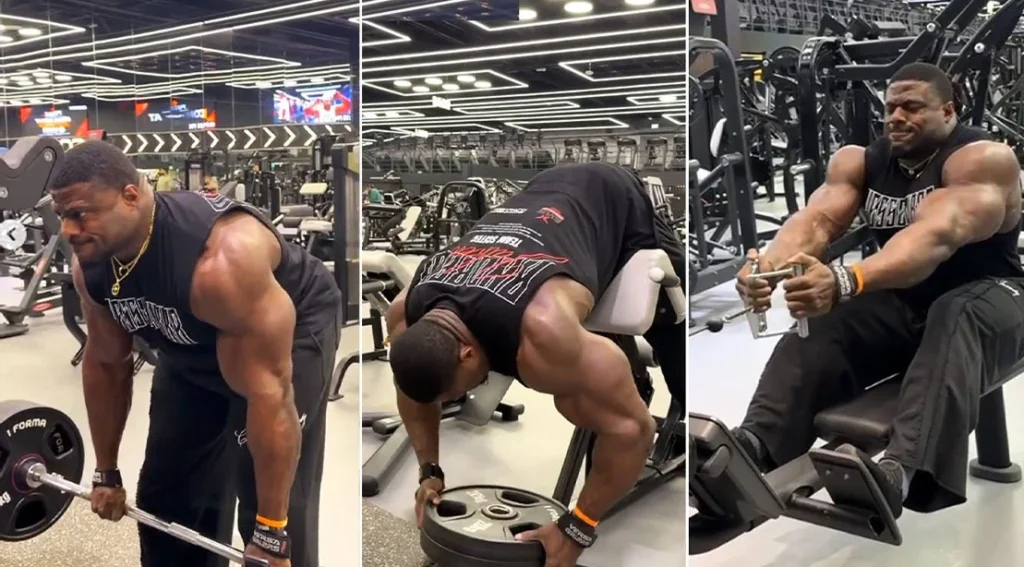
To make hip hinges genuinely effective for hamstring hypertrophy, training protocols must keep the knee joint relatively fixed while minimizing active knee extension demands during the movement. Interestingly, even within dedicated hip hinge and leg curl variations, hypertrophy patterns across the individual heads of the hamstrings can differ markedly depending on the specific mechanical profile of the exercise.
Consider recent investigative work examining the stiff-legged deadlift and its variants. One study led by Kawama et al. analyzed the physiological adaptations of implementing an eccentric-only, lengthened partial stiff-legged deadlift routine. The results revealed robust growth in the long head of the biceps femoris, the semimembranosus, and the semitendinosus, while the short head of the biceps femoris exhibited comparatively modest gains.
Direct comparative studies between hip hinges and leg curls further illuminate these regional growth variations. Early work by Bourne and colleagues contrasted the 45-degree back extension against the Nordic hamstring curl. The findings demonstrated that the long head of the biceps femoris and the semimembranosus experienced superior growth from the 45-degree back extension, whereas the short head of the biceps femoris and the semitendinosus favored the Nordic hamstring curl.

Reinforcing these distinctions, a more recent study conducted by Morin et al. compared the Nordic hamstring curl directly to the traditional stiff-legged deadlift. The data indicated that the Nordic hamstring curl produced superior hypertrophy in the semitendinosus, while the stiff-legged deadlift favored the semimembranosus, with both exercises eliciting comparable growth in the long head of the biceps femoris.
Taken together, these investigations suggest that hip hinges lean toward being slightly more advantageous for developing the long head of the biceps femoris and the semimembranosus, whereas leg curl variations tend to favor the short head and the semitendinosus. Beyond pure functional anatomy, this divergence provides a compelling, evidence-based rationale for integrating both movement categories into a well-rounded physical preparation program.
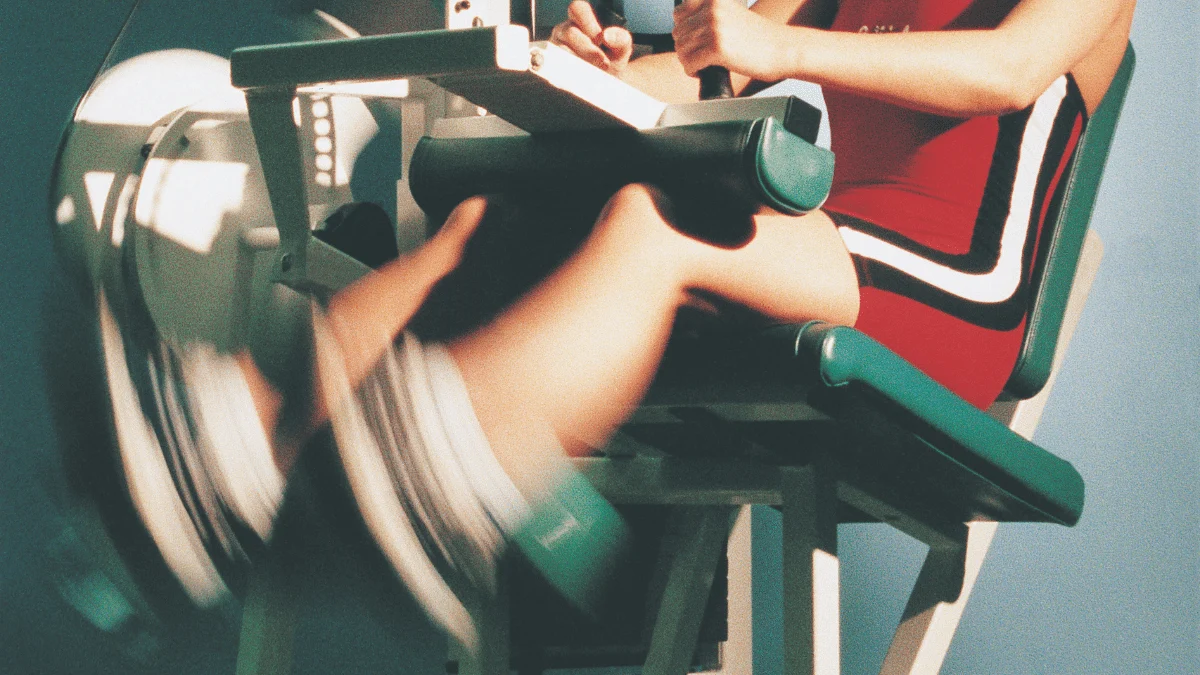
To refine exercise selection further within the leg curl category, two notable studies led by Maeo and colleagues offer practical guidance. The first study contrasted the seated leg curl against the traditional lying leg curl. Performing a leg curl from a seated position inherently flexes the hips, placing a significantly greater stretch on the biarticular hamstrings than a flat lying position. Conversely, the sartorius—a knee flexor that concurrently assists in hip flexion—is placed under a greater stretch during the lying leg curl. Experimental results showed that the seated leg curl produced superior growth in the biarticular hamstrings, while the lying leg curl promoted greater adaptation in the sartorius.
A subsequent study by the same research group compared the seated leg curl—performed with an intentional forward lean to maximize the stretch—against the Nordic hamstring curl. While the seated leg curl emphasizes deep muscle length for the biarticular hamstrings, the Nordic curl maximizes resistance profiles in the stretched position, progressively increasing in difficulty as the trainee lowers toward the floor. The data revealed that the Nordic curl stimulated greater growth in the short head of the hamstrings and the sartorius, whereas the seated leg curl excelled at developing the long head and the semimembranosus, with semitendinosus, gracilis, and popliteus growth remaining comparable between the protocols.
Synthesizing these findings indicates that the seated leg curl serves as a strong primary candidate for overall hamstring hypertrophy. Nevertheless, the lying leg curl retains distinct utility for targeting the sartorius, and the Nordic curl provides unique advantages for the short head of the hamstrings. Researchers note, however, that these specific variations were tested in isolation, and their comparative outcomes might shift when integrated into comprehensive programs that already feature dedicated hip hinge movements.

Additional investigations provide broader context for optimizing posterior chain development, even when not strictly focused on exercise selection alone. A conference abstract by Maeo et al. compared half-repetitions executed exclusively in the stretched position against full range of motion repetitions using a multi-hip apparatus. The findings indicated that growth across both the hamstrings and the glutes was generally enhanced by utilizing the lengthened partial technique, suggesting that partial repetitions in deep stretch positions warrant consideration in advanced programming.
Conversely, a study by Cadeo and colleagues examined whether manipulating ankle position during lying leg curls—specifically comparing fully plantarflexed versus dorsiflexed ankle angles—would alter the recruitment and growth of the biceps femoris long head. This mechanical adjustment aimed to alter the length of the gastrocnemius, a calf muscle that crosses the knee joint, thereby shifting mechanical load to or from the hamstrings. The results demonstrated that ankle position produced no significant impact on the resulting muscle hypertrophy, indicating that foot placement during leg curls remains largely a matter of individual comfort and personal preference.
Ultimately, current exercise science indicates that maximizing hamstring development requires a dual-modality approach incorporating both hip hinges and leg curls. Hip-hinge movements tend to bias the long head of the biceps femoris and the semimembranosus, while leg curl variants excel at targeting the semitendinosus and the short head. Among available curling options, the seated leg curl emerges as particularly effective for broad muscular development, complemented by the unique mechanical benefits of lying curls and Nordic variations. By combining these distinct movement categories and thoughtfully selecting specific exercise variations, trainees can construct a balanced program capable of addressing all four heads of the posterior chain.