

Wide, capped shoulders remain the ultimate cornerstone of a balanced, powerful physique. Whether the goal is stepping onto a competitive bodybuilding stage or simply building a more commanding physical presence, the pursuit of broad deltoids is a universal objective in physical training. However, achieving that coveted V-taper requires
more than just moving heavy loads from point A to point B. According to legendary physique coach Hany Rambod—widely known throughout the fitness industry as "The Pro Creator"—taking the wrong approach to shoulder training can inadvertently sabotage those aesthetic goals by overdeveloping the trapezius muscles instead of the deltoids.
In the complex mechanics of upper-body training, the shoulder joint relies on a sophisticated muscle group known primarily as the deltoids, which are divided into the anterior, lateral, and posterior heads. These muscles frequently work in close coordination with the neighboring trapezius muscles stretching up toward the neck, as well as the triceps situated along the back of the arms. To isolate and maximize growth within these specific areas, athletes traditionally rely on a staple of movements including overhead presses, lateral raises, rear delt flies, and front raises. Yet, as Rambod points out, the execution of these exercises dictates whether an athlete successfully builds width or merely thickens their upper back and neck.
Hany Rambod’s Delt-Isolation Method
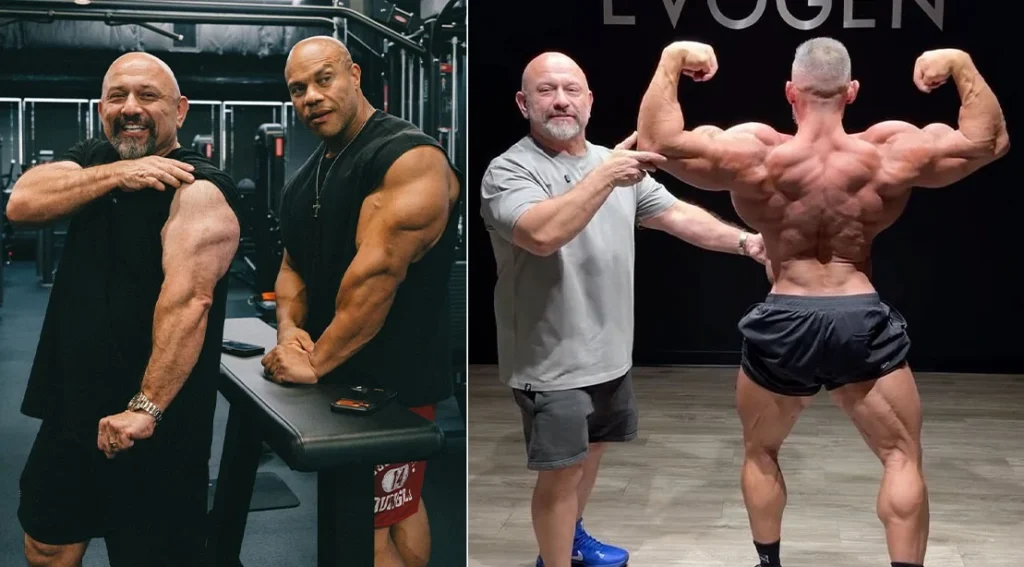
With a coaching resume boasting an astonishing 25 Olympia titles, Rambod has guided some of the most iconic and dominant competitors in the history of professional bodybuilding, including legends such as Phil Heath, Jay Cutler, Hadi Choopan, and Derek Lunsford. His insights into physique development carry immense weight across the fitness community. Addressing the common pitfalls of shoulder training, Rambod highlights a fundamental error that many lifters make in their pursuit of heavy lifting.
"The key for shoulders is not to train too heavy," Rambod explained, noting the mechanics behind improper load management. "Because if you go heavy, your traps kick in."
When an athlete attempts to move excessive weight during shoulder-targeted movements, the body instinctively recruits larger, more powerful surrounding muscle groups to assist with the load. The trapezius muscles, located across the upper back and neck, frequently take over the primary workload if the weight is too demanding or if form begins to break down. To counteract this, Rambod advises lifters to avoid swinging or using momentum, advocating instead for a controlled approach using moderate to challenging resistance that keeps the continuous tension locked squarely onto the targeted deltoid fibers.
While conventional fitness culture has long perpetuated the notion that heavier weights automatically equate to greater muscle hypertrophy, modern sports science offers a nuanced perspective on resistance training. Research published in scientific literature demonstrates that substantial muscle hypertrophy can be achieved using lighter loads—sometimes as low as 40 percent of an individual’s one-rep maximum—provided the training volume and proximity to muscular fatigue are appropriately managed. Nevertheless, whether an athlete chooses to operate within the traditional moderate-rep hypertrophy range of eight to twelve repetitions or utilizes lighter loads with higher volume, the underlying principle remains unchanged: execution and strict form dictate efficiency.
The Aesthetic Trap of Overdeveloped Traps
The danger of improper form extends far beyond mere training inefficiency; it can actively compromise the visual symmetry of the upper body. When momentum is introduced into a shoulder movement through body English or swinging, the traps inevitably hijack the exercise. According to Rambod, this reliance on momentum not only diminishes the mechanical stimulus placed on the deltoids but also triggers structural changes that work against the desired aesthetic.
"Once you swing, you engage the traps," Rambod said, detailing how momentum robs the shoulders of their growth potential. "And, if your traps get too big, it actually can make you look more narrow."
This visual illusion stems from proportions. A heavily overdeveloped, thick upper trapezius and neck region can diminish the apparent width of the clavicular area, drawing the eye inward and creating a narrower silhouette. This optical effect runs completely counter to the goals of both aesthetic fitness enthusiasts and competitive bodybuilders, who spend years meticulously carving a wide, sweeping upper body to maximize their visual impact.
For competitors stepping onto the bodybuilding stage, failing to strike the correct balance between trap development and deltoid thickness can carry tangible consequences under the scrutiny of the judging panel. Proportional harmony is a fundamental criterion in professional physique evaluation.
"If you’re gonna be bodybuilding and you’re trying to get on stage at some point, you really want to make sure you balance the trap size with the thickness of the delts, so therefore you maximize your width," Rambod emphasized.
The overarching takeaway from the coach’s philosophy reframes how lifters should view their training sessions. Success in shoulder development is defined less by the ego-driven pursuit of maximum weight and more by precision, mind-muscle connection, and the intentional distribution of mechanical load.
"It’s not about how much weight you move, it’s about where you’re putting the tension," Rambod wrote in a recent statement to his followers. "Keep the traps out of the movement, focus on your delts, and make every rep count."