
Nike is set to take over as the official match ball provider for the UEFA Champions League starting next season, bringing a definitive end to Adidas’s quarter-century association with European soccer’s premier club competition.
The agreement, which extends until the conclusion of the 2030/31 campaign, also establishes a historic sweep for the American sportswear giant. In addition to the Champions League, Nike will replace Decathlon brand Kipsta as the official ball supplier for the UEFA Europa League and the UEFA Conference League. This sweeping partnership marks the first time in history that a single company has simultaneously supplied the match balls for all three of UEFA’s men’s club competitions.
While financial terms were not officially disclosed by the governing body, SportsPro understands that the lucrative deal is valued at approximately €40 million (US$44 million) per year. This figure aligns with original reports from the Financial Times, which indicated that the new agreement doubles the financial value of the previous commercial contract.
For Nike, the partnership represents a triumphant return to a stage it once occupied at the turn of the century. The company previously supplied the match ball for the Champions League final between 1998 and 2001 before losing the contract to rival Adidas, whose rights were progressively expanded to cover every single match in the competition by 2006.
Nike’s path back to European club football’s crown jewel cleared earlier this year. Following a competitive tender process launched in March, UEFA men’s club competition commercial rights owner UC3 and its global sales agency, Relevent Football Partners (RFP), entered exclusive negotiations with Nike in April.
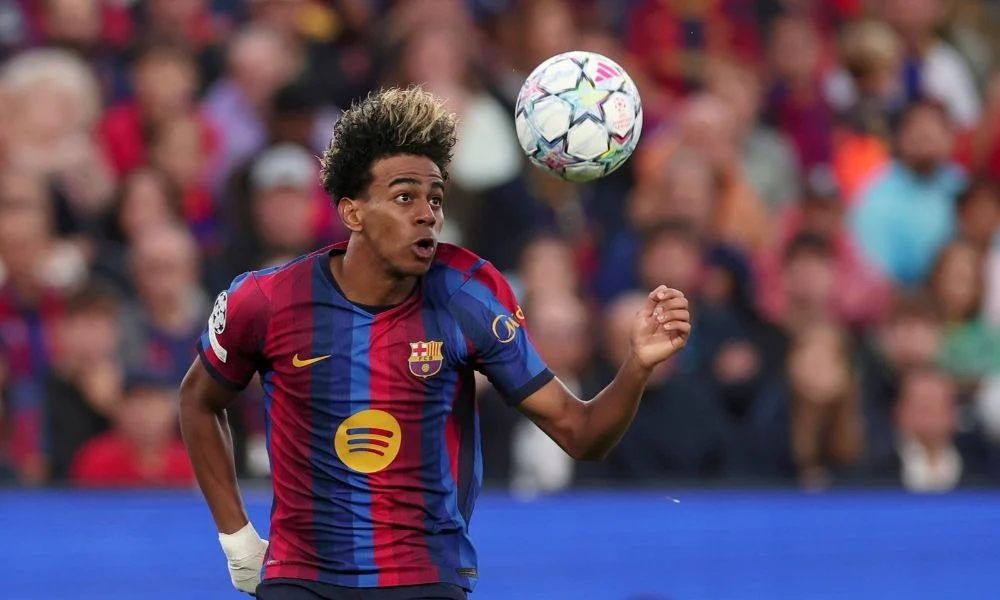
Further information regarding the aesthetic design of the new match balls is expected to be released in due course. However, questions remain regarding whether Nike will be able to incorporate the iconic star pattern that has become synonymous with Adidas match balls over the last two decades. Reports from The Guardian suggest that the German company currently holds the rights to that specific design, setting up potential visual changes for the tournament’s on-field look.
“Football is the world’s game, and the ball is at the centre of it, the one thing every player, in every competition, has in common,” said Camilo Andrade, vice president and general manager of Nike Football, emphasizing the cultural and sporting weight of the new partnership.
“This is a long-term commitment for Nike. We will listen to the athlete’s voice, push the edges of innovation, honour the prestige and tradition of these competitions, and make sure the ball represents the instinct, creativity and joy football brings to billions of fans,” Andrade added.
The blockbuster announcement serves as a significant morale and strategic boost for Nike. Chief Executive Elliott Hill has explicitly named soccer as a top priority sport within his overarching strategy to revitalize the brand’s financial fortunes and market share following his return to the business in 2024. The timing of the agreement was strategically underscored, being confirmed precisely on the eve of Nike’s investor day on 17th November.
Securing the UEFA portfolio also effectively fills a critical gap in Nike’s elite soccer equipment roster. The company had recently been left without a major tier-one ball supply deal in European men’s soccer after the English Premier League decided to switch to Puma—another German competitor—starting from the 2025/26 season, bringing an end to a 25-year association between the Premier League and Nike.
The partnership comes at a time when Nike has experienced mixed fortunes within its broader roster of football assets. The company recently saw French superstar Kylian Mbappé, one of its most prominent global athletes, opt to sign a boot endorsement deal with Swiss upstart brand On rather than extend his long-standing relationship with Nike.
Despite such high-profile shifts in individual endorsements, Nike retains an immense and pervasive footprint across elite European soccer. The brand maintains massive kit supply contracts with several perennial Champions League contenders and titleholders, including French powerhouse Paris Saint-Germain, Spanish giants FC Barcelona, and reigning Italian champions Inter.
The match ball agreement is part of a broader commercial shakeup overseen by Relevent Football Partners (RFP). RFP stepped in to replace Team Marketing, an agency that had managed and sold commercial rights for UEFA’s men’s club competitions for over three decades, acting as UC3’s exclusive global sales agency.
Under RFP’s stewardship, a redesigned tiered sponsorship structure has been introduced. This new framework is headlined by four premier partner slots designed to offer mega-brands the opportunity to secure comprehensive deals covering all three men’s club competitions simultaneously, alongside global packages tailored for individual tournaments.
Although Nike’s sweeping agreement covers all three distinct competitions, its designation as an official supplier means it will not occupy one of the premier partner slots, nor will it be formally classified as a global tier-one sponsor.
Refining the commercial strategy earlier this year, Charlie Marshall, chief executive of the European Football Clubs body and co-managing director of UC3, noted that the organization was eager to shake things up while keeping open channels for legacy partners.
That pragmatic philosophy has been clearly demonstrated throughout the current sales cycle. In one of the most notable transitions, Anheuser-Busch InBev successfully ended Heineken’s long-standing monopoly over the lucrative beer category in an agreement reportedly valued at roughly €200 million (US$232 million) annually. Meanwhile, major global entities such as Alibaba and returning partner PepsiCo have committed to top-tier deals for the 2027 to 2033 commercial cycle, while Haier and Hyundai have signed on as official global sponsors specifically for the Champions League.
Industry insights indicate that the ongoing sales process has already surpassed the revenue generated during the previous cycle and is comfortably on track to deliver more than €1 billion in total annual commercial income for UEFA.
While Adidas has lost its foundational grip on the men’s Champions League, the German sportswear manufacturer maintains a formidable presence elsewhere in international and elite football. Adidas remains the official match ball supplier for the UEFA Women’s Champions League, the FIFA World Cup, and a wide array of major UEFA national team competitions, including the upcoming Euro 2028 tournament and the UEFA Nations League.