What began as an informal experiment by former Manchester United and England full-back Gary Neville to “scratch an itch” has evolved into a multimillion-dollar sports media powerhouse. Speaking at the Sportel sports business conference in Monaco, Scott Melvin, chief executive of The Overlap, reflected on the remarkable trajectory of the digital-first brand that has come to define a new wave of creator-led media.
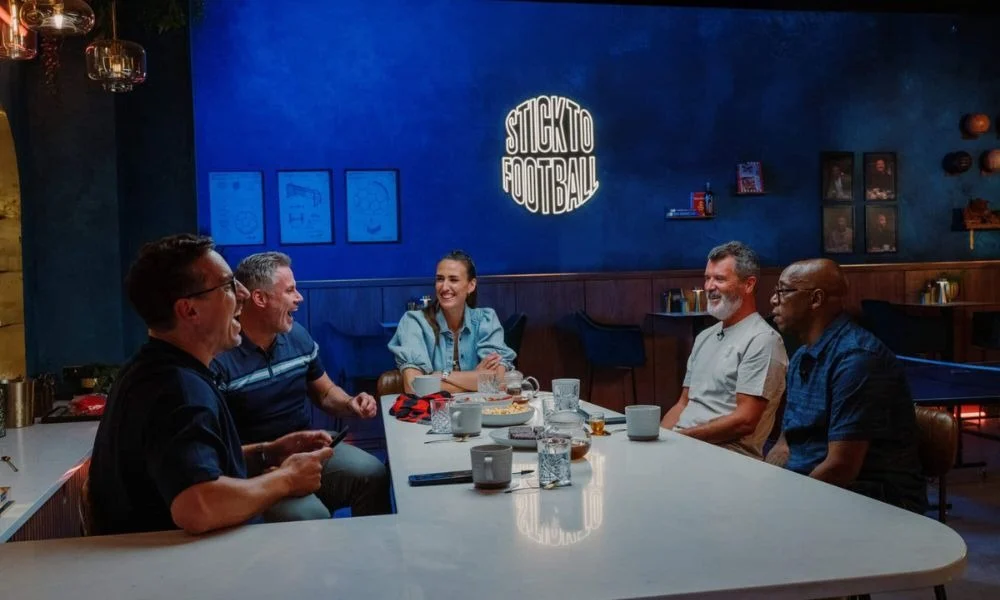
Neville began interviewing prominent sporting figures back in 2021 before launching Stick to Football two years later—a fortnightly discussion show featuring a lineup of familiar ex-players and pundits. On the surface, Melvin candidly admits, the concept was entirely unremarkable: gather a group of football figures around a table and let them talk about the game. There was no revolutionary blueprint, no complex formatting, and no rocket science involved.
Yet, viewers immediately connected with the content, recognizing the undeniable quality and chemistry of the talent lineup. The Overlap found itself in precisely the right place at the right time, capturing a surging consumer demand for digital-first, always-on sports conversations. Now, half a decade after its inception, what started as a modest side venture has transcended its original medium. It has secured lucrative streaming deals with major global platforms and increasingly dictates the wider sports media agenda.
“It was almost an accident,” Melvin told the audience in Monaco, describing the early days of Stick to Football. “It’s a bit of an experiment. It’s not a revolutionary idea: let’s get five people around a table and talk about football. You know, it’s not rocket science. But then very quickly we realised that something special was happening. And then we realised, actually, this is not just a hustle, this is a business, and we started seeing monetisation kick in and realised this needs a lot more attention than we’re probably giving it.”
Owning the Conversation
Comparisons between The Overlap and Goalhanger’s The Rest Is Football have proved inevitable within the industry. Both successful podcasts are spearheaded by former players turned broadcasters named Gary, and both rely heavily on high-profile talent sourced from established television networks. While Goalhanger co-founder Gary Lineker enlisted his former Match of the Day colleagues Alan Shearer and Micah Richards, Neville is joined by fellow high-profile Sky Sports and ITV pundits Roy Keane, Ian Wright, and Jill Scott.
Although Lineker has since parted ways with the BBC, the success of both shows signals a broader industry shift. The UK’s leading football voices have successfully cultivated personal brands powerful enough to reach massive audiences independently of their primary television employers. Furthermore, global streaming agreements—with Netflix for The Rest Is Football and Disney+ for The Overlap—have granted these creator-led properties true international scale, alongside substantial commercial wealth for their founders.
This growth trajectory caught the attention of major corporate buyers. In January, The Overlap was acquired by Global, one of the largest commercial radio operators in the UK and Europe, in a strategic move to bolster the broadcaster’s digital audio and video footprint. Global established a dedicated sports division last year, viewing The Overlap’s massive audience and star-studded talent roster as vital commercial assets. Last year alone, The Overlap generated 2.2 billion views across all platforms and pulled in 38 million monthly views on YouTube alone, proving that its panellists command attention far beyond younger, digitally native demographics.
Melvin credits much of Stick to Football’s appeal to its loose, unpretentious production style, giving talent the time and freedom to debate whatever topics they choose. Released on a fortnightly cadence, the content typically features a topical discussion episode in the morning, followed by an evergreen guest interview later in the afternoon.
Yet, Melvin emphasizes that live sport remains the ultimate driver of the entire ecosystem. Because live broadcasting rights are prohibitively expensive—putting them out of reach for independent creators and leaving only a select few major channels capable of affording the Premier League—alternative strategies are required.
“Live [sport] is the most important thing—it drives everything we do,” Melvin explains. “But rights are prohibitively expensive for any creator and there’s only one or two channels that can afford the Premier League. So, if you can’t own the rights, own the conversation. Most teams only play once a week so there are more than 150 hours when they’re not playing. That’s a big opportunity so how do you try and own that conversation?”
“We Needed to Be More Reactive”
While The Overlap’s scheduled fortnightly releases serve as reliable appointment viewing for fans eager to hear expert analysis on major weekly talking points, the format has inherent limitations. Anticipation often builds around what Neville and Keane will say about Manchester United following a heavy defeat—such as their 3-0 home loss to Bournemouth last month—even if both pundits have already appeared on Sky Sports’ live match coverage.
However, a fixed schedule struggles to accommodate breaking news stories that erupt between scheduled recording sessions. Melvin acknowledged that any media outlet or creator aiming to dominate daily discourse must operate with greater agility and responsiveness.
Recalling a turbulent period last season, Melvin notes, “Last November, Ruben Amorim was sacked by Man United on a Monday morning. We didn’t talk about it for ten days and we were sat there saying, ‘How can we be a home for football conversation when we don’t discuss a Man United manager getting sacked for ten days?’ People were giving us stick online for not talking about it. But we have a schedule and to try and get the five people we have on the panel together at a day’s notice is impossible. So, we just had to suck it up and wait.”

Recognizing that this rigidity was less than ideal, the company moved to launch Overlap Daily. Designed to operate on a continuous basis, the one-hour daily format addresses the reality exposed by major tournaments like the World Cup: the public appetite for football is relentless, spanning 24 hours a day, 365 days a year. The strategic objective, Melvin notes, is to remain as reactive and relevant as possible.
Going for Goldbridge
Launching a frequent, daily podcast within a crowded marketplace populated by traditional media giants and established digital creators is a formidable challenge, even for an established brand. Melvin’s solution involved partnering with an existing creator who possessed a high-volume output and a complementary audience—laying the groundwork not only for a daily soccer show, but for an expanding network of club-specific content.
Mark Goldbridge, whose legal name is Brent Di Cesare, initially faced ridicule for his highly expressive, emotive watchalong streams. Over time, however, he established himself as a leading figure in the fan-led content creation movement, cultivating millions of subscribers across his United Stand channel before branching out into broader football commentary with That’s Football.
Global subsequently acquired both properties for a reported seven-figure sum. This acquisition saw That’s Football transformed into Overlap Daily, augmented by additional journalists and former professional players joining Goldbridge. A parallel strategy was implemented for The United Stand, where figures like Wayne Rooney have made appearances—a collaboration that would have seemed nearly impossible just a few years ago.
Reflecting on the shift in the media landscape, Melvin admits that traditional broadcast attitudes towards fan channels have radically reversed. “We knew we wanted to try and move into club-specific [content] and it would have been the easiest thing in the world for us to start a Man United channel,” Melvin says. “But it’s taken Mark 12 years to build up to 2.5 million subscribers. It’s taken us five to get to 1.8. So, we could start a Man United channel and be at two million subs in ten years, or we partner with Mark, and instantly you’ve got 2.5 million Man United fans, and then another 1.5 on That’s Football. So, for us, it was a shortcut, but we knew he had a super-engaged community there already.”
“I spent 18 years at Sky Sports,” Melvin adds. “We were there at the same time, and we used to laugh at fan channels, because it was just angry, shouty, reactive. The joke’s on us now, because they are killing it, both from a credibility point of view and financially from brand partnerships. It’s definitely no laughing matter.”
This collaborative model could serve as a blueprint for future expansion into other club-specific channels as The Overlap builds out a broader network. Following a successful foray into cricket coverage, further expansion into additional sports is also under active consideration.
Navigating the Future of Digital Distribution
Content creators are not the only entities looking to seize control of the conversation. Global streaming services are increasingly eager to integrate sports-adjacent content onto their platforms, allowing them to engage sports fans without committing to the astronomical costs associated with live broadcasting rights. This commercial reality paved the way for the Disney+ distribution partnership, exposing The Overlap’s portfolio to a mainstream, global audience.
Nevertheless, YouTube continues to serve as a primary route to market. Video content currently accounts for 80 per cent of The Overlap’s overall consumption. While audio distribution remains a vital component of the business, the company is actively investing to grow its audio share, unlocking more lucrative brand partnerships and commercial revenue streams.
“Brand and advertising money is all shifting towards YouTube… and this is just the beginning,” Melvin states. “It’s only going one way and I think you’re going to see more and more rights holders and athletes come onto the platform.”
Beyond advertising partnerships, popular podcasts with fiercely loyal followings are increasingly experimenting with subscription models and membership tiers. These offerings provide superfans with bonus content, exclusive access, and dedicated community features designed to generate recurring revenue while combating broader consumer subscription fatigue.
For The Overlap, maintaining audience trust is paramount when structuring commercial offerings. Melvin emphasizes that consumer willingness to pay depends heavily on perceived value rather than arbitrary pricing.
“The thing with subscriptions is price is different to value,” Melvin explains. “If a subscription is value for money people will come, and we are always conscious that you don’t want to be seen as taking liberties with your audience. Our subscription is the price of a coffee. It’s UK£4.99—that’s not even a pint in London. So, we think it’s good value, and I think if the value is right, you’ve got a chance. One thing you can’t do is take the piss out of your audience, because they’ll know.”