

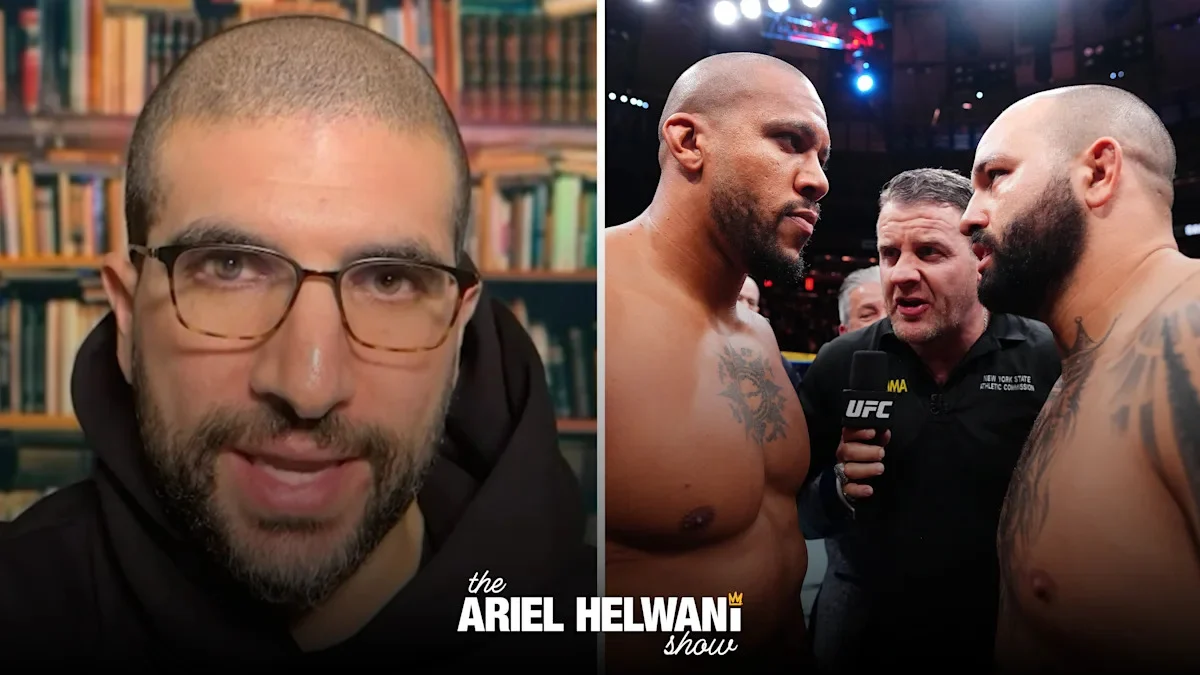
The combat sports world witnessed a seismic shift following UFC 334, an event that reshaped multiple divisional landscapes and provided mixed martial arts enthusiasts with one of the most consequential fight nights of the modern era. In the immediate aftermath of the pay-per-view showcase, veteran combat sports journalist Ariel Helwani took to his Uncrowned platform to offer a comprehensive reaction to the card’s most significant outcomes, led by Kayla Harrison’s shocking triumph over longtime divisional benchmark Amanda Nunes and former interim heavyweight titleholder Ciryl Gane’s victory over rising wrestler Josh Hokit.
Helwani’s post-fight reaction underscored the historic gravity of the night, focusing intently on how the results scrambled established hierarchies and raised fresh questions about the future of two premier weight classes. With UFC 334 delivering high-stakes drama from top to bottom, Helwani walked viewers through the technical nuances, the psychological underpinnings, and the long-term promotional ramifications of an evening that will be remembered primarily for an upset that altered the women’s mixed martial arts record books forever.

Central to Helwani’s post-event analysis was the stunning upset engineered by Harrison against Nunes, a development that instantly sent shockwaves through the sport. For years, Nunes had stood virtually alone atop the mountain of women’s combat sports, widely regarded by peers, analysts, and fans as the consensus greatest female mixed martial artist of all time. Having conquered two separate divisions, authored championship reigns characterized by devastating power, and vanquished nearly every notable pioneer and titleholder across a generation, the Brazilian icon represented the ultimate measuring stick for any prospective contender.
Harrison’s path to this career-defining moment was paved by singular athletic pedigree and intense scrutiny. A two-time Olympic gold medalist in judo, Harrison entered the broader mixed martial arts consciousness through a dominant multi-year tenure in the Professional Fighters League, where she captured tournament championships and demonstrated an overwhelming physical and grappling advantage against opposing competition. However, when she made the decision to test herself on the sport’s biggest stage, skeptics questioned whether her decorated judo base and relentless top control could translate effectively against the most dangerous, well-rounded athletes in the UFC’s bantamweight division, especially while navigating a demanding physical weight cut.

In breaking down the fight, Helwani emphasized that Harrison not only answered those lingering questions but did so in a manner that completely subverted pre-fight expectations. To dethrone an athlete of Nunes’ stature is a rare feat in itself, but to perform with the poise, tactical discipline, and relentless determination required to shock the former two-division champion placed Harrison into an elite, historic tier. Helwani reflected on the magnitude of the moment, noting that victories of this caliber transcend ordinary title contention, fundamentally redefining how a fighter’s legacy is perceived on the global stage.
Helwani pointed out that the upset carries profound structural implications for the women’s bantamweight division moving forward. For years, matchmaking at 135 pounds had operated largely within the orbit of Nunes’ dominance, with prospective challengers evaluated primarily on how their stylistic profiles might fare against her crushing right hand and black-belt submission arsenal. With Harrison securing the monumental victory, the entire dynamic of the division shifts overnight. Helwani examined the promotional avenues now available to the UFC, including the inevitability of conversations surrounding an immediate high-stakes rematch, as well as the emergence of fresh matchups against other top contenders who suddenly find a revitalized path to the top of the mountain.

Beyond the earth-shaking shockwave delivered by Harrison, Helwani turned his attention to the heavyweight co-headliner, where Ciryl Gane successfully navigated a dangerous assignment against Josh Hokit. The heavyweight division has long been defined by its volatility, where a single clean exchange can render months of preparation obsolete, and Gane’s matchup against Hokit offered a quintessential clash of contrasting fighting philosophies and career trajectories.
Gane entered the contest carrying the polished reputation of one of the most fluid, agile, and technically proficient kickboxers ever to compete in the UFC’s heaviest weight class. Having already captured an interim heavyweight championship and competed in multiple undisputed title bouts, the French standout brought a wealth of high-level championship experience to the Octagon. Throughout his tenure, Gane’s game has been predicated on sophisticated distance management, exceptional spatial awareness, and an elusive striking style that presents a logistical nightmare for traditional, lumbering heavyweights.

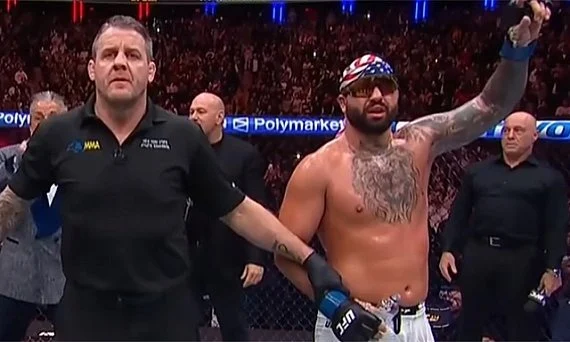
Standing across from Gane was Hokit, a former elite collegiate wrestling standout whose transition into professional mixed martial arts had generated substantial intrigue. A decorated dual-sport athlete with deep roots in freestyle and folkstyle wrestling, Hokit brought the kind of raw explosive power, collegiate pedigree, and relentless takedown threat that has historically represented the clearest stylistic obstacle for Gane. Ever since Gane’s previous championship setbacks, in which high-level wrestling and grappling control proved decisive, every bout pairing the Frenchman against an elite wrestler has been viewed through the prism of his defensive grappling evolution.
In his analysis of the heavyweight encounter, Helwani broke down how Gane handled the stylistic test and preserved his place among the division’s premier elite. Rather than allowing Hokit to dictate the terms of engagement or turn the contest into an uncomfortable grind against the cage, Gane utilized his signature movement, footwork, and precise striking to neutralize the wrestler’s primary avenues to victory. Helwani noted that Gane demonstrated significant technical maturity, refusing to overextend into dangerous pocket exchanges where Hokit could capitalize on his strength and leverage.

The victory, as Helwani emphasized, serves as a crucial reaffirmation of Gane’s standing as an elite heavyweight contender. In a division where new blood is constantly sought to invigorate the championship picture, turning back an ambitious, heavy-handed wrestling talent like Hokit reinforces that breaking into the absolute upper echelon of the heavyweight ranks requires far more than collegiate grappling accolades. For Hokit, Helwani noted that the contest will serve as an invaluable learning experience, exposing the precise technical nuances and patience required to bridge the gap between emerging prospect and established world-class competitor.
Helwani also reflected on the broader card at UFC 334, examining how the evening’s collective outcomes fit into the wider narrative of the organization’s calendar year. Post-fight reactions within mixed martial arts media frequently focus on singular highlight-reel finishes, but Helwani’s breakdown highlighted the connective tissue between individual fight outcomes and the organizational shifts that follow. From emerging prospects asserting their readiness for step-up competition to established veterans fighting to defend their divisional real estate, the event functioned as a critical clearinghouse for upcoming matchmaking decisions.

Throughout his commentary, Helwani’s analysis on Uncrowned demonstrated why post-fight reaction shows have become vital viewing for mixed martial arts followers. Rather than simply reading through official scorecards, Helwani contextualized each result within the broader historical tapestry of the sport, weighing what Harrison’s breakthrough means for the legacy of women’s mixed martial arts, evaluating how Gane’s continued technical execution impacts the heavyweight title queue, and assessing how the promotion will navigate the matchmaking fallout in the months ahead.
With UFC 334 now in the books, the ripple effects of the event are set to dominate combat sports discussions for weeks to come. Harrison’s stunning performance against Nunes provides the women’s bantamweight division with an entirely new narrative focal point, while Gane’s triumph over Hokit solidifies his continued relevance among the sport’s heavyweight elite, leaving fans and analysts eager to see how the matchmaking landscape evolves in response to a truly unforgettable night of fights.