

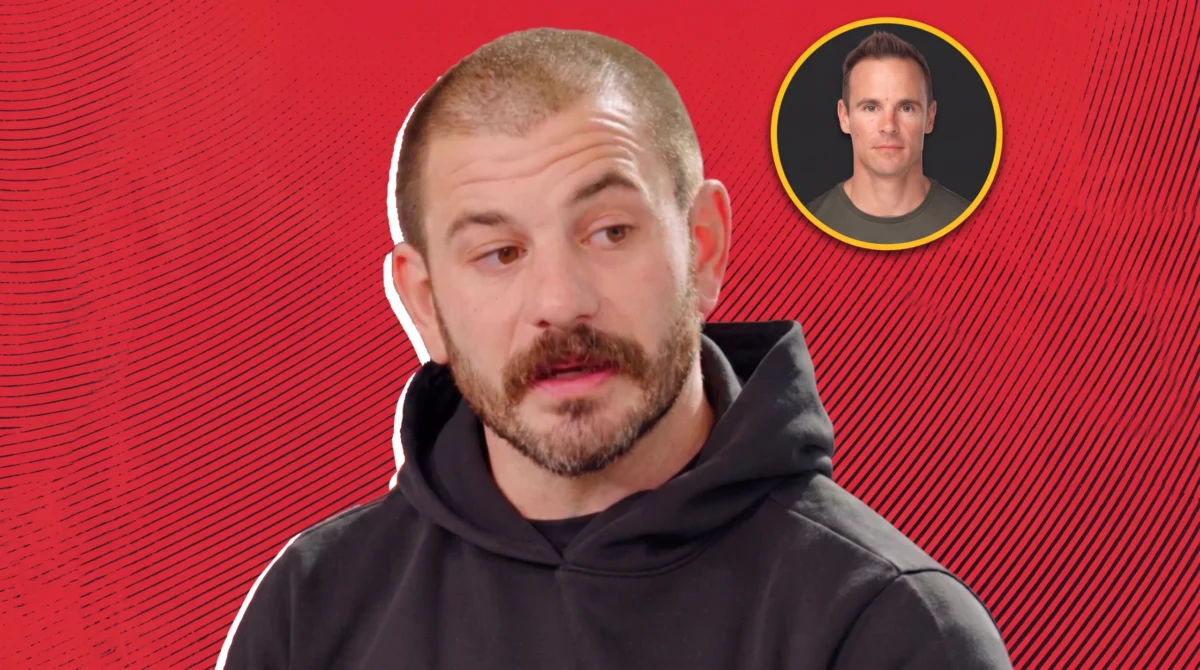
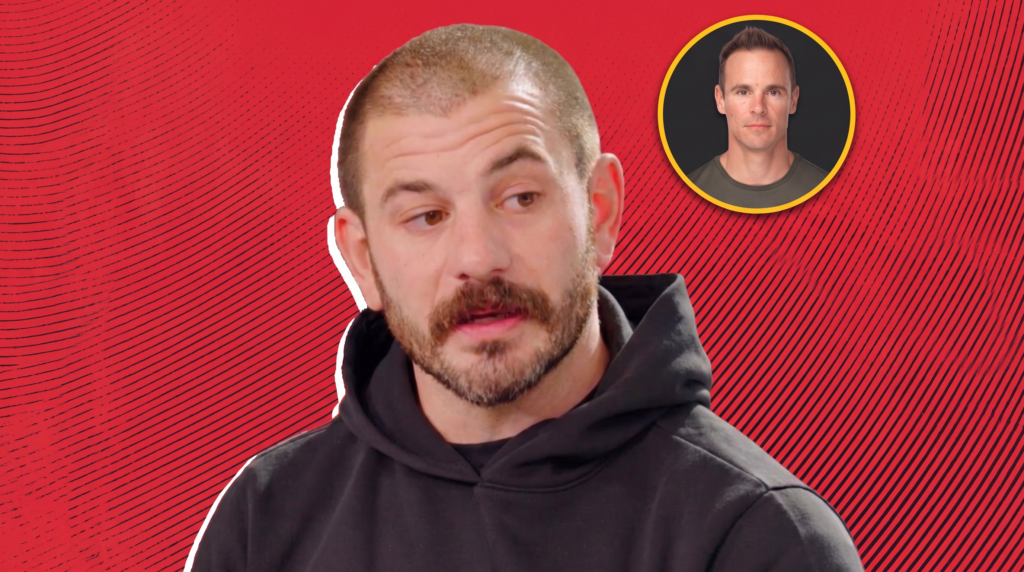
To the casual observer, Mat Fraser’s legacy in the sport of CrossFit looks like an untouchable masterclass in dominance. Capturing five consecutive CrossFit Games titles, Fraser built a reputation as an unyielding machine—a competitor who seemingly felt no pain and knew no equal. Yet, behind the gleaming gold medals and the indomitable five-year undefeated streak lay a starkly different reality. In a recent appearance on the Strong Talk podcast, the retired champion pulled back the curtain on his storied career, offering a raw, unfiltered look at the psychological toll of elite competition, the terror of falling short, and the surprising physical toll that accompanied his historic reign.
Fraser’s dominance was not forged in comfort; it was born from a cocktail of intense anxiety and grueling physical preparation. Among the most striking revelations from his interview was the admission that he threw up before nearly every single event during the CrossFit Games. Long before stepping onto the competition floor to execute flawless barbell cycling or punishing gymnastics, Fraser would retreat to the back of the starting corral to run through a quiet ritual. There, he would recite the Serenity Prayer, focusing meticulously on what was within his control, before the physical manifestation of his nerves—the dry heaves and vomiting—would inevitably take over. His manager, Matt O’Keefe, reportedly grew so accustomed to this routine that he would actually feel uneasy if Fraser didn’t throw up before a heat, viewing the nausea as a necessary barometer of readiness.
That visceral anxiety was mirrored by the sheer brutality of the workouts he endured. When asked to name the single training session or event he would least like to repeat, Fraser pointed directly to a grueling 42,000-meter rowing marathon at what he believes was the 2018 CrossFit Games. Spanning roughly three to three and a half hours, the relentless endurance test pushed him to absolute exhaustion. Describing the aftermath, Fraser noted that he sweated so profusely it looked as though someone had taken two gallons of water and dumped them directly onto the floor. Though he managed a top-ten finish, the aftermath demanded a humbling compromise with his team. He recalled whispering to an associate that he needed to be carried away from the arena, but sternly warned them to make it look effortless so his competitors wouldn’t catch a glimpse of how thoroughly crippled he felt.
Fraser’s relentless drive was initially sparked by profound heartbreak. His second-place finish at the 2015 CrossFit Games hit him with devastating force, striking at the core of his personal identity and plunging him into a period of depression. Aside from his first two Games appearances, which also concluded without a top-podium spot, that agonizing defeat served as the final blemish on an otherwise spotless major career. Following 2015, Fraser embarked on an unprecedented five-year run where he did not lose a single in-person competition. Reflecting on those years, Fraser emphasized that public glory is an illusion built entirely in solitude. You do not experience the celebratory moment in front of thousands of roaring fans, he noted, without enduring a thousand lonely moments in your own gym when no one is there to pat you on the back.
This mindset manifested in what Fraser calls the "tasting pennies" approach to training. Whenever he faced a grueling threshold piece, he pushed his body until his head tingled and his mouth tasted metallic. His internal logic was brutally pragmatic: whether he pushed through or throttled back, he would eventually find himself at the water fountain ten minutes after the workout feeling totally fine. However, holding back meant leaving a permanent question mark hanging over his potential. For Fraser, pushing through the agony was the only way to ensure no doubt was left on the table.
Ironically, despite the punishing nature of CrossFit, Fraser revealed that he rarely went all-out in his day-to-day training. Instead, the vast majority of his year was dedicated to single-modality work—strength training, conditioning blocks, and accessory movements performed separately. He compared this preparatory phase to studying for an exam, while the actual metcons at the competitions served as the final test. Within this regimen, the rowing machine often functioned as a psychological sanctuary. If an athlete fails on a rower, the worst-case scenario is a six-inch drop back to the floor, providing a stark and safe contrast to dropping a heavy barbell on one’s body or taking a catastrophic fall from the rings. He distinguished carefully between training to compete and training simply to build, noting that they are two entirely different physiological and mental endeavors.
This elite approach to handling discomfort drew insightful commentary from Pat, the show’s science contributor, who discussed Tim Noakes’ central governor model. The theory posits that the brain acts as the primary referee of fatigue, regulating physical output to protect the body from self-destruction. Pat noted that familiarity with intense discomfort effectively calms the brain, explaining why seasoned champions can navigate physiological distress that would cause panic in an unconditioned individual. To drive the point home, Pat used a vehicular analogy, warning that everyday lifters cannot expect to drive a standard car like a monster truck without mechanical failure, emphasizing the importance of respecting one’s baseline conditioning rather than blindly mimicking elite protocols.
Fraser also shared practical wisdom for athletes preparing to compete, advising against the common habit of rivals who begin moving and warming up far too early. Instead of pacing anxiously on the sidelines, Fraser would execute a rep or two and then sit quietly under a blanket, conserving his energy by resting as hard as possible before his heat.
Life after competitive retirement, however, brought its own distinct set of challenges. Transitioning away from the podium hit Fraser harder than he anticipated, leaving his daily gym sessions feeling hollow and purposeless. He quickly realized that unless he was willing to commit to an eight-hour training day, his workouts were merely serving to slow down his inevitable physical decline. Staring at the merciless digital display of a rowing machine that offered no comfort or lies, it took him a couple of years to find a balanced perspective. Today, his primary motivation has shifted toward family. His main "why" is rooted in wanting his children to see that training is a normal, healthy part of daily life and to help them establish sound movement mechanics from an early age.
Even in retirement, Fraser’s intrinsic need for physical outlets has not faded. Recent genetic testing provided a fascinating scientific postscript to his career, revealing that while his top-end strength is relatively modest, his physiological response to endurance training is exceptionally high. In fact, a weightlifter once remarked to him that he was essentially an endurance athlete who had spent a decade training for strength sports. This genetic predisposition explains his recent gravitation toward massive endurance feats, such as tackling the Grand Canyon’s rim-to-rim-to-rim trail—a grueling 45-mile journey featuring roughly 11,000 feet of elevation gain and loss—as well as climbing Vermont’s Camel’s Hump three times in a single day while incorporating 1,000 burpees over the span of roughly eight hours.
Fraser’s current training routine is refreshingly straightforward. He frequently relies on a 15-minute EMOM protocol consisting of burpees over a 30-inch box, performing 10 reps for 10 minutes or scaling it to 12 reps for 12 minutes, keeping his focus strictly confined to the next 30 seconds. Nutritionally, he favors simplicity and repeatability, often turning to ground beef bowls seasoned with taco spices and paired with white rice because the meals are easy to prep, palatable, and simple to reheat.
Looking back on the foundational elements that shaped his journey, Fraser credits Chris Polakowski, an elementary school physical education teacher who self-funded and built a weightlifting room for his students without charging a single penny. Under Polakowski’s watchful eye, students were never permitted to execute a single repetition unless he was actively observing them, instilling the vital lesson that true athletic development requires dedicated coaching and patience rather than simply following a generic spreadsheet. For Fraser, those early lessons in purpose, combined with an unmatched capacity for suffering, ultimately paved the path from a struggling competitor to one of the most dominant athletes in the history of fitness.