


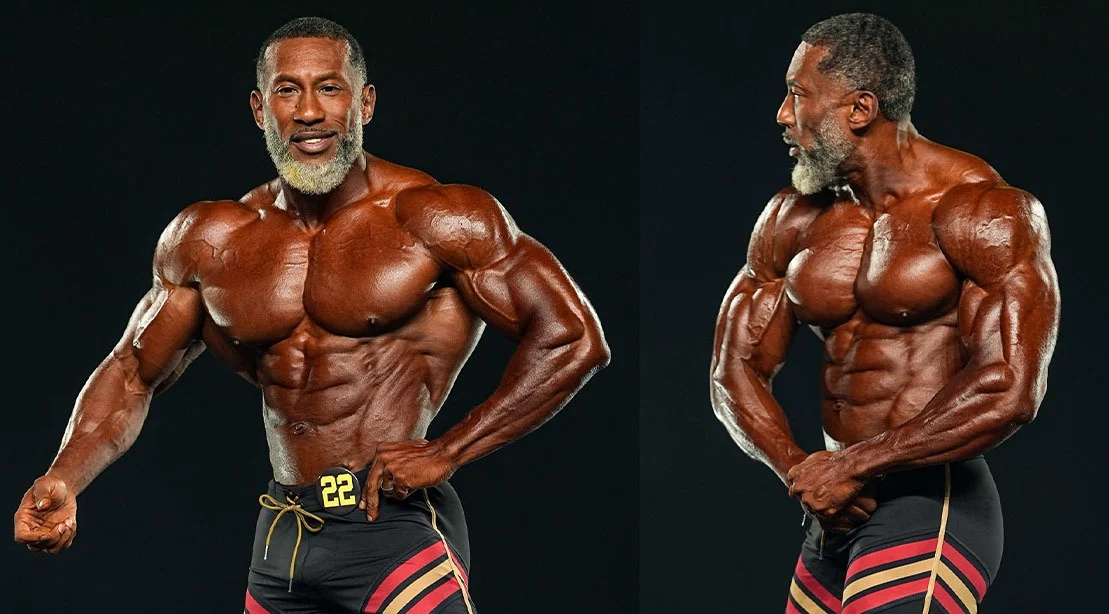
At 50 years old, IFBB Pro and Masters Men’s Physique competitor Adam J. Ellison possesses a physique that regularly turns heads and leaves individuals half his age in awe. Juggling the demanding responsibilities of a professional career alongside his role as a proud father of three, Ellison proves that age is no barrier to peak physical conditioning. Recently taking to Instagram to share his unfiltered "No B.S. guide" to body recomposition, the elite athlete has offered a masterclass in how to effectively drop stubborn body fat while maintaining hard-earned muscle mass, all while navigating the biological shifts that accompany the aging process.
As men mature, physiological changes are virtually inevitable. Scientific literature highlights that fat mass tends to naturally increase while lean muscle mass declines over time, a shift largely influenced by a natural slowdown in metabolic rates. These metabolic changes are a primary reason why shedding body fat becomes increasingly challenging as the years accumulate. However, Ellison’s journey serves as a powerful reminder that these biological realities do not mean fitness and physique goals must be abandoned. Rather than accepting a decline in physical conditioning as an inevitable consequence of aging, Ellison continues to dominate on the competitive bodybuilding stage.
His ongoing success was prominently displayed at the 2026 IFBB Masters World Championships, where he captured the top spot in the Master’s 50+ Men’s Physique category. Demonstrating that he can still compete at the highest levels against younger generations, Ellison also secured a remarkable second-place finish in the 40+ division, holding his own against competitors up to a decade his junior. Backed by this level of competitive longevity and credibility, Ellison’s practical insights into fat loss and muscle preservation offer a refreshing and scientifically aligned perspective for aging athletes and fitness enthusiasts alike.
How Does AJ Ellison Shred Body Fat and Maintain Muscle After 50?
Protein-Centric Meal Structuring:
According to Ellison, the foundation of any successful physical transformation is built far away from the weight rack. In his social media commentary, the seasoned competitor emphasized that fat loss fundamentally begins in the kitchen, reiterating the timeless fitness adage that it is impossible to out-train a poor diet. Rather than relying on restrictive fad diets or erratic eating patterns, Ellison advocates for a structured, protein-forward nutritional approach to keep metabolism stable and support lean tissue recovery.
To achieve this, he recommends consuming substantial amounts of protein at every single meal, specifically targeting a range between 50 and 70 grams per sitting. By anchoring each plate around a high-quality protein source first, individuals can naturally regulate their appetite, stabilize blood sugar levels, and preserve muscle tissue while in a caloric deficit. Once the protein requirement is established, the remainder of the meal is rounded out with nutrient-dense whole foods, ensuring a balanced intake of essential micronutrients and complex macronutrients without unnecessary complications.
Prioritizing Muscle Maintenance
A common pitfall for individuals attempting to lean out is an excessive focus on simply burning more calories through sheer volume of exercise. Ellison views this common strategy as entirely backwards, arguing that the primary objective should always be the protection and maintenance of existing muscle tissue. While muscle tissue does not directly burn vast quantities of calories on its own in the simplistic ways often claimed, the presence of greater amounts of metabolically active muscle tissue elevates the body’s overall energy demands, leading to a higher baseline caloric requirement and supporting long-term metabolic health.
To foster an environment conducive to muscle growth and preservation, the competitive bodybuilder recommends a structured resistance training schedule consisting of lifting weights three to four times each week. Crucially, he stresses the importance of progressive overload, emphasizing that practitioners must consistently strive to progress their lifts whenever possible over time to stimulate ongoing muscular hypertrophy. By keeping resistance training intense and purposeful, individuals ensure that the weight they lose during a fat-loss phase comes primarily from adipose tissue rather than metabolically valuable muscle.
Low-Stress NEAT Over Excessive Cardio:
Cardiovascular training often occupies the center stage in traditional weight-loss programs, but Ellison views it strictly as a supportive tool rather than the foundational cornerstone of his routine. While cardio has its place in a comprehensive fitness regimen, the veteran competitor maintains that strength training must always take precedence. For his substantial audience of nearly 900,000 Instagram followers, Ellison explains that cardiovascular exertion should be utilized to support overall physical recovery and health rather than functioning as a form of punishment for dietary slip-ups.
To integrate cardiovascular activity seamlessly into a busy lifestyle without incurring excessive systemic fatigue, Ellison champions the power of Non-Exercise Activity Thermogenesis, commonly known as NEAT. He advises individuals to aim for a consistent baseline of 8,000 to 10,000 daily steps. This approach allows for a substantial daily caloric expenditure through low-stress, low-impact movement—such as walking—that does not compromise recovery or interfere with the grueling demands of heavy resistance training sessions.
Moderate Calorie Deficits:
Summarizing his philosophy on nutrition and fat loss, Ellison cautions against the dangers of aggressive dieting and extreme caloric restriction. In his experience, small and sustainable calorie deficits consistently outperform crash diets, which often signal the body to panic, conserve energy, and plummet metabolic output in self-defense. Instead of rapid, unsustainable weight drops, Ellison coaches his followers to target a modest rate of fat loss, aiming to drop roughly 0.5% to 1% of total body fat per week while trusting the natural progression of the process.
Patience is another critical component of Ellison’s methodology. He advises individuals to track their progress consistently for a minimum of three weeks before making any drastic adjustments to their nutrition or training protocols. This measured approach prevents reactionary changes driven by short-term weight fluctuations, ensuring that fat loss remains steady, predictable, and sustainable over the long term. Through a balanced combination of disciplined nutrition, strategic resistance training, daily movement, and measured caloric deficits, Ellison continues to demonstrate that achieving and maintaining an elite physique after 50 is entirely attainable for those willing to commit to the process.