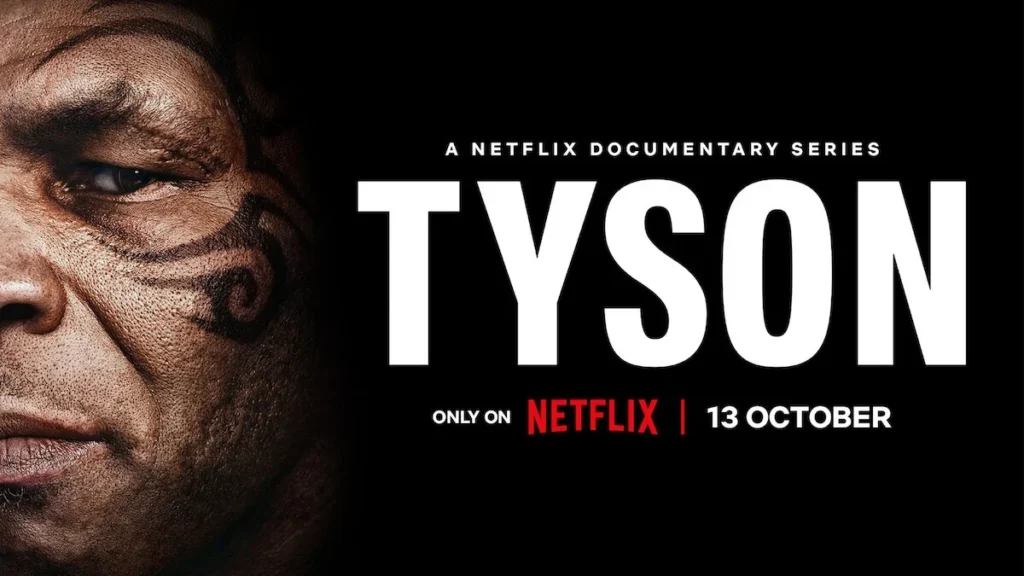


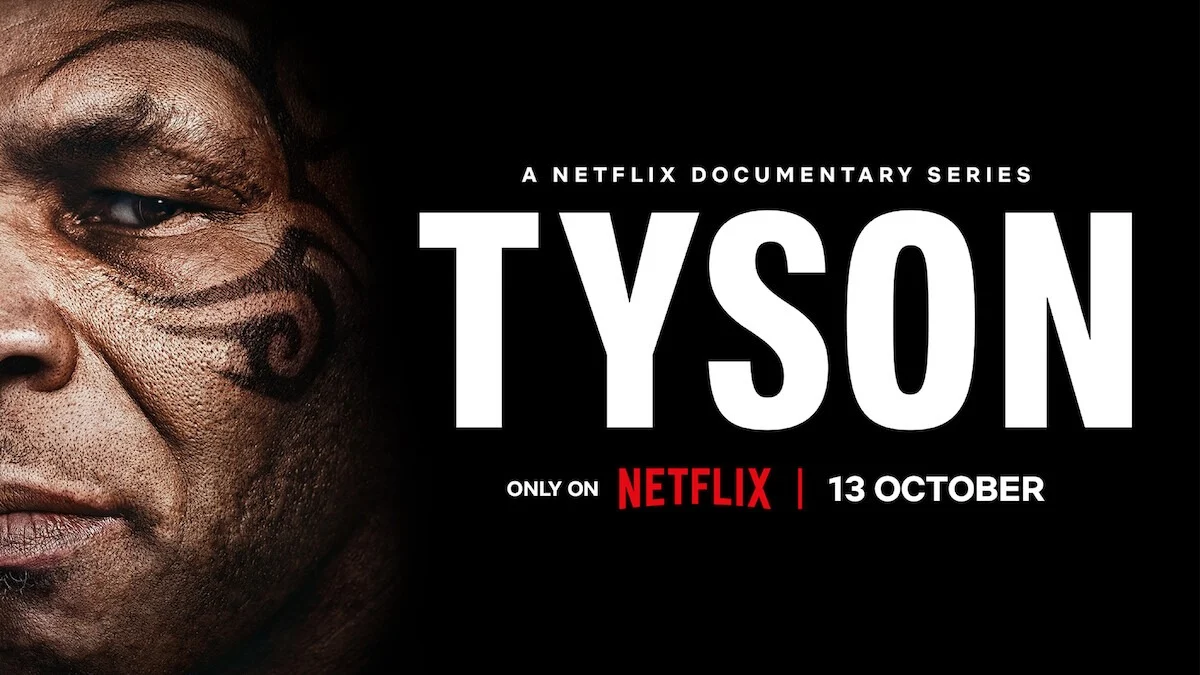
Former undisputed heavyweight champion Mike Tyson has unexpectedly found himself at the center of a fresh wave of online scrutiny and false drug allegations. The controversy stems from a digitally altered photograph originating from a high-profile celebrity party held back in 1997, which recently resurfaced across social media platforms. Users shared the manipulated image alongside unfounded accusations questioning the editorial integrity of Netflix and its newly released four-part documentary series chronicling the legendary boxer’s turbulent life and career.
The disputed image appears to depict the boxing icon with traces of a white powdery substance dusted around his nose and upper lip. For casual internet users scrolling through feeds, the photograph immediately evokes speculation about substance abuse, a topic that has famously shadowed portions of Tyson’s public life. A social media user recently amplified the image by posting a direct comparison between a clean photograph featured in Netflix’s documentary and the doctored version containing the artificial white marks.
Accompanying the post was a provocative question directed at the streaming giant: "Why did Netflix edit this Mike Tyson photo on his documentary..?" The post quickly gained traction, prompting public curiosity and skepticism regarding whether the documentary production team had deliberately scrubbed incriminating evidence from archival footage to sanitize the sports legend’s image.
However, a thorough examination of the facts reveals that the entire premise of the social media post is built upon a falsehood. The photograph showing the white powder is entirely fake. The authentic archival image contains no such marks, and the digital alterations were made many years before Netflix even conceived its latest Tyson documentary project.
Platform safety features quickly intervened on the viral post, attaching a Community Note to clarify that the white powder had been digitally superimposed onto the original photograph. Independent fact-checking investigations subsequently corroborated this context, tracing the life of the manipulated image back through digital archives to demonstrate just how long the hoax has persisted in online spaces.
The Origins of the 1997 Photograph and the Anatomy of a Hoax
To understand the true nature of the controversy, one must look back nearly three decades to September 9, 1997. On that autumn evening, Mike Tyson attended a star-studded celebrity celebration in Culver City, California, hosted to mark the release of pop icon Janet Jackson’s critically acclaimed studio album, The Velvet Rope.
Renowned celebrity photographer Steve Granitz captured the former heavyweight champion mingling at the bustling event. That precise moment was permanently preserved when the image was cataloged and stored within the official Getty Images archive. In this authentic, unaltered photograph, Tyson is captured wearing a distinctively patterned shirt and looking directly toward the camera lens. A close inspection of the original Getty photograph reveals a completely clear face, entirely devoid of any white powder around his nose or mouth.
Despite the clear documentation provided by major photo archives, the fake version of the image has managed to maintain a persistent digital footprint for more than a decade. A comprehensive November 2024 investigation conducted by the specialized fact-checking outlet Provereno successfully traced the doctored image back to its earliest known online circulation in May 2014.
During its initial resurgence over a decade ago, the manipulated photograph was shared across various forums accompanied by a misleading caption falsely suggesting that Tyson had been photographed during a wild party in the 1980s. This initial temporal mismatch was already inaccurate, given that the underlying photograph was captured in 1997. Furthermore, the Provereno investigation uncovered additional digital manipulations within the fake image file, noting that the forgers had also tampered with the area surrounding Tyson’s eyes to make them appear noticeably redder and more distressed than they were in reality.
To cross-verify the authenticity of the event, investigators pulled other photographs of Mike Tyson taken by various media outlets at the exact same Janet Jackson album release party from the Getty archives. None of these supplementary photographs displayed any trace of the white powder that appears exclusively in the manipulated version.
These findings completely dismantle the narrative pushed by social media critics that Netflix actively intervened to remove cocaine residue from the historical record. In reality, the heavily altered version of the photograph had been actively circulating across the internet for more than ten years before the streaming platform ever began production on its multi-part documentary series.
Tyson’s Publicly Documented History with Addiction
The ease with which the doctored photograph gained renewed traction online is largely tied to Mike Tyson’s own candid admissions regarding his past struggles with substance abuse. Throughout the promotional rollout and the narrative arc of the Netflix documentary, Tyson speaks openly and unflinchingly about his history of drug addiction, severe alcoholism, and the chaotic lifestyle that frequently threatened to derail both his professional career and his personal life outside the squared circle.
The former heavyweight champion has never hidden the darker chapters of his past. In various interviews and memoirs over the years, Tyson has discussed previous chemical dependencies and harrowing personal encounters with overdoses that he has openly acknowledged came dangerously close to costing him his life. These deep-seated personal battles are examined thoroughly within the Netflix production, which seeks to provide a balanced, warts-and-all portrayal of a complex athletic icon who achieved unprecedented heights in sports while simultaneously wrestling with profound internal demons.
Addressing his current health and lifestyle status, Tyson gave a revealing interview in October 2026. At 60 years old, the former champion shared a significant milestone with the public, stating that he had successfully maintained total sobriety, remaining completely free from cocaine and alcohol for a full ten years.
Yet, while Tyson’s documented history of past addiction is an undeniable part of his biography, media analysts and fact-checkers point out that these admissions do not provide any factual basis or proof that the athlete was using illicit substances at Janet Jackson’s 1997 album release party. The widespread familiarity of Tyson’s historical struggles simply created a fertile psychological environment for conspiracy-minded viewers to find the doctored image believable, despite its digital fabrication.
Ultimately, the viral social media claim demonstrates how historical photographs can be weaponized out of context in the modern digital landscape. What began as a fabricated image engineered more than ten years ago was successfully repurposed to manufacture a modern controversy against a major streaming platform, forcing fact-checkers to once again separate digital fiction from the documented historical record preserved in professional archives.