

In the fast-paced world of modern combat sports, fleeting social media highlights often dictate what constitutes cutting-edge athleticism. Lately, clips of elite practitioners executing lightning-fast evasive maneuvers on the inside—frequently associated with Soviet and Cuban training philosophies, or modern masters like Vasyl Lomachenko—have captured the attention of fight fans worldwide. Yet, beneath the veneer of a trendy social media phenomenon lies a much deeper historical reality. What many contemporary observers view as a revolutionary style is, in fact, a foundational technique that has quietly faded from mainstream boxing curricula: the art of slipping inside punches.
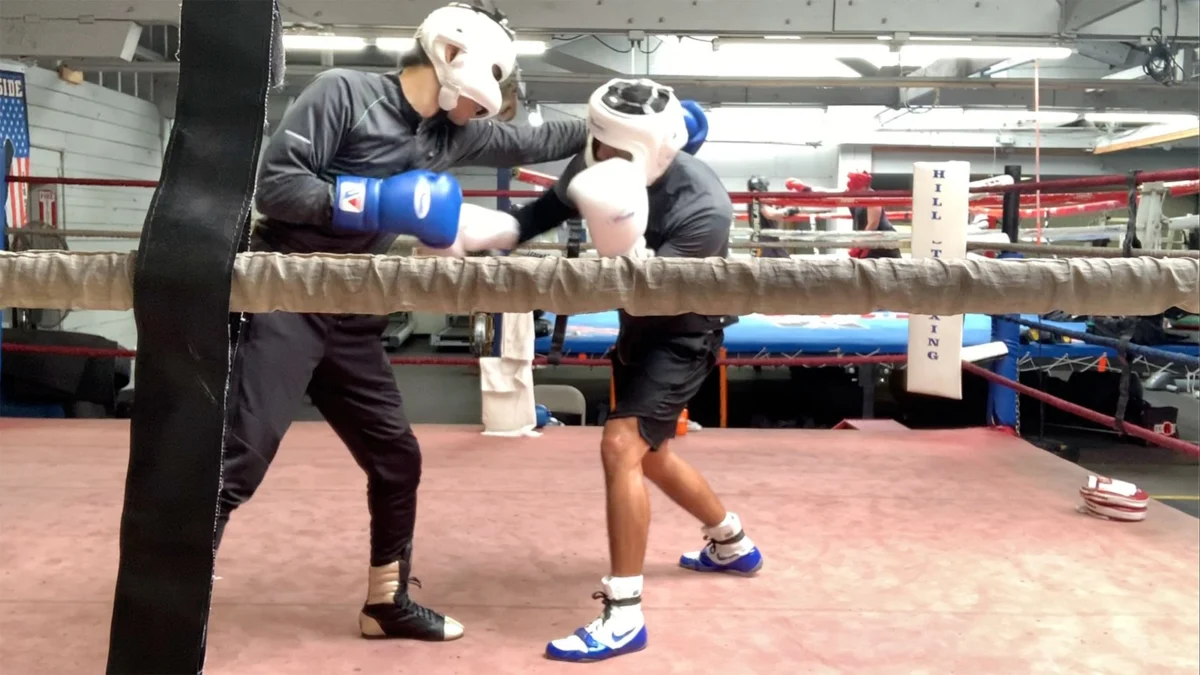
For generations, inside slipping was a standard pillar of pugilistic education. Archival footage of old-school fighters reveals a heavy reliance on moving to the inside of an opponent’s incoming artillery to smother attacks, conserve energy, and dictate close-range engagements. However, contemporary boxing gyms overwhelmingly default to teaching fighters to slip outward. This widespread shift in methodology has fundamentally altered how amateur and professional athletes approach defensive movement, transforming a once-ubiquitous tactic into a specialized craft practiced by only a dedicated few.
The Evolution and Eclipse of Inside Slipping
The departure of inside slipping from mainstream coaching manuals can be traced through the historical evolution of boxing styles and the media business models that reward specific athletic aesthetics. Over the past several decades, amateur boxing has increasingly favored explosive athleticism, long limbs, and high-mobility fighting. In a three-round amateur bout, the hit-and-run style of outside slipping offers undeniable advantages. It is visually striking, easy for judges to score, and keeps competitors safe at a distance. When fighters pull their heads away from punches and counter from afar, the action is clean, visible, and easily digestible for spectators.
Conversely, inside slipping often appears messy to the untrained eye. When a fighter ducks and turns into an opponent’s punch, the resulting proximity frequently transitions into a clinch or a tight, phone-booth exchange. This lack of visual separation makes it difficult for judges—particularly under amateur point systems—to accurately score blows. Furthermore, the athletic profile required for modern success has shifted toward fighters who can capitalize on mobility, whereas historical eras featuring grueling 15-round championship fights heavily rewarded the energy efficiency of inside fighting. Running around the ring demands immense cardiovascular output, whereas neutralizing an opponent’s leverage at close range preserves stamina over the championship distance.
The stylistic preferences of successive generations have also played a profound role in shaping contemporary fundamentals. The emergence of legendary figures like Mike Tyson in the 1980s fundamentally shifted public perception and gym culture worldwide. Tyson captivated audiences by slipping aggressively to the outside of punches and detonating devastating knockout counters from a distance. The boxing business model, heavily reliant on pay-per-view television and audiences seeking clean knockouts and flashy movements, naturally gravitated toward this style. Consequently, elite professionals throughout the 1990s and 2000s were predominantly trained as outside-slipping distance fighters.
Decades later, the paradigm shifted once more with the dominance of Floyd Mayweather Jr., whose mastery of the shoulder roll and the Philly shell defense popularized a new defensive baseline. Even today, elite heavyweights like Tyson Fury incorporate elements of the shoulder roll and inside evasive tactics, demonstrating how boxing styles continually cycle through historical iterations rather than inventing entirely new paradigms.
Mechanics and Strategic Advantages of the Inside Slip
Despite its relative scarcity in modern basic training, inside slipping offers distinct tactical advantages that old-school practitioners understood implicitly. Chief among these is visual and mechanical intuitiveness. When an opponent throws a right hand, human instinct naturally compels the torso to turn away from the oncoming limb. Slipping to the inside capitalizes on this natural rotation, whereas slipping to the outside requires a counter-intuitive motion that forces the body toward the incoming threat.
Additionally, inside slipping demands significantly less energy and athletic exertion than its outside counterpart. While elite athletes can execute outside slips with minimal movement, achieving that level of proficiency is exceptionally difficult. Slipping inside, however, immediately transports a fighter into a safe zone where the opponent’s arm space is too smothered to generate further leverage. Rather than expending vital energy to evade a punch only to end up farther away, an inside slip neutralizes the attack and closes the distance simultaneously.
This geometric reality dictates the flow of the entire engagement. Fighters who consistently turn outward on every defensive movement inevitably drift away from their adversaries. Conversely, inside-slipping fighters maintain a mirroring posture where every movement draws them closer, effectively nullifying the reach advantage of taller opponents. This proximity establishes a safer punching rhythm, as counter-strikes can be delivered in a harmonious, flowing motion that rolls with the opponent’s momentum rather than crashing against it. When a fighter is struck while attempting an outside slip, the movement against the incoming force often magnifies the impact, occasionally resulting in a knockdown. In contrast, an inside slip or shoulder roll deflects the blow, substantially mitigating its force.
Strategic Applications in the Ring
Integrating inside-slipping into a comprehensive fight strategy unlocks multiple tactical dimensions, beginning with the fundamental challenge of closing distance against longer-ranged opponents. Amateurs often struggle to penetrate a taller adversary’s jab, frequently making the mistake of attempting to slip outside. Because outside-slipping inherently moves a fighter away from the target, it grants the opponent ideal spacing to set up a devastating right hand. Slipping inside the initial jab bypasses this trap, instantly neutralizing the opponent’s reach advantage and creating opportunities to force inside exchanges, smother punches, or initiate a clinch.
Beyond simply closing distance, inside slipping serves as an effective mechanism for redirection and angle-setting. When aggressive opponents commit their weight forward, skilled defenders can use inside-slipping or pivoting to allow the attacker to punch through empty space, leaving them momentarily off balance. This elusiveness expands a fighter’s offensive, defensive, and footwork repertoires, introducing angles of attack that opponents accustomed to linear exchanges rarely anticipate.
While mastering these techniques traditionally requires careful observation and controlled sparring rather than rigid, step-by-step drills, the underlying principles remain accessible to any boxer willing to unlearn modern habits. Transitioning from the ubiquitous outside slip to mastering the inside slip of a jab, ducking and rolling through power punches, and timing the opponent’s rhythm rather than merely reacting to hand speed transforms a fighter’s defensive capability.
Ultimately, the tradition of inside slipping never truly vanished from the sport; rather, it became obscured by shifting coaching trends and a media landscape enamored with flashy, outside-fighting aesthetics. Legendary champions such as Roberto Duran, James Toney, Bernard Hopkins, Pernell Whitaker, and Vasyl Lomachenko preserved these methods through their mastery of inside combat and defensive finesse. For those willing to look past contemporary conventions and study the masters of the past, the art of slipping inside remains an available and devastatingly effective tool in the modern prize ring.