


Most professional sports clubs are sitting on mountains of supporter data that they cannot actually use, primarily because no one can definitively say which records across disparate systems belong to the same individual fan. According to industry insights and recent sector reports, the financial toll of this fragmentation is showing up clearly where it hurts most: in sponsorship renewals, matchday yield optimization, and everyday marketing spend.
When a partnerships director pulls a monthly CRM report and reads that there are 247 new members, rarely has anyone verified whether that figure represents 247 distinct, newly acquired human beings or 90 returning fans who have inadvertently logged transactions under three separate email addresses. When multiplied across ticketing platforms, retail portals, stadium Wi-Fi logins, and third-party licensee systems, a modern sports club does not actually suffer from having too little fan data. Instead, it possesses an abundance of fan data it fundamentally cannot trust, because it cannot accurately resolve which fragmented records describe the same person.
Fundamentally, this is a fan data resolution challenge rather than a data collection problem. Sports organizations have spent years funneling resources into capturing every digital touchpoint, yet they have routinely failed to build the underlying architecture needed to unify those touchpoints into coherent, single-customer views.
The True Scale of the Value Gap
The financial implications of this identity crisis are staggering. According to the Anonymous Fan Index—a comprehensive 2026 survey of senior leadership across 50 major sports organizations conducted by Dizplai—most professional bodies can reliably name and directly contact only about 24 percent of their total active fanbase. Furthermore, the survey revealed that 62 percent of these organizations believe they are collectively losing more than a million dollars annually simply by failing to effectively monetize their wider, untracked audiences.
These findings run parallel to the latest Deloitte Football Money League report, which highlights that European matchday income reached a record EUR 2.4 billion, representing a 16 percent year-on-year increase. This growth has been driven largely by enhanced matchday experiences and the implementation of Personal Seat Licenses. Crucially, however, both revenue streams depend heavily on an organization knowing precisely who attends fixtures, what those attendees value, and what price points they are willing to bear.
Concurrently, commercial income across elite clubs has climbed to EUR 5.3 billion. This segment relies just as heavily on retail operations, corporate sponsorships, and non-matchday stadium utilization—including restaurants, bars, and hotels—which only generate maximum economic return if clubs can successfully target the right audiences with bespoke, relevant offers. Deloitte’s ongoing warnings underscore that clubs must urgently develop a deeper understanding of their key consumer groups, their specific behaviors, and direct-to-consumer content channels to protect and expand their brand reach.
Navigating Owned, Borrowed, and Dark Fan Data
To understand where revenue slips through the cracks, industry analysts generally categorize supporter data into three distinct buckets: owned, borrowed, and dark. Owned data encompasses direct club channels like official ticketing platforms and proprietary apps; borrowed data covers social media followings and rented platforms where the club does not own the audience relationship; and dark data represents the untracked, offline, or disconnected interactions that occur across a matchday ecosystem.
Most professional clubs are acutely aware of this taxonomy, yet they routinely manage it backward. They aggressively defend the channels they already own, celebrate superficial follower growth on platforms they do not own, and completely leave dark data alone because no single department owns the responsibility of fixing it. Yet, paradoxically, dark data holds the largest share of unclaimed commercial value among the three categories.
Identity resolution directly unlocks value across three primary financial pillars that clubs track meticulously: matchday revenue, commercial income, and partnership renewals.
In terms of matchday operations, Deloitte’s data shows record-breaking revenues that are fundamentally dependent on Personal Seat Licenses and upgraded experiences. A club that possesses the capability to view a single season ticket holder holistically—spanning ticketing purchases, retail transactions, and stadium Wi-Fi connectivity—can price, upsell, and retain that customer with absolute confidence. Conversely, a club that views the same supporter through three disconnected, partial profiles is left guessing.
For commercial income, which accounts for EUR 5.3 billion across top-tier clubs, retail, sponsorship, and non-matchday stadium activities all rely entirely on precision targeting. Corporate sponsors do not buy empty impressions; they buy verified audiences. An audience’s commercial credibility is only ever as robust as the identity resolution framework that sits behind it.
This dynamic shapes the partnership renewal process itself. A partnerships director who can walk into a boardroom and confidently state that a specific audience consists of 90 unique fans, 80 percent of whom attended last season, and 60 percent of whom have actively opted in to partner offers, commands a vastly different negotiating position than one who presents an uncertain figure of 247 unverified new members. The former data-backed narrative secures long-term renewals, while the latter invites corporate sponsors to scrutinize every other metric presented in the commercial pitch deck.
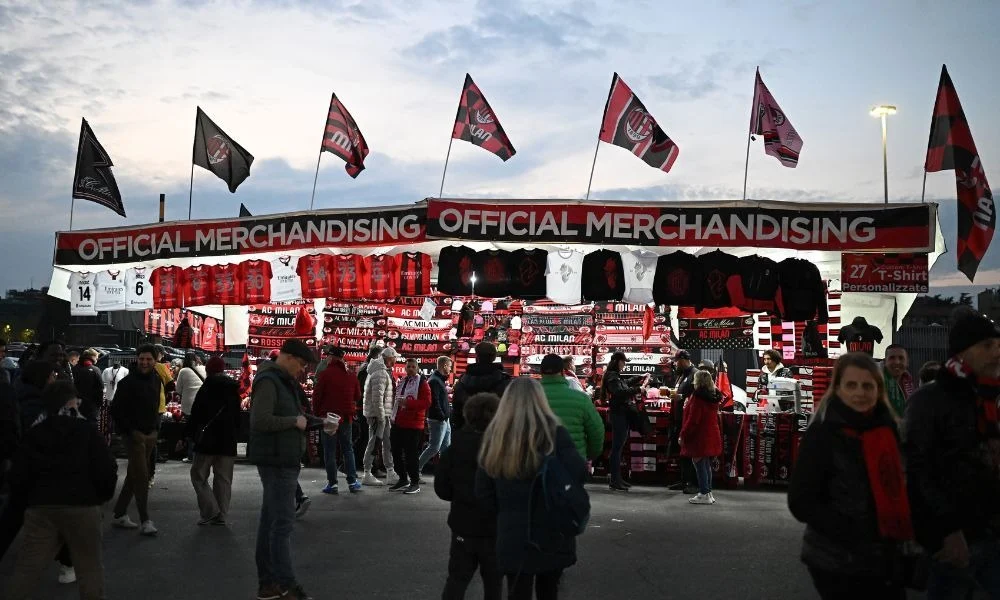
Dark fans remain most heavily exposed within these transactional gaps. Consider the typical supporter who purchases a ticket through a friend’s account, pays cash at a concourse kiosk, and collects a replica shirt from an external licensee’s stadium stall. That individual might attend 15 home fixtures a year while remaining entirely invisible within the club’s official database. Yet, they represent the ideal candidate for conversion into a full season ticket holder or Personal Seat License buyer. Because the club cannot locate them in the system, it cannot make that vital commercial offer.
This informational blind spot similarly distorts dynamic pricing strategies. Yield management decisions made for sold-out fixtures cannot accurately account for the true identity of the individuals actually filling the seats, nor can they verify whether the live stadium crowd matches the demographic profile that sponsors paid to reach. Recovering even a fraction of this missing audience transforms anonymous consumer spending into an actionable, long-term relationship, giving commercial teams a defensible foundation for their next sponsor discussions.

Transforming the Experience for Clubs, Sponsors, and Fans
Resolving fan identities fundamentally alters the operational reality for the club, its commercial partners, and the supporters themselves.
For the sports club, identity resolution means knowing precisely who is inside the stadium bowl. This visibility empowers management to price hospitality packages dynamically, route targeted stadium upgrade offers to the right fans at the right time, and lift per-head spend at concession stands and retail shops through informed precision rather than guesswork.
The administrative back office benefits equally. Resolving data eliminates the friction of discount codes being issued multiple times to the same individual, prevents renewal emails from bouncing to defunct addresses, and generates true membership metrics that marketing budgets can actually trust. Because a robust identity resolution layer operates securely within the club’s internal IT environment, the organization retains complete ownership of this valuable data asset without dangerous dependencies on third-party platforms.
For corporate sponsors, a resolved database provides transparent audience composition, verified reach, and concrete proof of activation performance. When activation results sit alongside the exact fan records that explain them, clubs can definitively demonstrate who was reached, defend commercial renewals, justify price uplifts, and provide sponsors with verifiable evidence. Automated data hygiene checks flag stale, duplicated, or corrupted records long before they are compiled into sponsor reports, ensuring that performance metrics withstand rigorous external testing.
For the fan, resolution eliminates administrative annoyance. A loyal supporter who has renewed their membership for consecutive seasons stops receiving generic introductory new-member offers. Promotional discount codes arrive once rather than twice, and supporters are no longer pestered to renew products or services they have already purchased.
Fans actively desire this level of personalization. Research published by IBM, which surveyed more than 20,000 sports fans across 12 international markets, found that 65 percent of respondents believe enhanced personalization would significantly improve their digital sports consumption experience. When consent architecture is integrated from the outset, this personalization remains strictly on the fan’s own terms.
Meeting Regulatory and Compliance Demands
As sponsors increasingly demand proof of audience composition, they inevitably raise questions regarding data accuracy and regulatory consent. For European sports clubs, this line of inquiry intersects directly with stringent General Data Protection Regulation requirements.
Rather than slowing down digital transformation initiatives, these compliance pressures argue for building resilient resolution layers capable of withstanding scrutiny the first time it occurs. Discovering that data provenance is untraceable in the middle of a high-stakes sponsor renewal or regulatory audit is the worst possible scenario for a commercial team.
Technology firms have increasingly stepped in to address these structural challenges. Modern data strategies focus on deploying resolution layers that sit directly on top of existing club infrastructure rather than demanding disruptive, costly system replacements.
This work typically begins with sophisticated record matching. Resolution layers link fragmented supporter profiles across ticketing engines, retail stores, mobile applications, Wi-Fi networks, and licensee databases by deploying a combination of deterministic and probabilistic matching algorithms across identifiers such as email addresses, phone numbers, account histories, and device IDs, supported by human review for ambiguous cases. The resulting output is a single, verified identity per fan, complete with a confidence score and a clear audit trail of where each data fragment originated.
Sitting above this matching foundation is typically a semantic query layer. Once disparate data is successfully unified, commercial and marketing leads can query the system using plain, natural language—asking questions such as how many unique fans attended three or more home matches without purchasing from the official club store this season—and receive precise answers in seconds rather than waiting weeks for custom database queries from data analysts.
Built-in consent tracking ensures compliance from the ground up rather than as an afterthought. Every resolved identity carries its explicit consent status and historical data source, enabling clubs to demonstrate precisely how an audience metric was calculated and confirm the legal parameters governing its use. This capability is paramount in regions governed by strict privacy frameworks like the GDPR.
Industry practitioners note that applying rigorous data resolution techniques across sectors with even higher compliance bars—such as insurance aggregation, financial reinsurance, and advanced player scouting analytics—proves that unified data infrastructure can drastically accelerate operational workflows. Questions that previously required weeks of manual data compilation by analysts can be resolved in an afternoon once the underlying information architecture is properly aligned.
Ultimately, effective fan identity resolution enables a sports club to know its supporters as intimately as those supporters know the club. Every ticket purchased, replica shirt acquired, and app session logged contributes to a single, trusted picture of each individual, powering sharper marketing campaigns, stronger commercial partnerships, and timely renewals that capture fans before they drift away.