


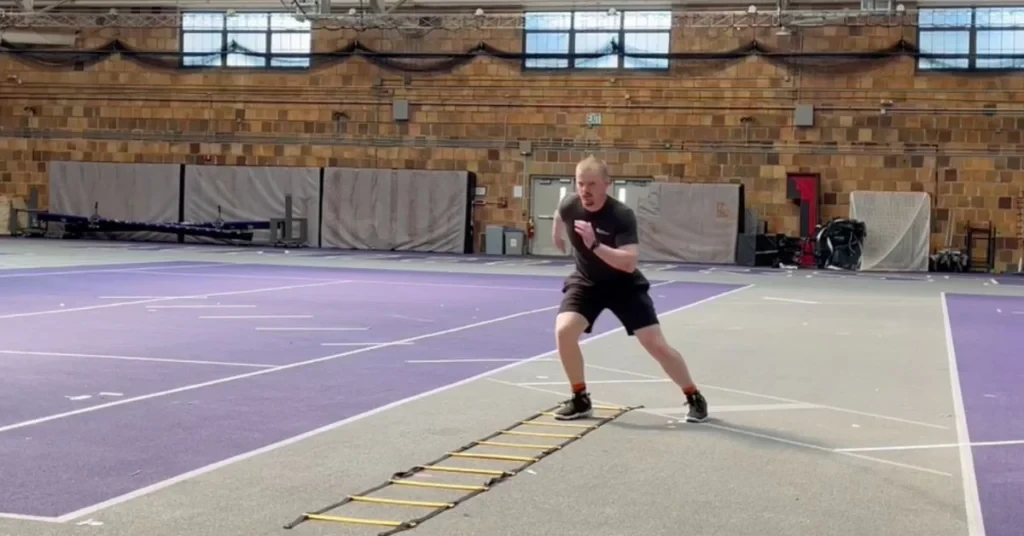
The debate over the utility of speed and agility ladders in modern athletic training is nearly as old as the equipment itself. Mentioned in hushed tones by purists or championed enthusiastically on social media, these colorful plastic contraptions have long divided the strength and conditioning community. To some, they are nothing more than theatrical props that create an illusion of athletic prowess; to others, they are a versatile tool for movement preparation. According to prominent coach TJ Cahill, the truth lies somewhere in the middle, rooted not in magical performance enhancements, but in practical, measured applications that can complement a comprehensive training program.
For years, the fitness industry has marketed these tools under banners of speed and agility, terms that Cahill argues are fundamentally misleading when applied to ladder drills alone. To understand where ladders truly fit within an athlete’s developmental pathway, coaches must first acknowledge what these drills do not accomplish. Most importantly, ladder exercises do not replicate the mechanical demands of true sprinting, nor do they foster the reactive agility required in competitive sports.
Examining the Limits of Ladder Drills
To evaluate speed training accurately, experts divide it into primary, secondary, and tertiary categories. Primary speed exercises directly enhance running velocity by training at true sprinting speeds with correct mechanics, such as push-up start variations. Secondary exercises support speed development with slight alterations to speed or technique, such as heavy sled pulls that may compromise optimal form while still providing a potent strength stimulus for acceleration. Tertiary exercises, meanwhile, complement speed characteristics in a much broader sense, such as a standing broad jump that targets horizontal power output without bearing any visual or mechanical resemblance to an actual sprint.
While ladder routines often require athletes to move their feet at rapid frequencies, the movement patterns themselves bear little resemblance to sprinting. They fail to reproduce the specific force vectors, ground contact times, and stride mechanics necessary for top-end speed development.

Similarly, agility ladders fall short when evaluated against official definitions of athletic agility. Organizations such as the National Strength and Conditioning Association define agility as the skills and abilities needed to change direction, velocity, or mode of movement in response to a stimulus. Because traditional ladder patterns are pre-planned and executed in a closed environment, they lack this crucial reactive component. Athletes moving through a ladder are rarely reacting to an unpredictable environmental cue, meaning the drills cannot independently build true sport-specific agility or directional mechanics.
Where Ladders Fit in the Athletic Development Continuum
Despite these limitations, dismissing ladders entirely ignores several tangible benefits they can offer when integrated thoughtfully. Rather than viewing them as instruments of direct speed enhancement, coaches can utilize them effectively across four distinct training domains.
The first and perhaps most straightforward application is during the warm-up phase of a training session. Following structured movement preparation protocols, warm-ups should gradually elevate heart rate, body temperature, and systemic circulation while preparing the nervous system for upcoming demands. When implemented correctly, ladder exercises can easily fulfill these physiological requirements. High-profile athletes, including NFL offensive standouts, frequently incorporate ladder work into their routines to wake up their feet, mobilize their hips, and synchronize neural pathways before heavier workloads. This approach provides a neurological priming stimulus comparable to traditional track-side drills like A-marches and A-skips.
Beyond physiological warm-ups, ladder drills offer a practical avenue for developing coordination and timing, particularly for younger or less experienced athletes. While these drills do not automatically rewrite an individual’s rate coding—the frequency at which motor units fire action potentials—they do challenge neuromuscular coordination. Patterns such as lateral step-ins, multi-directional crossovers, and rhythmic shuffles demand rhythm and spatial awareness, helping developing athletes gain better command over their own limbs in a controlled setting.

A third major advantage involves the accumulation of extensive plyometric contacts. Although extensive plyometric work is not as potent for developing rapid rate of force development as intensive plyometric training, it serves a vital purpose in tissue conditioning. During general physical preparation phases, integrating low-level, repetitive foot contacts helps athletes build structural tolerance. This foundation prepares connective tissues to safely handle the more intense, high-impact forces encountered later in a training macrocycle, proving especially useful for multidirectional team sport athletes who require high capacities for repeated submaximal efforts.
Finally, the psychological and motivational impact of ladder training should not be underestimated. Athletes, parents, and coaches frequently gravitate toward ladder drills because elite performers make them look effortless and fluid. This visual appeal translates into genuine enthusiasm. Athletes want to use the ladders, and that inherent desire can significantly boost training motivation and engagement. When channeled correctly, this enthusiasm encourages athletes to attack the warm-up with greater intent, indirectly supporting the neuromuscular coordination and timing benefits mentioned earlier.
Practical Implementation on the Training Floor
Ultimately, ladder drills occupy a tertiary role in the broader landscape of athletic development. They are not direct catalysts for elite speed, nor are they substitutes for true reactive agility drills and structured sprint mechanics. However, they remain valid additions to a coach’s repertoire.
By setting realistic expectations, strength and conditioning professionals can leverage ladders to add variety to warm-up protocols, encourage foundational coordination, introduce extensive plyometric volume, and elevate overall athlete engagement without falling prey to unscientific marketing claims.