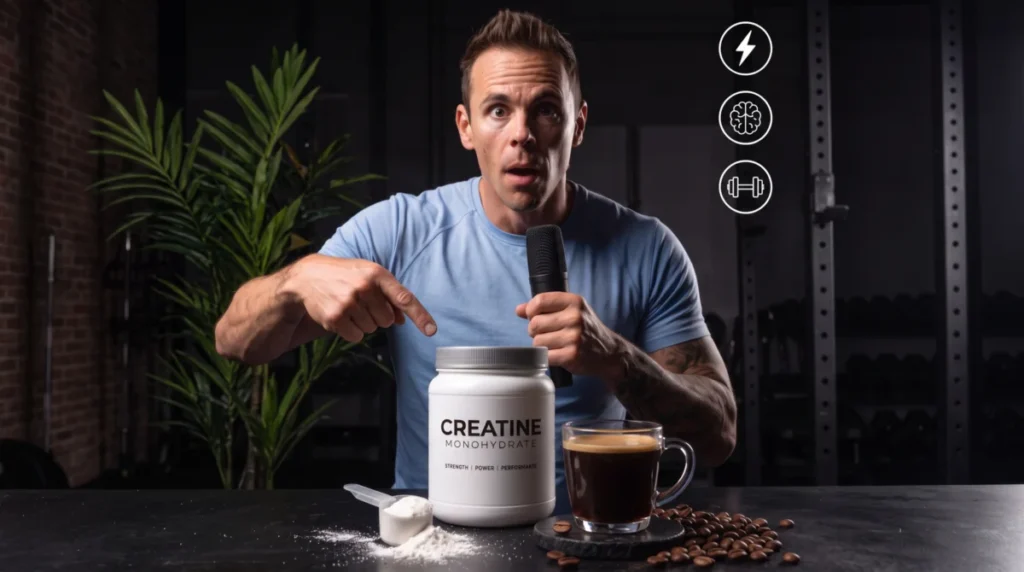


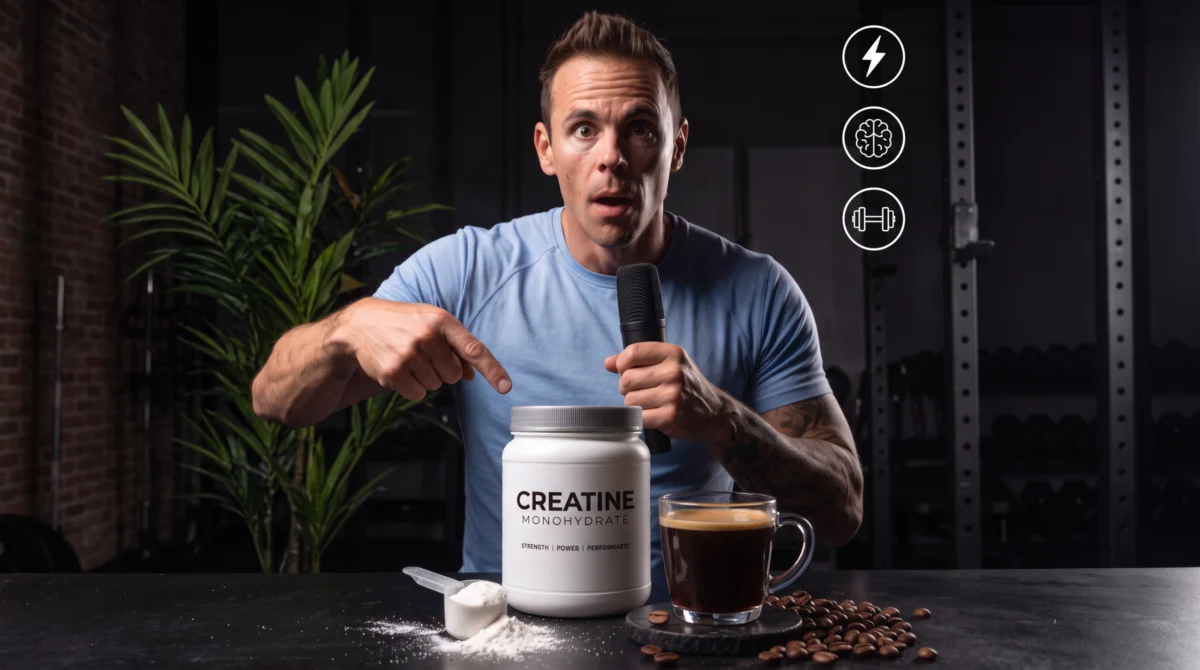
The intersection of morning routines and fitness optimization has once again generated widespread debate across social media platforms. In a recent viral video, a prominent fitness creator told followers that stirring creatine powder straight into their morning coffee can significantly supercharge brain function, enhance absorption rates, and deliver dramatic physiological benefits. Backed by eye-catching figures regarding heat, absorption metrics, and precise dosages, the claims quickly captured the attention of athletes, biohackers, and casual coffee drinkers alike.
While some of the assertions made in the video align well with established sports science, others require a much closer look before individuals decide to completely overhaul their daily routines. The trend raises fundamental questions about how supplements interact with hot beverages, the actual mechanics of human nutrient absorption, and the realities of cognitive enhancement through sports nutrition.
Can You Really Mix Creatine Into Coffee?
The core premise of the viral trend—that creatine can be dissolved directly into a hot cup of coffee—is fundamentally sound. According to nutritional science, creatine monohydrate dissolves remarkably well in warm and hot liquids, remaining chemically stable and intact over the short duration required to consume a standard cup of coffee.
However, experts caution that there is a notable caveat to keep in mind regarding timing. Creatine slowly begins to break down when it sits suspended in liquid for extended periods through a process called hydrolysis. Therefore, the practical advice for anyone attempting this method is to stir, sip, and finish the beverage promptly, rather than leaving a spiked mug sitting on a desk throughout the morning hours.
The “3 Grams Becomes 5 Grams” Claim
Where the viral video begins to diverge from established science is in its mathematical assertions regarding dosage and temperature. The creator suggested that due to the thermal properties of hot coffee, a standard three-gram serving of creatine effectively transforms into nearly five grams because it allegedly becomes more soluble within the human body.
Scientific consensus pushes back firmly against this claim. While heat undoubtedly assists in dissolving the powder into the liquid matrix of the cup, it does not magically multiply the mass of the substance. Three grams introduced into the beverage remains precisely three grams upon consumption. Furthermore, oral creatine monohydrate is already absorbed by the human digestive system with remarkably high baseline efficiency, leaving virtually no physiological room for a hot-drink thermal upgrade to artificially inflate the dose.
Similar skepticism surrounds the creator’s assertion that this method yields an uptake efficiency boost of nearly ninety-five percent. Current scientific literature features no solid human evidence supporting a figure of that magnitude, meaning the claim should be viewed as internet enthusiasm rather than established clinical fact.
Does Morning Timing Beat Water Later On?
Another focal point of the viral discussion centers on the timing of supplementation. The creator argued that individuals who wait two or three hours after finishing their morning coffee to take their creatine with plain water are missing out on a prime physiological opportunity.
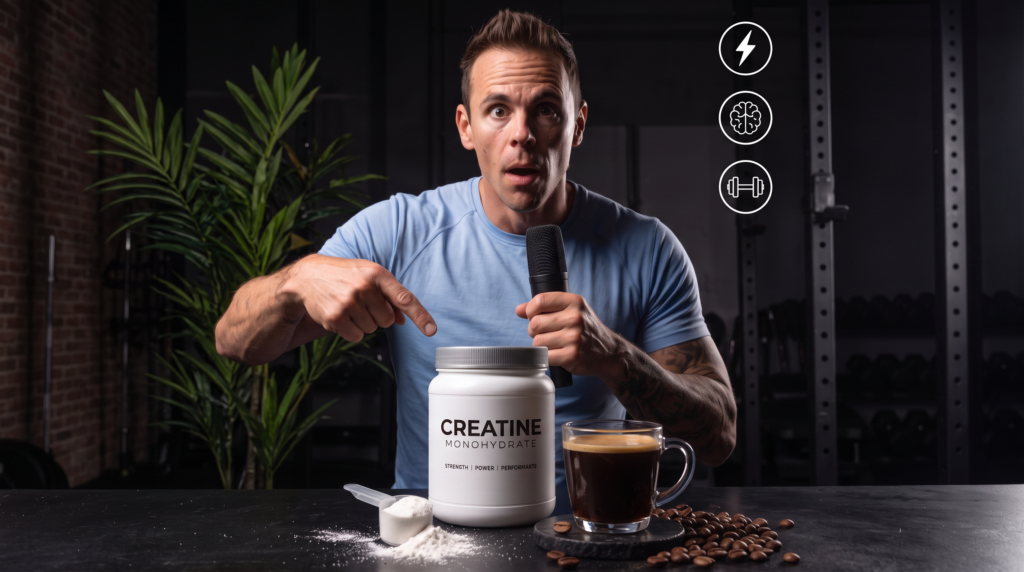
While waiting hours to take a supplement is certainly unnecessary, sports nutritionists emphasize that the reverse is equally true: exact timing matters far less than absolute daily consistency. Muscle creatine stores do not fill up instantly based on a single morning window; rather, they accumulate gradually over weeks of regular, uninterrupted intake. Consequently, the optimal window for consuming creatine is simply whenever an individual will reliably remember to take it day after day.
Brain Power and the 10-Gram Dose
One of the most compelling aspects of the creator’s argument involves cognitive performance. The video asserted that mixing creatine into coffee raises plasma levels to a specific threshold high enough to effectively cross the blood-brain barrier and unlock profound mental benefits.
The scientific reality regarding creatine and the brain is significantly more nuanced than these viral claims suggest. While creatine certainly reaches the brain, it enters through dedicated cellular transporters over time rather than simply surging across a plasma-level threshold following a single hot beverage. Small human trials have hinted at potential cognitive perks—particularly during periods of high stress, mental fatigue, or sleep deprivation—but study results remain somewhat inconsistent, and researchers have yet to settle on an ideal daily dosage specifically tailored for cognitive enhancement.
The creator’s rationale for recommending doses as high as ten grams centers precisely on those difficult, high-stress days marked by jet lag or poor sleep. While that scenario happens to align with the specific conditions where early neurological research looks most promising, researchers stress that promising preliminary findings are not the same as definitive proof. While a ten-gram daily dose is generally well-tolerated by healthy adults, larger quantities can occasionally cause gastrointestinal upset, and individuals with pre-existing kidney concerns are routinely advised to consult a physician before significantly increasing their daily intake.
Does Coffee Deserve Its Bad Rap?
Amidst the discussion of supplement integration, the viral video also touched upon the health profile of coffee itself, describing the beverage as one of the most thoroughly studied longevity-enhancing substances in existence.
Coffee certainly ranks among the most scrutinized drinks on Earth, with large observational studies frequently linking moderate, regular intake with a reduced risk of early mortality. Nutritionists note, however, that observational findings cannot definitively prove that coffee itself is the direct cause of a longer life, as healthy lifestyle habits frequently travel together in large population studies.
A more grounded point raised in the discussion concerns what consumers frequently add to their mugs. The creator warned that coffee often receives an undeserved bad reputation primarily because people abuse it with heavy additions of sugar, artificial syrups, and milk. These additives can quickly erase much of the beverage’s inherent metabolic and nutritional appeal, making a simple black or lightly dressed cup of coffee the far superior vehicle for a morning wellness routine.
Ultimately, mixing creatine into a morning cup of coffee proves to be a safe, convenient, and entirely viable habit, even if the viral mathematics claiming a hotter drink equals a bigger dose ultimately fall flat. For those looking to streamline their morning routine without sacrificing efficacy, the practice offers a seamless way to secure daily consistency, provided the coffee is consumed promptly and viewed as a matter of convenience rather than a biochemical shortcut to amplified potency.