

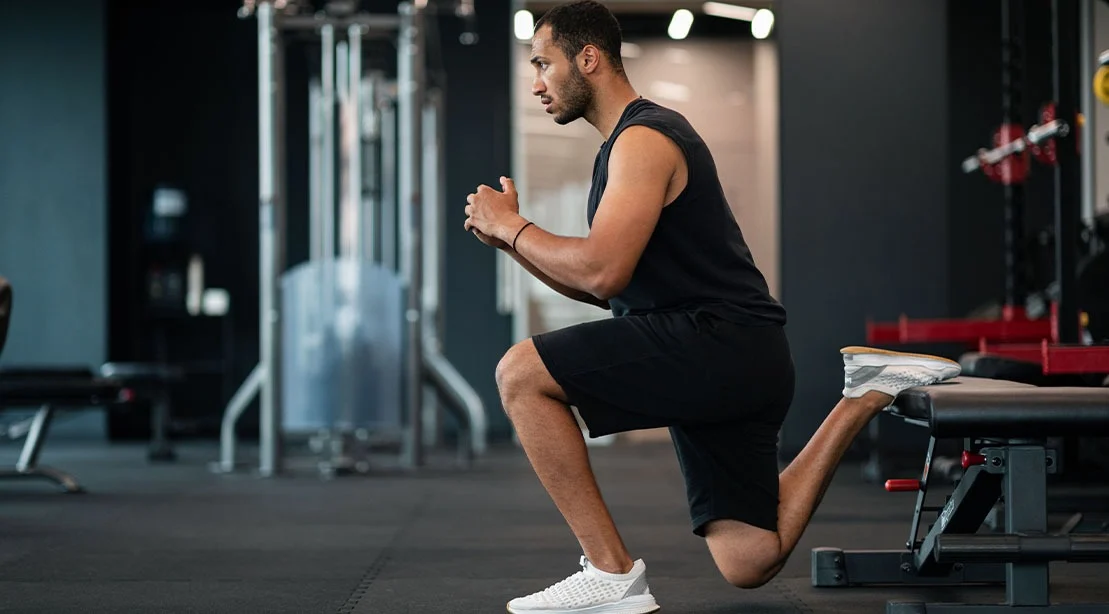
The Bulgarian split squat occupies a unique and humbling space in the landscape of lower-body resistance training. Widely recognized as the exercise almost all lifters love to hate, it delivers undeniable physiological benefits, including increased quadricep and glute strength, enhanced muscle hypertrophy, and a significant reduction in unilateral strength imbalances that frequently limit bilateral squat performance. Yet, despite its proven efficacy for athletic development and physique enhancement, the movement has a notorious reputation for exposing flaws in physical preparation.
Executing a proper Bulgarian split squat demands far more than raw muscular force. It is a complex integration of hip mobility, ankle dorsiflexion, precise pelvic control, and unyielding single-leg stability. When even one of these underlying biomechanical components is compromised, the exercise quickly shifts from a productive lower-body builder to an awkward test of balance and coordination—often with deeply unflattering results for anyone unfortunate enough to be caught on camera.
To help athletes navigate these common performance hurdles, fitness professionals and strength coaches continue to analyze the mechanics of the Bulgarian split squat. Understanding the root causes of breakdown at the bottom of the movement is essential for maximizing its potential while minimizing frustration. Rather than abandoning the exercise altogether, lifters can troubleshoot setup errors and implement targeted mobility strategies to transform the most dreaded movement in the gym into a cornerstone of leg development.
Before attributing every movement breakdown to an inherent lack of flexibility, coaches emphasize the importance of assessing whether a difficulty stems from a true mobility restriction or merely a suboptimal setup. The goal of any preliminary evaluation is not to achieve a flawless-looking repetition straight out of the gate, but rather to uncover the specific performance limitations that are quietly holding back muscular and strength gains. Fortunately, not every Bulgarian split squat problem requires an extensive corrective routine or immediate reliance on a foam roller. In many cases, making a few small, deliberate adjustments to stance, foot placement, and torso angle can make a profound difference in execution.
A well-executed Bulgarian split squat requires adequate hip and ankle mobility to navigate the range of motion, combined with widespread stability to maintain alignment throughout the lift. Mobility serves as the vehicle that gets the body safely into position, but strength and stability are what allow the lifter to own that deep, stretched position under load.
When adjustments to the initial setup fail to clean up persistent performance issues, targeted mobility exercises become necessary to bridge the gap. Addressing the specific joints involved in the movement can unlock the range of motion required to achieve a stable bottom position.
The first major area of concern is often found in the hips, which must control not only the primary up-and-down trajectory of the squat but also subtle side-to-side forces to keep the pelvis and knees stable. To manage this lateral control, the lateral lunge to box serves as an effective preparatory movement. While the Bulgarian split squat is fundamentally a vertical exercise, the hips must resist unwanted lateral shifting. This movement improves adductor mobility and builds the requisite hip strength and control, allowing lifters to descend into the split squat without destabilizing their alignment. By training the adductors through a lengthened position while simultaneously developing the hip capacity needed to resist excessive side-to-side deviation, lifters create a more secure foundation for single-leg work.
Another common restriction stems from the rear leg, particularly when tight hip flexors and quadriceps prevent a smooth descent without forcing an excessive arch in the lower back. The rectus femoris muscle is uniquely situated among the quadriceps because it crosses both the hip and the knee joints. When this specific muscle is restricted, lifters often feel an intense pulling sensation in the front of the thigh, leading them to compensate by arching their lower spine or artificially shortening their range of motion to avoid discomfort. Incorporating the couch stretch helps restore essential length to the rectus femoris and surrounding quadriceps, mitigating the anterior pull on the pelvis and allowing for a more vertical torso position during the split squat.
Ankle mobility represents the third critical pillar of a successful Bulgarian split squat. If an athlete struggles to drive the front knee forward over the toes, the heel frequently lifts off the floor, balance deteriorates, and the lower limb loses its mechanical advantage. The weighted ankle rocker addresses this missing range of motion without requiring overly complex interventions. During a proper split squat, the front ankle naturally moves into dorsiflexion as the knee travels forward. Sufficient dorsiflexion ensures that pressure remains evenly distributed across the entire foot as the body lowers into the bottom position, providing a stable platform for force generation.
For lifters who possess adequate passive range of motion but struggle with active control at the deepest part of the movement, the front-foot-elevated split squat with a pause offers a practical bridge. It is entirely possible to sink into a deep split squat, but if an athlete bounces uncontrollably out of the bottom or lacks the muscular strength to halt momentum at the turnaround point, the movement breaks down. Elevating the front foot allows the body to explore a deeper split squat trajectory, while introducing a deliberate isometric pause builds the requisite strength and confidence in that vulnerable range of motion, preventing the tendency to rush the eccentric phase or overly rely on the trailing leg.
Finally, addressing the deeper hip flexors, such as the iliopsoas, is essential for optimal rear-hip extension. When the trailing hip lacks full extension due to tight hip flexors, the body frequently compensates by hyperextending the lower back or tipping the pelvis forward during the descent. A half-kneeling hip flexor mobilization incorporating an overhead reach and side bend helps improve iliopsoas length while actively reinforcing pelvic stability and hip extension. This targeted mobilization primes the hips to handle the postural demands of the split squat efficiently.
Ultimately, the Bulgarian split squat remains an uncompromising test of lower-body capability, made even tougher when underlying mobility and setup issues actively resist every repetition. True muscular growth and strength adaptations occur at the bottom of the movement, where the target tissues are subjected to a heavily loaded stretch. By systematically addressing setup errors and incorporating focused mobility drills, lifters can bridge the gap between their current limitations and optimal performance. Developing the necessary mobility grants access to the deepest positions of the lift, while strength and stability provide the means to rise back out of them. Mastering both turns one of the gym’s most intimidating challenges into an exceptionally productive tool for building resilient, powerful legs.