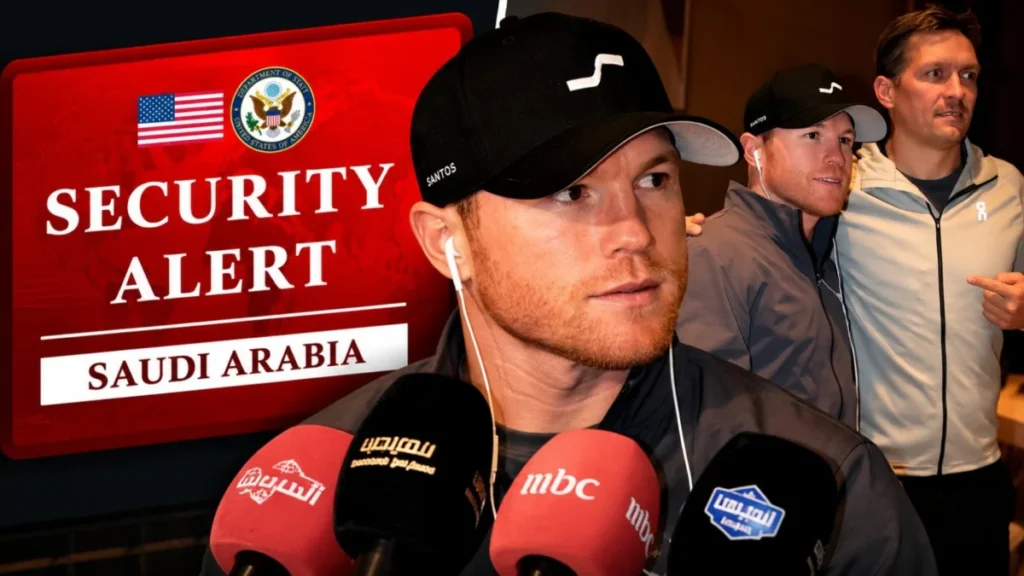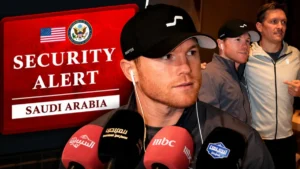
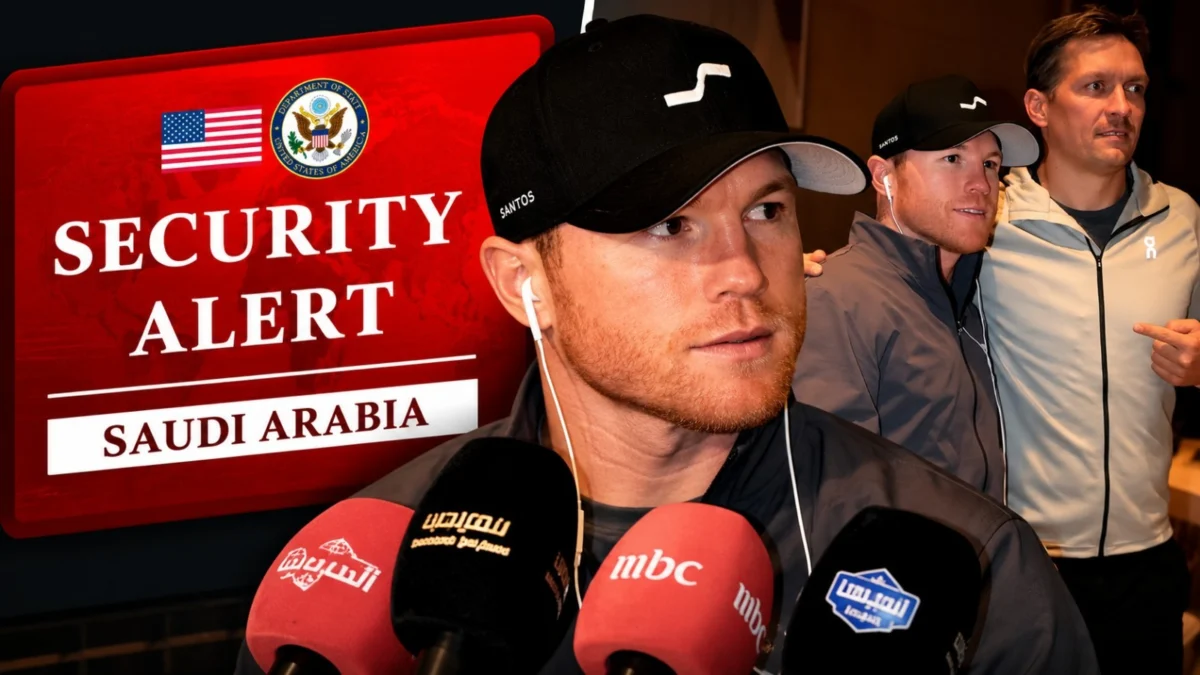
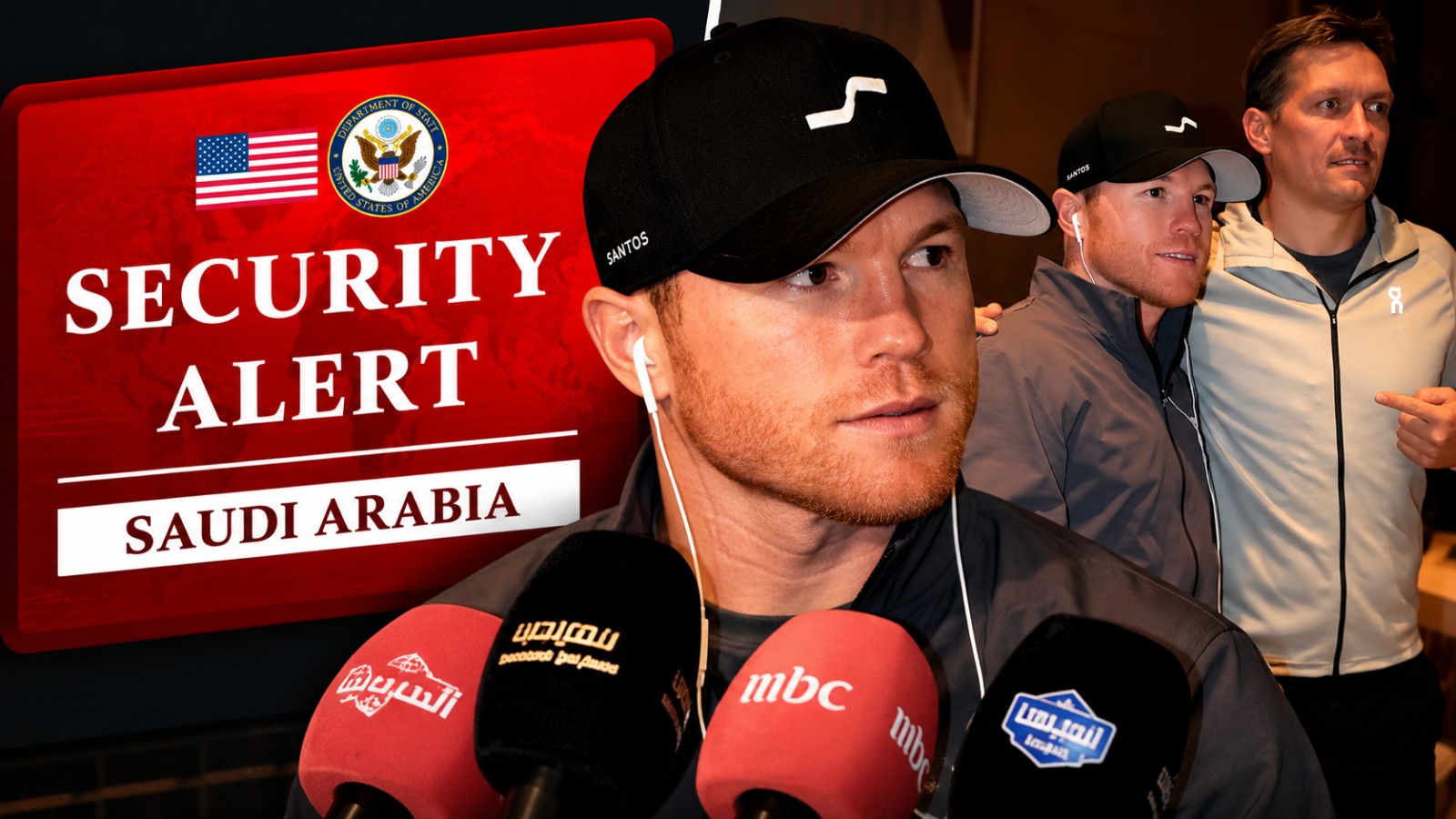
The arrival of boxing superstars Canelo Alvarez and Oleksandr Usyk in Riyadh has thrust a major upcoming sporting event into a complex and high-stakes geopolitical situation. With mounting security concerns across Saudi Arabia, significant questions are being raised over whether the sport’s biggest names have access to underground bunker protection if regional attacks escalate.
More importantly, as international tensions rise and diplomatic warnings multiply, observers and industry insiders are asking a critical question: if the elite fighters are protected, what about the fans?
The presence of two of the world’s top pound-for-pound fighters in a nation currently facing active missile and drone threats has created one of the most concerning security environments ever witnessed surrounding a major championship boxing event. Canelo is scheduled to step into the ring to challenge Christian Mbilli for the WBC super middleweight title on October 31. Simultaneously, heavyweight kingpin Usyk has arrived in Riyadh, touching down just as the United States government orders non-emergency personnel and their families to evacuate Saudi Arabia over escalating safety risks.
The immediate concern focuses on whether the high-level security measures and shelter options potentially available to boxing’s biggest marquee names extend down to everyone else associated with the event, including undercard competitors, event staff, and ordinary spectators.
Saudi Bunker Protection and Elite Security
Reports originating from outlets like The Wall Street Journal have highlighted that Saudi Crown Prince Mohammed bin Salman has been moving between heavily guarded palaces equipped with advanced subterranean bunkers as security concerns across the kingdom intensify. Against this backdrop, boxing analysts and industry observers believe that elite competitors of Canelo and Usyk’s stature would have necessarily sought strict assurances regarding secure facilities—potentially including underground bunkers—before agreeing to travel to Riyadh during a period of heightened volatility.
It is difficult to imagine two of the most valuable commodities in modern boxing agreeing to fly into an active geopolitical flashpoint without ironclad assurances that they, their families, and their respective training teams would be shielded in the event of an aerial attack. However, these safety measures remain a matter of industry assessment rather than official confirmation. No specific details regarding emergency security arrangements for the fighters have been made public by promoters, local officials, or the athletes’ management teams.
The broader and more alarming concern centers on whether ordinary fans, undercard fighters, venue workers, and international visitors have been offered anything approaching a comparable level of protection. The U.S. State Department has issued explicit warnings regarding missile and drone attacks targeting regional interests, while British and other Western embassies have likewise updated their guidance, advising their nationals of significant security hazards while residing in or traveling through Saudi Arabia.
If boxing’s biggest names have indeed been assured of secure, specialized shelter, the thousands of ticket-holding fans attending the event deserve to know what emergency safety arrangements have been made for them. To date, there has been no public confirmation of equivalent protection for general spectators. This is a pressing question that Riyadh Season organizers and key figures like Turki Alalshikh should address transparently before welcoming massive crowds into a single venue.
U.S. Embassy Orders Departures and Travel Disruptions
The security climate shifted dramatically when the U.S. State Department ordered non-emergency American government employees and their families to depart Saudi Arabia, an directive initially issued on October 23 and forcefully reiterated by the U.S. Embassy on October 25.
These precautionary measures followed a series of alarming attacks directed at civilian airports and other vital national infrastructure. These incidents have not only resulted in casualties but have also caused severe, ongoing disruptions to regional travel networks. Riyadh’s King Khalid International Airport, a primary hub for international arrivals, has only partially resumed normal operations, while U.S. government employees are now required to obtain special authorization simply to utilize airports within the country.
These escalating warnings have already begun to impact the boxing card itself. Contender Lindolfo Delgado made the decision to cancel his travel plans to Riyadh, pulling out of his scheduled bout against Arthur Biyarslanov due to mounting safety apprehensions and a perceived lack of transparency regarding travel and venue security logistics.
While Biyarslanov has already arrived in the country, it remains entirely unclear whether he will remain on the fight card to face a late-replacement opponent, or if further disruptions to the roster are imminent. Similar anxieties regarding the safety and well-being of travelers heading to Saudi Arabia have been voiced publicly by respected boxing figures, including veteran trainer Robert Garcia.
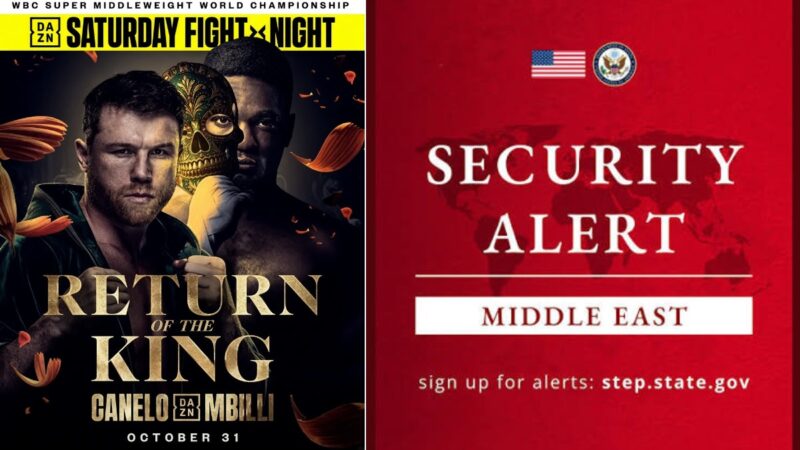
The decision to forge ahead with Canelo’s high-profile DAZN event in the wake of deadly attacks involving Saudi airports has inevitably drawn heavy scrutiny, forcing the combat sports community to weigh the immense financial rewards of these modern mega-fights against undeniable physical risks.
One Incident Could Change Everything
The burden of responsibility now rests squarely on the shoulders of Turki Alalshikh, Riyadh Season organizers, and all corporate and promotional stakeholders involved in staging the event. Ensuring the absolute physical safety of every single individual inside or near the venue is paramount.
Industry analysts point out that even a single security incident at or near the venue could trigger consequences stretching far beyond the immediate cancellation of a championship boxing match. An emergency involving fighters, spectators, or event personnel would represent an irreversible turn of events from which the promoters and local organizers would struggle to recover, both reputationally and operationally.
While elite athletes like Canelo Alvarez and Oleksandr Usyk command the resources and leverage to demand high-level emergency protection, the silence surrounding public safety protocols for everyday fans leaves a glaring void.
Repeated calls from industry observers have argued that high-risk events like Canelo versus Mbilli should be relocated away from Riyadh while the regional security situation remains profoundly unstable. That critical perspective remains unchanged. While the upcoming bout represents a multi-million-dollar spectacle for the sport, no boxing event—regardless of its financial magnitude—is worth risking human lives, particularly at a time when major Western governments are actively ordering their own official personnel to evacuate the region.