


Boxing has long grappled with a deeply troubling narrative that exists entirely outside the squared circle—one defined not by championship belts, tactical brilliance, or pay-per-view success, but by recurring allegations of domestic violence involving some of the sport’s most recognizable names.
The latest chapter in this grim ongoing saga unfolded with the recent arrest of Edgar Berlanga in Florida. His detention has instantly thrust the issue back into the global spotlight, reminding the combat sports world that the industry continues to struggle with a systemic problem that cannot simply be ignored, excused, or settled by what happens inside the ring.
Berlanga now finds his name added to a dishonorable roster of prominent fighters—including Gervonta Davis, Floyd Mayweather, and Deontay Wilder—who have faced serious allegations or legal proceedings involving violence against women. While the legal outcomes of these respective cases vary dramatically, ranging from severe criminal convictions and jail time to dismissed charges, dropped cooperation, and ongoing court battles, their collective weight leaves boxing facing an uncomfortable reality. It is a sport built on controlled combat, yet it repeatedly finds itself forced to answer for uncontrolled violence occurring behind closed doors.
Edgar Berlanga Arrested in Florida
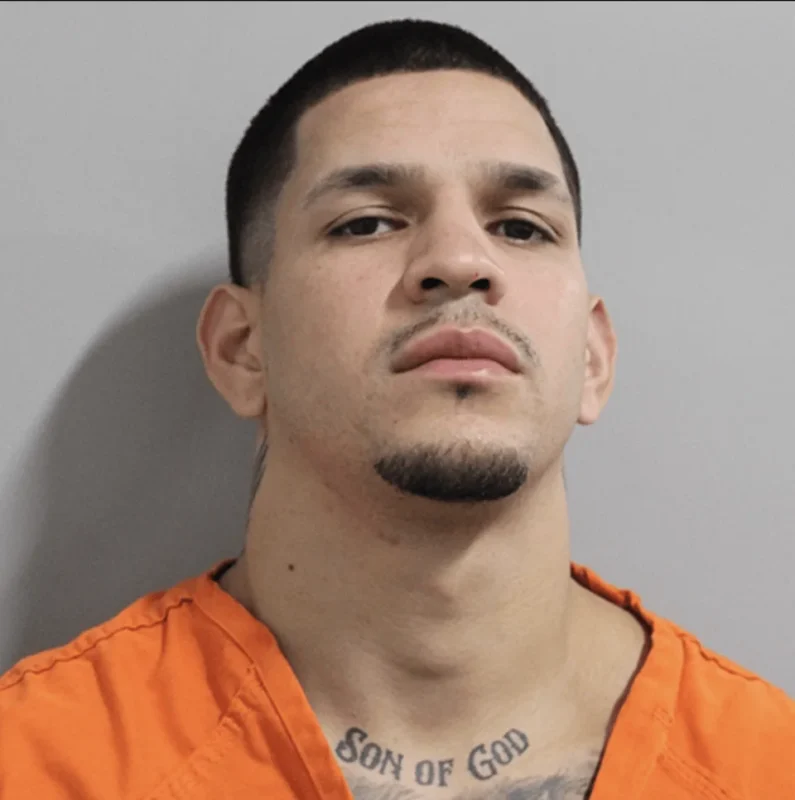
The immediate catalyst for this renewed conversation is the October 26 arrest of Edgar Berlanga in Polk County, Florida. According to a detailed report filed by the Lakeland Police Department, the arrest stems from an alleged violent altercation that occurred eight days prior involving the mother of his child.
Berlanga, a 29-year-old former super middleweight title challenger, allegedly became embroiled in a heated argument inside a vehicle. Investigators state that the altercation escalated physically when Berlanga allegedly slapped the woman before striking her forehead with part of a firearm.
According to police accounts, the terrified victim managed to escape the vehicle and fled to a nearby 7-Eleven convenience store, where concerned bystanders immediately stepped in to contact local authorities. Responding officers later documented visible physical trauma, noting distinct swelling and bruising to the victim’s forehead.
In the wake of the police investigation, Berlanga was formally charged with felony aggravated battery and misdemeanor domestic battery. A local court set his bail at $16,000, and a formal arraignment has been scheduled for November 17.
As is standard within the legal system, these allegations have not yet been formally proven in a court of law, and Berlanga remains legally presumed innocent unless and until he is convicted by a judge or jury.

The timing of the arrest deals a severe blow to the fighter’s career momentum. It comes mere months after Berlanga signed a high-profile promotional deal with Dana White’s newly formed Zuffa Boxing, a venture seeking to make major waves in the combat sports landscape. Earlier in July, Berlanga had seemingly righted his professional ship with a hard-fought victory over Steven Butler at Madison Square Garden.
Instead of building upon that success, his arrest has compounded an already difficult and tumultuous period for Zuffa Boxing, which has faced a string of high-profile setbacks and logistical nightmares surrounding several of its marquee signings.
Gervonta Davis Faces Repeated Legal Scrutiny
Berlanga’s arrest is far from an isolated incident within modern elite boxing. Over recent years, lightweight superstar Gervonta Davis has repeatedly found himself entangled in a web of domestic violence allegations and high-profile legal battles, with documented incidents spanning from 2020 through early 2026.
The pattern of legal trouble intensified publicly in February 2020, when chilling surveillance footage circulated widely online showing Davis aggressively grabbing the mother of his child by the neck and forcing her out of her seat during a celebrity charity basketball event in Miami. Law enforcement subsequently arrested him, and prosecutors charged him with simple battery. However, the case ultimately stalled and was dropped after the parties involved declined to pursue further cooperation.
Further allegations surfaced in December 2022, resulting in Davis being arrested in Florida on a fresh battery allegation involving a domestic partner. Once again, prosecutors ultimately opted to drop the case.
The legal hurdles continued to mount in July 2025, when Davis was taken into custody yet again following accusations that he had struck a former partner during a volatile dispute concerning their children. That charge met a similar fate in August of that same year, dropped by prosecutors after the victim chose not to cooperate with the ongoing legal proceedings.
However, Davis’s legal jeopardy escalated significantly following a separate incident in October 2025 at a Miami-area nightclub, where another former girlfriend came forward with harrowing allegations. This led to a dramatic arrest in January 2026, with authorities slapping Davis with serious charges that included battery, false imprisonment, and attempted kidnapping. Throughout the proceedings, Davis’s defense attorney has vigorously disputed the accuracy of the allegations.
The legal pressure remained intense as the case pushed forward in the courts. In April 2026, a presiding judge firmly rejected a defense motion seeking to completely dismiss the ongoing criminal proceedings.
Crucially, the fallout from the October 2025 nightclub incident extended far beyond the courtroom, directly impacting the sports entertainment industry. The swirling controversy surrounding the arrest forced the cancellation of a lucrative, highly anticipated exhibition boxing match between Davis and internet personality Jake Paul, which had been scheduled to stream on Netflix in November—just two months prior to his formal January arrest.
Floyd Mayweather’s 2011 Conviction and Career Legacy
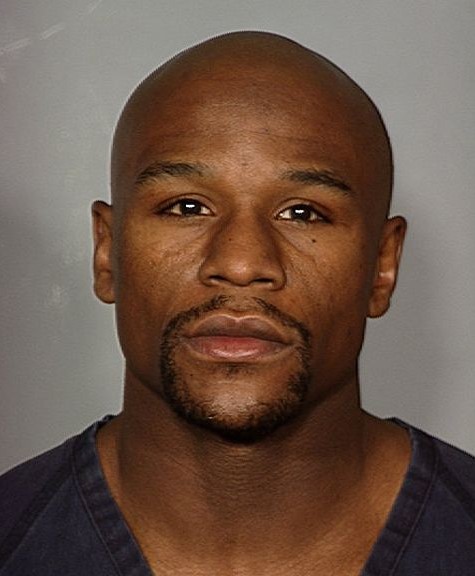
While many high-profile fighters have seen their domestic violence cases end in dropped charges or ongoing litigation, Floyd Mayweather stands apart because his case culminated in a definitive criminal conviction and a custodial prison sentence.
In December 2011, the undefeated former multi-division world champion entered a guilty plea to a misdemeanor charge of domestic battery, alongside no-contest pleas to harassment charges. The legal action stemmed from a violent domestic incident that occurred in September 2010 inside the Las Vegas home of his former partner, Josie Harris. The confrontation was made all the more harrowing by the fact that two of the couple’s young children were present and witnessed the assault unfold.
As a result of the plea agreement, Mayweather was handed a 90-day jail sentence in the Clark County Detention Center, alongside mandatory community service requirements, financial fines, and court-ordered domestic violence counseling.
Mayweather ultimately served approximately two months behind bars during the summer of 2012 before being released to resume his active boxing career.
Remarkably, the conviction and subsequent jail time failed to derail his commercial appeal or his unmatched dominance in the ring. Mayweather returned to the sport to shatter pay-per-view records, earning hundreds of millions of dollars to become the highest-paid athlete of his generation, and ultimately retiring with a pristine, historic 50-0 professional record. Yet, despite his extraordinary athletic achievements and eventual induction into the International Boxing Hall of Fame, his domestic violence conviction remains an indelible part of his public legacy.
Deontay Wilder Faces Accusations and Legal Hurdles
The heavyweight division has also seen its share of high-profile legal controversies. Former WBC heavyweight champion Deontay Wilder was arrested by police in Las Vegas back in May 2013 following a violent domestic incident inside a hotel room.
At the time, Wilder was accused of domestic battery by strangulation. Police and medical reports from the incident detailed alarming injuries sustained by the female victim, including noticeable facial swelling and distinct bruising and marks around her neck.

Wilder’s defense attorney at the time maintained that the fighter had acted under a mistaken belief, claiming Wilder genuinely thought the woman was attempting to steal from him. Wilder himself later asserted publicly that the criminal allegations against him had ultimately been dropped.
A decade later, additional personal and legal turmoil emerged in June 2024. Wilder’s former fiancée, Telli Swift, successfully obtained a temporary restraining order against the heavyweight boxer after filing legal documents accusing him of enduring patterns of repeated physical abuse. Legal experts noted at the time that the protective order was a temporary civil measure designed to ensure safety rather than a formal criminal conviction.
World Boxing News previously chronicled Swift’s allegations and the subsequent protective order in the wake of Wilder’s professional defeat to Chinese heavyweight contender Zhilei Zhang.
The legal landscape grew even more complicated for Wilder in April 2026, when he was forced to publicly deny a fresh wave of serious allegations contained within a separate civil lawsuit filed by Swift’s son, who accused the boxer of physical abuse dating back to his childhood years. Wilder’s legal representation forcefully characterized those allegations as entirely false, vowing that the former champion would mount a rigorous defense in court. Wilder reiterated these denials in subsequent legal filings reported late in the year.
A Decades-Long History Across Boxing
The modern cases involving Berlanga, Davis, Mayweather, and Wilder are part of a grim historical continuity that demonstrates how deeply domestic violence has affected boxing for decades, ensnaring legendary champions across multiple eras.
Among the most notorious historical cases is that of Riddick Bowe. The former undisputed heavyweight champion pleaded guilty to federal charges of interstate domestic violence in June 1998, following a terrifying incident in which he abducted his estranged wife and their five children. After a prolonged and complex federal sentencing process that wound its way through the courts, Bowe was ultimately handed an 18-month federal prison sentence on January 16, 2003.
Decades earlier, the sport was rocked by the tragic case of Carlos Monzón. The legendary Argentine undisputed middleweight champion was convicted in his home country in July 1989 for the killing of his partner, Alicia Muñiz, following a violent altercation in February 1988. Monzón was sentenced to 11 years in prison, bringing a tragic end to the life of one of boxing’s greatest stylistic technicians.
Perhaps the most harrowing tragedy in the sport’s history involves Edwin Valero. The undefeated Venezuelan world champion was arrested in April 2010 after hotel staff discovered his wife stabbed to death in a Carabobo hotel room. Local Venezuelan police authorities subsequently reported that Valero had confessed to murdering her while being taken into custody. The full truth of the tragedy would never reach a courtroom, however, as Valero was found dead in his police jail cell the very next day, having died by suicide before he could stand trial.
While the specific circumstances, jurisdictions, and legal outcomes of these historical and contemporary cases vary wildly, they collectively paint an undeniable picture. The sport’s history is inextricably linked to recurring instances of domestic abuse, moving from criminal convictions and prison sentences to pending court battles and tragic deaths.
The Broader Reckoning for Boxing
As Edgar Berlanga’s legal process moves forward, the sport of boxing is once again forced to confront a profound ethical and institutional dilemma. The fundamental question facing the industry is how promoters, major television networks, sanctioning bodies, and governing organizations should respond when elite athletes—individuals capable of filling arenas and generating massive television revenue—find themselves implicated in serious accusations of violence against women.
This issue is amplified exponentially by the unique nature of professional combat sports. Elite fighters undergo grueling physical conditioning, developing extraordinary strength, cardiovascular endurance, and devastating punching power that can turn deadly in an instant. Consequently, allegations involving physical violence directed at domestic partners carry an inherent gravity that sets combat athletes apart from participants in other sports.
Industry stakeholders continue to navigate a delicate balancing act when these crises erupt, often caught between respecting the due process of the legal system and failing to treat violence against women as a mere administrative inconvenience to a packed promotional fight schedule.
Berlanga’s recent arrest has successfully dragged this uncomfortable conversation back into the open. While the ultimate legal outcome of his case remains entirely unwritten, the broader history of professional boxing demonstrates vividly why this discussion extends far beyond the fate of a single fighter, remaining an urgent and unresolved crisis for the sport at large.