The 1912 Olympic marathon in Stockholm unfolded beneath a relentless Scandinavian heatwave that quickly shattered the field. Among those overwhelmed by the punishing conditions was Shizo Kanakuri, a runner from Japan whose grueling, weeks-long journey to Sweden had left him drained, under-trained, and unable to sleep. Arriving at approximately the 16-mile mark of the race, exhausted and disoriented, Kanakuri simply could not carry on. He drifted off the official course and into the serene environment of a nearby garden party. There, to the fascination and amusement of his hosts, the weary athlete rested, sipping orange juice for a full hour while the rest of the world ran past.
Overwhelmed by embarrassment at failing to reach the finish line, Kanakuri quietly boarded a ship the following day and returned home to Japan without notifying race officials. In Sweden, his mysterious vanishing act grew into an enduring piece of sporting lore, with Kanakuri’s name remaining officially recorded on the nation’s missing persons list for more than half a century.
It was not until the 1960s that a inquisitive journalist finally located him living a quiet life in Kumamoto, in southern Japan, where he was working as a geography teacher. Recognizing an irresistible narrative, Swedish television spent considerable resources to fly Kanakuri back to Stockholm, ferrying him directly to the precise spot where he had abandoned his run decades earlier.
Thus, in March 1967, Kanakuri at last crossed the finish line to officially complete his 1912 Olympic marathon. His final recorded time stood at 54 years, eight months, six days, five hours, 32 minutes, and 20.3 seconds. Athletically, the feat was entirely meaningless and devoid of competitive value. Yet as a story, it was magnificent. It filled newspaper columns, occupied broadcast schedules, and captivated public interest. Ultimately, in the grand calculus of popular media, that was the only outcome that truly mattered.

This long, circuitous tale offers a fitting parallel to the long-awaited heavyweight showdown between Tyson Fury and Anthony Joshua. Critics regularly argue that this British blockbuster is taking place several years too late—that the 38-year-old Fury and the 36-year-old Joshua are well past their athletic zeniths, that years have elapsed since either man scored a victory over an opponent of genuinely elite world-class pedigree, and that the sheer delay involved makes the prolonged buildup to Floyd Mayweather against Manny Pacquiao seem positively hasty by comparison.
However, to view this delay as an unfortunate accident is to misunderstand the modern fight game. Fury versus Joshua is occurring precisely when it was always meant to happen: at the exact intersection where peak commercial valuation intersects with an almost complete absence of genuine athletic jeopardy. Had this contest been staged in 2021, both fighters would have been risking world titles, the undisputed championship, and the ultimate standing of their respective legacies on a single night. Conversely, had it been kicked down the road until 2031, not even the combined promotional machinery of Frank Warren, Eddie Hearn, Dana White, and Turki al-Sheikh could have convinced a cynical public that the fight was anything more than an embarrassing carnival act.
Instead, the bout arrives right at the threshold—staged before public interest completely evaporates, yet delayed long enough to maximize revenue. Like a shrewd market vendor squeezing the absolute highest price out of a piece of fruit on the very eve of rot, the boxing business is operating at its absolute peak commercial efficiency. Back in April 2016, Joshua famously observed, "We will get it on at the right time." At that moment, a matchup with Fury would have commanded only a fraction of the £150 million figure it commands today. In the brutal economy of prizefighting, absence does not merely make the heart grow fonder; it makes the purse grow exponentially larger.
The reality that such delays are treated as routine annoyances rather than existential flaws points to a deeper crisis within the sport. Almost every other modern athletic discipline relies on established organizational structures, rigid rankings, and governing bodies designed to compel the absolute best to face the best at their physical peak. Boxing stands as virtually the sole exception, operating as an unruly marketplace where the premier competitors can avoid one another for a decade. This persistent failure raises a fundamental question: can modern boxing still be classified as a true sport in the traditional, codified sense, or has it devolved entirely into custom-built entertainment?
For his part, Fury has spent recent months—and indeed recent years—trying to lay the blame for the delay at Joshua’s door, insisting that he has been waiting patiently all along. Yet that narrative conveniently overlooks the massive detours that have defined Fury’s career path. There was the two-and-a-half-year hiatus spent away from the ring entirely, amid UK Anti-Doping charges, substance abuse issues, and severe mental health struggles.
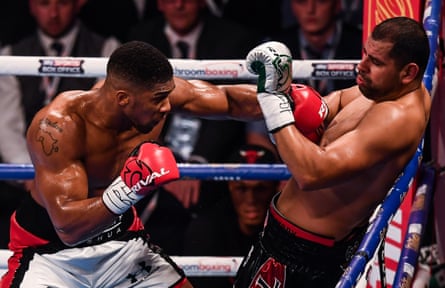
That was followed by another two-and-a-half-year block dedicated to his thrilling trilogy against Deontay Wilder—a saga fought not only inside the ring but also through protracted court arbitrations. While those brutal encounters provided sensational drama, they inevitably consumed the window during which an all-British undisputed clash could have taken place at its absolute peak.
Then there are Fury’s perpetual retirements, an ongoing performance art piece that has seen him announce his exit from the sport approximately five separate times depending on how one tracks his proclamations. Nostalgia now colors his first abrupt exit in 2013, when he vowed he was "1000000%, no matter what" done fighting forever. Similar exits followed in 2016 and 2017, the latter punctuated by a dramatic declaration of "THE END." By 2022, he was promising that "no amount of material assets or money" would lure him back to the canvas, a stance that inevitably softened, leading to yet another sabbatical spanning 2025 into 2026. While contract negotiations in elite sport are notoriously complex, repeatedly walking away from the profession remains an unorthodox method for building a reliable sporting partnership.
Calling any athlete who steps between the ropes a coward is fundamentally unjust; the physical risks taken for public entertainment are real and terrifying. Nevertheless, it remains a profound disappointment that a clash capable of defining a golden generation of British heavyweight boxing arrives only when the true competitive stakes have been thoroughly drained. Despite the immense promotional noise that will inevitably surround the event over the coming months, what can this fight actually prove? What historical hierarchy will be settled? Indeed, given the tantalizing prospect of an even more profitable rematch staged in late 2027, it may not be in anyone’s commercial interest for anything to be definitively settled at all.
Historically, prizefighting has thrived by balancing two competing impulses: the thrill of genuine athletic supremacy and the theatrical flair of pure showmanship. At its best, these elements reinforce each other, creating an irresistible mix of sport and spectacle. Like a traditional holiday cracker, the enterprise requires both the bright, attractive paper on the outside and the sharp explosive bang on the inside; strip away either element, and the illusion collapses entirely.
In contemporary boxing, however, these two forces are pulling completely apart, splitting the sport into two distinct realms: meritocratic athletic achievement on one side, and algorithmic, celebrity-driven entertainment on the other.
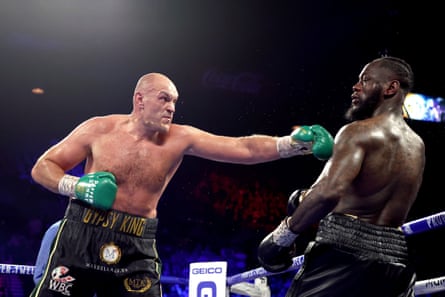
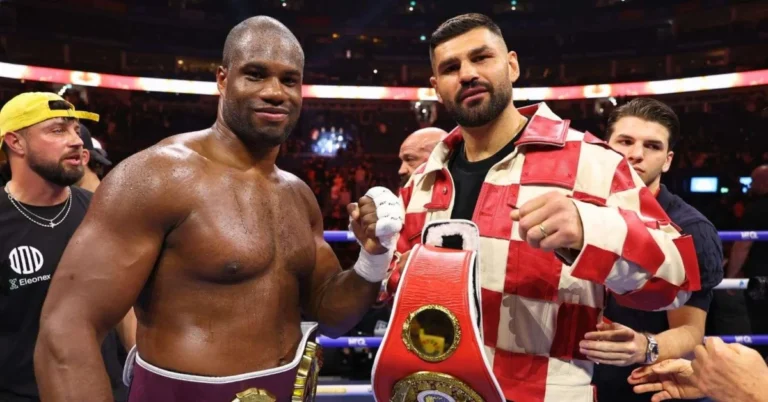
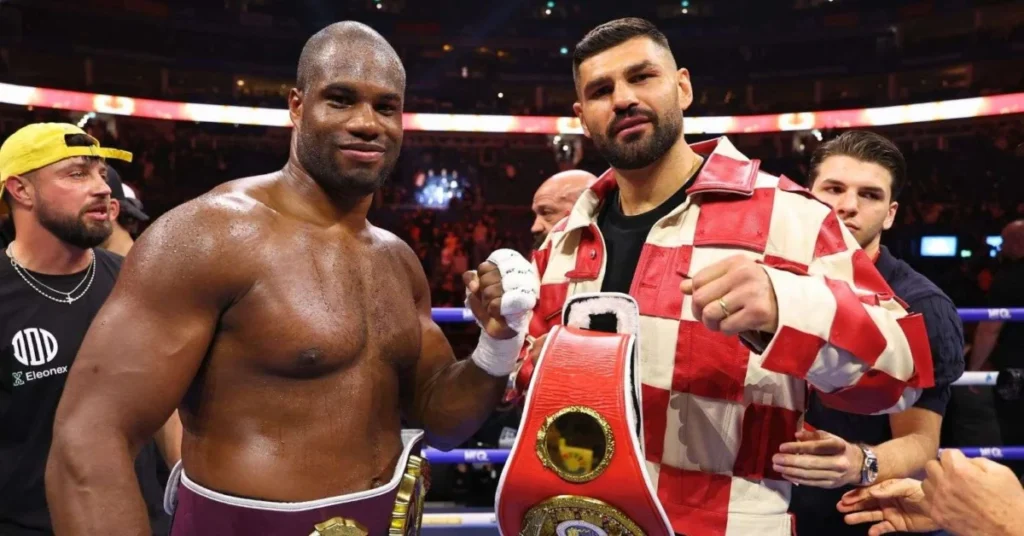
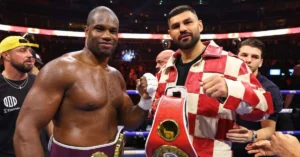
On the meritocratic side, brilliant young talents like Moses Itauma remain well-kept secrets from the general public, while a thrilling, high-stakes all-British world title clash like Daniel Dubois versus Fabio Wardley can be celebrated by hardcore purists as a fight of the decade while registering almost zero footprint in the wider cultural consciousness.
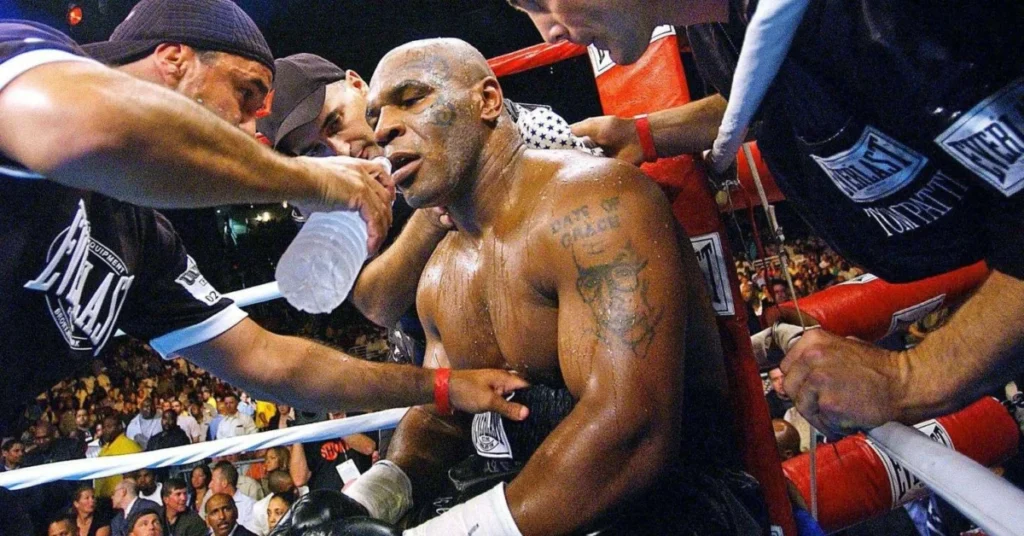
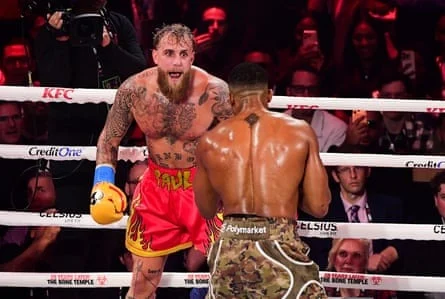
On the algorithmic side, internet personalities like Jake Paul rank among the sport’s most lucrative pay-per-view draws, undisputed heavyweight king Oleksandr Usyk finds himself booked against a professional kickboxer, rumors persist regarding retired icons Floyd Mayweather Jr. and Mike Tyson, and Conor Benn and Chris Eubank Jr. appear locked in a promotional cycle destined to repeat for another decade.
This leaves Fury versus Joshua occupying an ambiguous middle ground. Does it belong to the world of elite sporting competition, or is it merely another entry in the booming market for high-concept celebrity entertainment? Many fans will desperately want to believe in the Fury of old, the unpredictable boxing genius, and in the Joshua of the 2010s, the pristine, unscarred powerhouse who captivated a nation. We want to believe that what we are watching is still, at its heart, elite sport. But deep down, as the spectacle approaches, the truth behind the delay is impossible to ignore.