


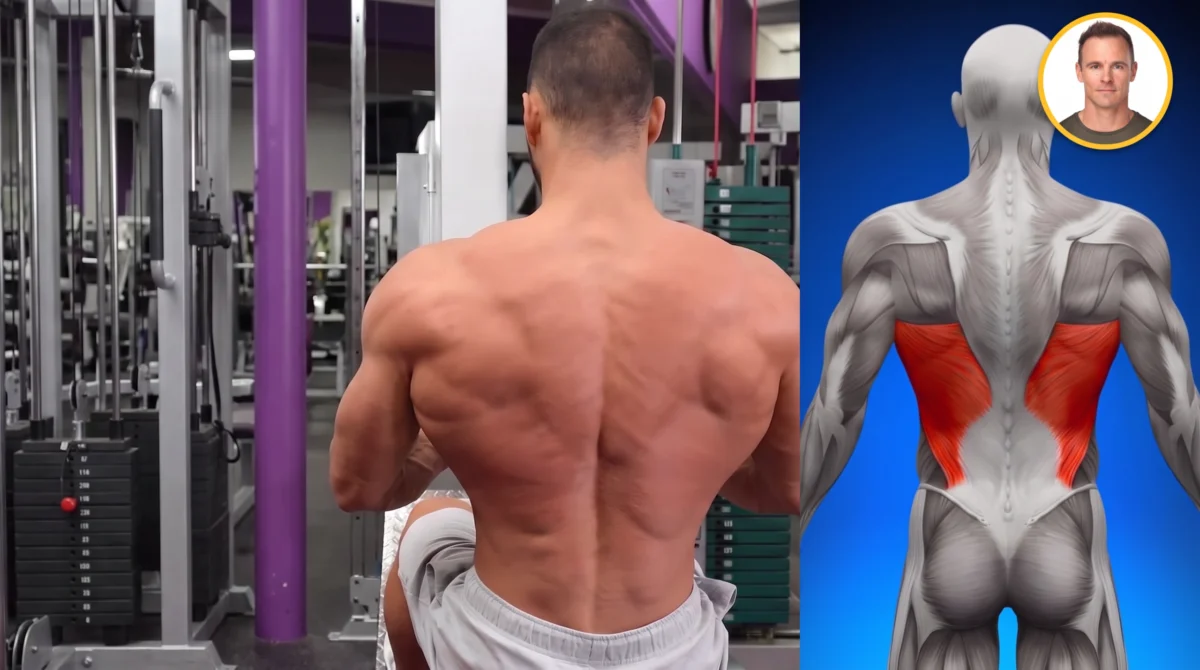
Building an impressive, V-shaped upper body has long been a primary objective for fitness enthusiasts and athletes alike. For decades, conventional fitness wisdom dictated that achieving this coveted aesthetic—characterized by broad shoulders, a wide back, and a powerful, tapered physique—required navigating complex training splits, managing dozens of isolated exercises, and spending hours every week in the weight room. However, modern training analysis suggests that a more streamlined approach can yield superior results with far greater efficiency.
Fitness experts and strength coaches are increasingly emphasizing that focusing purely on three strategic, multi-joint movements can deliver the exact upper-body transformation many lifters are chasing. Rather than scattering energy across an overwhelming variety of isolation exercises, streamlining a routine around pull-ups, overhead shoulder presses, and deadlifts targets the key muscle groups responsible for creating the dramatic taper from the shoulders down to the waist. Whether an individual is a beginner laying the foundational blocks of physical strength or an experienced lifter looking to optimize and streamline their training schedule, mastering these three foundational movements offers a direct and highly effective pathway to upper-body development.
At the core of this minimalist yet powerful routine is the pull-up, widely regarded as the ultimate back-width builder. As a bodyweight movement, the pull-up stands as a cornerstone exercise for developing the expansive, powerful upper back that forms the top portion of the classic V-shape. The exercise primarily targets the latissimus dorsi—the broad, wing-like muscles spanning the back—while simultaneously engaging the biceps, upper back, and core to deliver a comprehensive upper-body challenge. The inherent appeal of the movement lies in its straightforward nature, requiring little more than a stable bar and determination.
Proper execution of the pull-up dictates that form begins with grip and positioning. Lifters are advised to place their hands shoulder-width apart with an overhand grip, palms facing away from the body. Hanging with fully extended arms while engaging the core prevents unwanted swinging, a common error that compromises muscle tension. The movement is initiated by pulling the shoulder blades down and back, followed by an upward drive until the chin clears the bar. Keeping the elbows tucked close to the body rather than allowing them to flare outward maximizes lat activation and protects the shoulder joints. Common pitfalls, such as kipping or utilizing a partial range of motion, rob the muscles of the continuous tension required for growth. Various adaptations, including wide-grip variations for heightened lat emphasis, narrow-grip holds for bicep engagement, and resistance bands or negative pull-ups for developing strength, provide accessible entry points for trainees at every level of experience.
Complementing the back-width development of the pull-up is the overhead shoulder press, an essential movement designed to build powerful, capped shoulders. The deltoids are the primary target of this press, creating the broad silhouette that makes the waist naturally appear narrower, thereby amplifying the overall V-taper illusion. Additionally, the movement recruits the upper back and triceps, fostering comprehensive upper-body strength and joint stability.
Achieving proper technique on the overhead press requires a stable foundation, starting with feet positioned shoulder-width apart and weights held at shoulder height with palms facing forward. Engaging the core prior to pressing is critical, as it stabilizes the spine and prevents the excessive lower back arching that frequently leads to injury and shifts the load away from the target muscles. Pressing the weights overhead to a point of near-full extension, followed by a controlled descent back to shoulder level, ensures that both the concentric and eccentric phases of the lift contribute effectively to muscle hypertrophy. Trainees can utilize dumbbells to correct bilateral strength imbalances and allow a greater range of motion, barbells to lift heavier loads along a fixed path, or resistance bands to maintain constant tension. Furthermore, choosing between standing and seated variations allows athletes to prioritize either full-body core stability or strict, isolated shoulder development.
Tying the entire upper-body structure together is the deadlift, an exercise that serves as the foundation of total-body strength and posterior chain development. While frequently categorized as a lower-body movement, the deadlift is indispensable for cultivating the powerful posterior muscles that support a strong, athletic torso. By engaging the lower back, glutes, hamstrings, and core, the deadlift builds functional strength that translates directly into improved posture, stability, and performance across virtually all other athletic endeavors.
Executing a safe and effective deadlift begins with precise positioning, placing the feet hip-width apart with a barbell centered over the mid-foot. By hinging at the hips and knees to secure a grip just outside the legs, lifters must establish a neutral spine and engage their core before initiating the pull. This internal pressure acts as a muscular lifting belt, protecting the spinal discs from excessive stress. Pushing through the heels while simultaneously extending the hips and knees keeps the bar traveling in a tight, vertical path close to the body. Variations such as conventional deadlifts for overall posterior chain development, sumo deadlifts for heightened glute and inner-thigh engagement, and Romanian deadlifts for targeted hamstring tension allow lifters to tailor the movement to their specific developmental goals. Beginners often start with lighter loads, kettlebells, or trap bars to master the fundamental hip hinge mechanics safely, while more advanced athletes progress toward heavier loads and specialized variations to overcome training plateaus.
Ultimately, combining pull-ups, overhead shoulder presses, and deadlifts creates a complete, balanced blueprint for a V-shaped physique. Pull-ups expand the back, overhead presses build the broad shoulders that create the illusion of a narrower waist, and deadlifts reinforce the posterior chain and core stability required to support heavy loads safely. As trainees pursue continuous improvement through the principle of progressive overload—gradually increasing weight, repetitions, or difficulty—maintaining strict form remains paramount. By prioritizing consistency, disciplined technique, and smart training progression, individuals can transform their upper bodies efficiently without the need for convoluted, high-volume workout routines.