



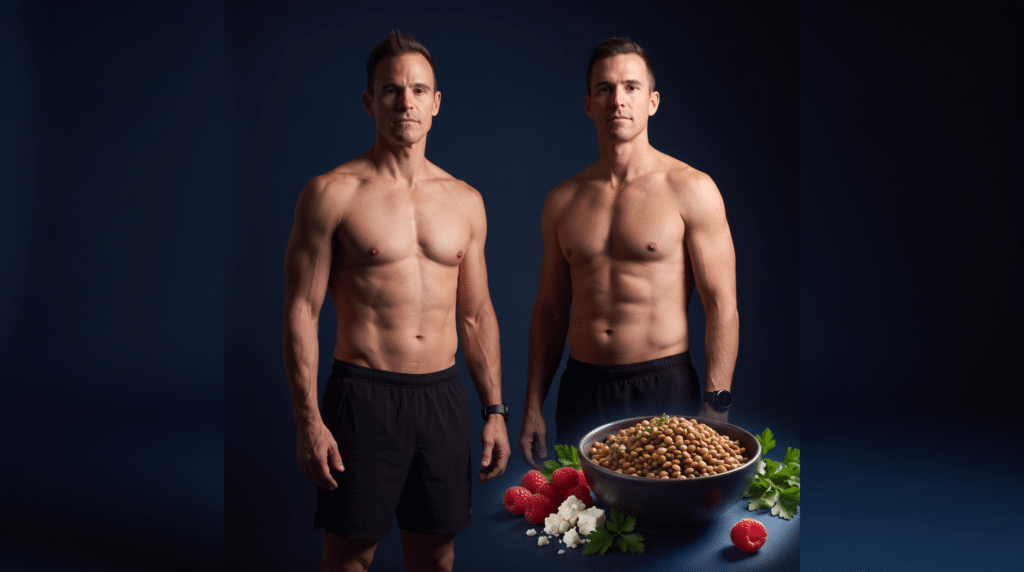
Dr. Clay Moss immediately stands out in a crowd, and certainly within the often-confusing landscape of modern medicine. Lean, muscular, and carrying an athletic build that commands attention, he is a medical professional who visibly practices what he preaches when it comes to the intersection of rigorous physical training and nutritional science.
In a recent and candid conversation detailing his personal philosophy on eating and physical conditioning, Moss pulled back the curtain on the surprisingly straightforward strategies that allow him to maintain peak physical condition. His methods offer a refreshing, pragmatic departure from the overly complicated meal plans, obsessive macro-tracking, and restrictive protocols that dominate contemporary wellness culture. From incorporating intermittent fasting into his daily routine to prioritizing training in a fasted state, Moss’s approach challenges many of the prevailing assumptions about what it takes to stay lean, strong, and energetic.
The Foundation: Mediterranean-Style, High Protein
Moss has not arrived at his current physical state by following a single, dogmatic nutritional path. Instead, like many individuals trying to cut through the noise of the diet industry, he has experimented extensively with various popular eating paradigms over the years. His journey included deep dives into the carnivore diet, strict veganism, and the ketogenic lifestyle, giving him firsthand insight into how drastically different fuel sources impact the human body. Ultimately, however, he stepped away from these rigid extremes to settle on a nutritional style that prioritizes sustainability and long-term vitality.
Rather than adhering to a strict label, Moss describes his current nutrition as a high-protein, Mediterranean-style diet, occasionally shifting toward a ketogenic framework depending on his current physical demands and his personal response to carbohydrates. His daily regimen centers squarely on whole, single-ingredient foods that undergo minimal processing. There are no convoluted calculations or obsessive tracking applications dictating his every move. Instead, he relies on real, nutrient-dense food prepared simply and efficiently.
At a body weight of 182 pounds, Moss targets approximately 160 grams of protein daily. While this figure sits slightly below the frequently cited body-building standard of one gram of protein per pound of body weight, it remains well within the robust range supported by current scientific literature for preserving and maintaining muscle mass during daily activity and rigorous resistance training.
Why Carb Sensitivity Matters
A key turning point in Moss’s nutritional evolution was recognizing his unique physical responses to macronutrients, particularly carbohydrates. He discovered early on that consuming carbohydrates, especially during the middle of the day, triggered a physiological response that left him battling severe energy crashes by late afternoon. For Moss, managing carbohydrate intake is not driven primarily by a fear of fat accumulation, but rather by how specific foods dictate his daily quality of life and sustained energy levels.
When he consumes a substantial portion of carbohydrates—such as rice, sweet potatoes, or bread—in the middle of the day, his body experiences a rapid spike in blood sugar. Once that glucose spike subsides and drops below baseline, intense hunger signals fire simultaneously with a steep plummet in physical and mental energy. By keeping his carbohydrate intake lower and strategically timed, Moss enjoys much steadier, predictable energy throughout the day, coupled with a significant reduction in unwanted food cravings.
A Day of Eating: Simple and Sustainable
The daily nutritional pattern Moss follows is remarkably straightforward and consistent with his Mediterranean philosophy. His meals typically emphasize high-quality protein sources, healthy fats, an abundance of vegetables, and occasional low-glycemic carbohydrate options such as blueberries or quinoa.
Whether he is engaging in intermittent fasting—a practice he frequently utilizes for weeks or months at a time—or eating his first meal of the day, the fundamental template remains unchanged. Breakfast, lunch, and dinner share a common thread of nutrient density without culinary complexity. There are no exotic supplements or gourmet preparations required to sustain his physique; the core of his success lies in consistent, repeatable choices centered around real food.
Training Fasted: An Unexpected Advantage
In addition to his nutritional habits, Moss’s physical training regimen defies conventional fitness wisdom. While generations of athletes have been told they must consume a pre-workout meal or carbohydrate snack to fuel optimal performance, Moss actively prefers training in a fasted state, applying this practice to both his cardiovascular running sessions and heavy weightlifting routines.
His personal experience demonstrates that performance does not inherently suffer without immediate fuel in the stomach. While physiological responses vary significantly from person to person, fasted training can enhance fat oxidation and potentially improve metabolic flexibility over time. For Moss, the primary driver is subjective performance: he simply feels better and moves with greater focus when training on empty, proving that personal intuition often outweighs rigid exercise dogma.
The Calorie Debate: It’s Not Just About Numbers
When the conversation shifts to the foundational mechanics of weight management, Moss offers a nuanced perspective that looks far beyond the simplistic mantra of "calories in, calories out." While he acknowledges that overall energy balance ultimately dictates whether an individual loses or gains total body weight, he emphasizes that the specific macronutrients making up those calories play a monumental role in shaping body composition and metabolic health.
In short, total calories dictate the number on the scale, but the proportion of protein, fats, and carbohydrates determines whether a person is actively building functional muscle tissue or merely storing excess energy as body fat. Maintaining a high protein intake is particularly crucial during weight management because the body preferentially directs amino acids toward muscle protein synthesis, a process heavily amplified by resistance training. Furthermore, protein boasts a high satiety factor, naturally curbing appetite and mitigating hunger without requiring extreme willpower.
This philosophy connects directly to the concept of energy flux, or G-Flux, which Moss and his interviewer explored. The principle suggests that an individual maintaining a 2,000-calorie intake with a 2,000-calorie expenditure is at equilibrium, but a person consuming and burning 5,000 calories exists in a fundamentally different metabolic state. Higher energy throughput through the system can elevate total daily energy expenditure and metabolic efficiency. The overarching lesson is that striving for health through increased physical activity and adequate, high-quality fueling is often far superior to attempting health through severe energy restriction.
The Danger of Extreme Calorie Restriction
Moss issues a stern warning against the common pitfall of slashing caloric intake too aggressively in pursuit of rapid weight loss. When calories drop too low for extended periods, the body’s basal metabolic rate adapts downward as a survival mechanism, and precious muscle mass is catabolized. Under these conditions, an infrequent indulgence—such as a high-calorie meal that was once easily managed—can suddenly exert a heavily magnified negative metabolic effect on the body.
This biological downregulation explains why traditional yo-yo dieting so frequently backfires. Individuals lose lean tissue, suppress their metabolic engine, and inevitably rebound with accelerated fat gain once they return to normal eating patterns. Moss advocates for a more sustainable path, emphasizing that strategic adjustments paired with consistent physical activity yield far better results than severe, punishing restriction.
The Cristiano Ronaldo Diet: A Case Study in Simplicity
To illustrate the power of dietary minimalism, the conversation highlighted the reported eating habits of international soccer icon Cristiano Ronaldo. Known for maintaining an elite athletic physique well into his career, Ronaldo’s daily nutrition is remarkably stripped-down, avoiding sugar, preservatives, and dairy while relying on a minimal variety of whole foods to achieve maximum athletic output.
Moss views this approach as a prime example of the power of subtraction rather than addition in modern nutrition. Society is constantly conditioned to believe that better health requires accumulating more supplements, more superfoods, and more complicated protocols. Ronaldo’s success suggests that optimizing metabolic efficiency through simple, nutrient-dense inputs can yield superior performance compared to over-engineered dietary plans.
Identity-Based Habits: The Key to Consistency
Drawing inspiration from behavioral psychology, specifically the principles outlined in the book Atomic Habits, Moss stresses that lasting physical transformation requires shifting one’s core identity rather than merely modifying surface-level behaviors. Rather than framing a goal as a temporary effort to "eat healthy," lasting success comes from adopting the identity of someone who naturally makes health-conscious choices.
For Moss, this psychological framework translates into practical, environment-driven decisions. Knowing his own behavioral tendencies, he actively prevents temptation from entering his home by asking his family not to stock specific snacks and sweets. By removing friction and temptation from his immediate environment, he eliminates the need to rely on sheer willpower during moments of fatigue.
Five Fat Loss Strategies That Actually Work
When asked to distill his extensive knowledge into actionable advice for individuals struggling to lose fat, Moss outlined a clear, no-nonsense framework rooted in physiological science.
First, he urges individuals to prioritize strength training. Skeletal muscle functions as the body’s largest metabolic sink, actively clearing glucose from the bloodstream and buffering against occasional dietary missteps.
Second, he reiterates the necessity of increasing protein intake, which preserves hard-earned muscle tissue during fat loss phases while naturally regulating appetite and suppressing hunger signals.
Third, Moss suggests experimenting with intermittent fasting. Even if its primary benefit is simply establishing a natural window for moderate calorie control, fasting offers distinct metabolic benefits and streamlines daily meal planning.
Fourth, he emphasizes the importance of comprehensive clinical lab work. Undetected micronutrient deficiencies—such as low levels of vitamin D, magnesium, or omega-3 fatty acids—can quietly sabotage metabolic function and impede fat loss progress, making foundational health optimization a necessary first step.
Finally, Moss advises eliminating ultra-processed foods and excess carbohydrates from the daily routine. By focusing on the perimeter of the grocery store and selecting nutrient-dense whole foods over calorie-dense processed alternatives, individuals can dramatically improve their nutritional profile.
The Problem With GLP-1 Drugs
While acknowledging that GLP-1 receptor agonists like Ozempic serve as powerful pharmaceutical tools for individuals battling severe clinical obesity by blunting appetite and initiating weight loss, Moss points to a critical hidden danger: the rapid loss of lean muscle mass. Without deliberate intervention, patients utilizing these medications often shed significantly more muscle tissue than they would during traditional, lifestyle-modified weight loss.
Moss cautions that replacing a population struggling with obesity with a population characterized by sarcopenia—low muscle mass combined with fat—creates a uniquely dangerous health profile. He views medications as temporary tools rather than permanent solutions, asserting that long-term success requires pairing pharmaceutical interventions with structured resistance training and adequate protein consumption. The true test of these treatments, he argues, occurs after discontinuation, when sustainable lifestyle habits must take over to prevent a severe physiological rebound.
Listen to Your Body—Really
In closing, Moss returns to a fundamental premise that he believes modern processed foods have systematically compromised: the human body’s innate ability to communicate its nutritional needs. When individuals eliminate highly processed items from their diets, even for a brief period, they regain the biological sensitivity required to notice how specific whole foods actually make them feel hours or days later.
While a particular food may be universally lauded as a superfood, individual physiological responses vary widely. If a specific item consistently drains energy or causes physical discomfort, Moss advises paying attention to those internal signals rather than following blanket nutritional advice blindly. Ultimately, there is no single dietary blueprint that works universally for every human being. The ultimate objective is to cultivate deep self-awareness, honor personal physiological feedback, and embrace a lifestyle centered on simplicity, consistency, and foundational health.