
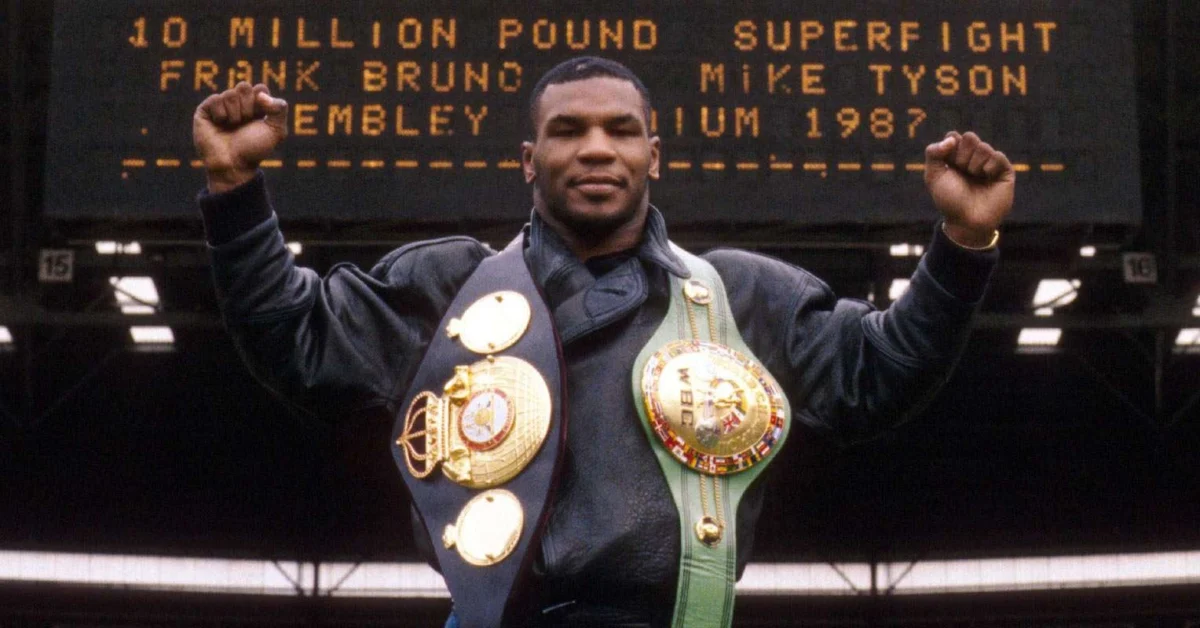
During the absolute zenith of his legendary professional boxing career, Mike Tyson was widely regarded as the most feared, destructive, and formidable heavyweight force on the face of the planet. Blessed with a terrifying combination of blinding hand speed, immense defensive head movement, and devastating one-punch knockout power, "Iron" Mike swept through the heavyweight division like a force of nature. His explosive, aggressive fighting style terrorized opponents and earned him an astonishing 19 consecutive knockout victories in his first 19 professional fights. Among those dominant early performances, an incredible 12 victories came inside the very first round, establishing a psychological aura of invincibility that preceded him into every single bout.
The crowning moment of this unprecedented ascent came in 1986, when a young Tyson stepped into the ring against Trevor Berbick. In a performance that cemented his status as a generational phenomenon, Tyson brutally blasted Berbick out in the second round of their contest. That devastating victory not only secured the WBC world heavyweight title for the challenger but also etched his name into the history books permanently. At just 20 years old, Mike Tyson became the youngest heavyweight champion in the history of professional boxing—a remarkable record that proudly stands to this very day, decades after that fateful night.
Tyson’s relentless march toward complete and unquestioned supremacy did not stop with the WBC belt. Subsequent victories over fellow world-class titleholders—including a dominant win over WBA champion James "Bonecrusher" Smith and a masterclass against IBF champion Tony Tucker—unified the division. This historic run propelled Tyson to become the undisputed heavyweight champion of the world. He went on to make six successful defenses of his crown, ruling over a division filled with elite contenders before suffering the first professional defeat of his career at the hands of James "Buster" Douglas in a massive upset in 1990.
Among the notable names that Tyson defeated during his dominant reign as the undisputed king of the heavyweights was Larry Holmes. Holmes was himself a legendary, all-time great heavyweight champion who had previously ruled the division with an iron fist, holding the world heavyweight championship an impressive streak from 1978 all the way through 1985. Holmes was known for possessing one of the finest left jabs in boxing history and a remarkably high boxing IQ, making his eventual encounter with the surging Tyson one of the most anticipated matchups of the era.
Years after hanging up his gloves for good, Larry Holmes opened up about that chapter of his career in an interview with The Telegraph. During the conversation, Holmes candidly spoke of his profound regret over choosing to go ahead with a comeback fight against "Iron" Mike Tyson. However, true to the fierce competitive spirit that defined his Hall of Fame career, Holmes also maintained that had they ever crossed paths when both men were operating at the absolute peak of their physical powers, the outcome would have been entirely different, and he would have emerged victorious.
Reflecting on the 1988 bout, Holmes offered a candid assessment of the matchup and his decision to step out of retirement. "I shouldn’t have come out of retirement against him," Holmes admitted during the interview. "I fought Mike Tyson and I lost. He stopped me. Tyson could punch, you can’t take that away from him."
Despite acknowledging the devastating punching power that ultimately brought a halt to his own night, Holmes remained steadfast in his belief regarding a hypothetical prime-versus-prime showdown. "He would stand in front of you, try and push you against the ropes, but he wouldn’t have been able to do that to me in my prime. I would have beaten him," Holmes asserted.
Following his defeat to "Iron" Mike in 1988, Larry Holmes did not immediately walk away from the sport that had defined his life. Instead, the veteran champion persevered, continuing to lace up his gloves and compete against subsequent generations of fighters for more than another decade. His remarkable longevity in the punishing sport of professional boxing finally came to a definitive end in July 2002. At that point, Holmes stepped into the ring for the final time, securing a victory in his 75th and final career bout against Eric "Butterbean" Esch before officially retiring from boxing for good.