

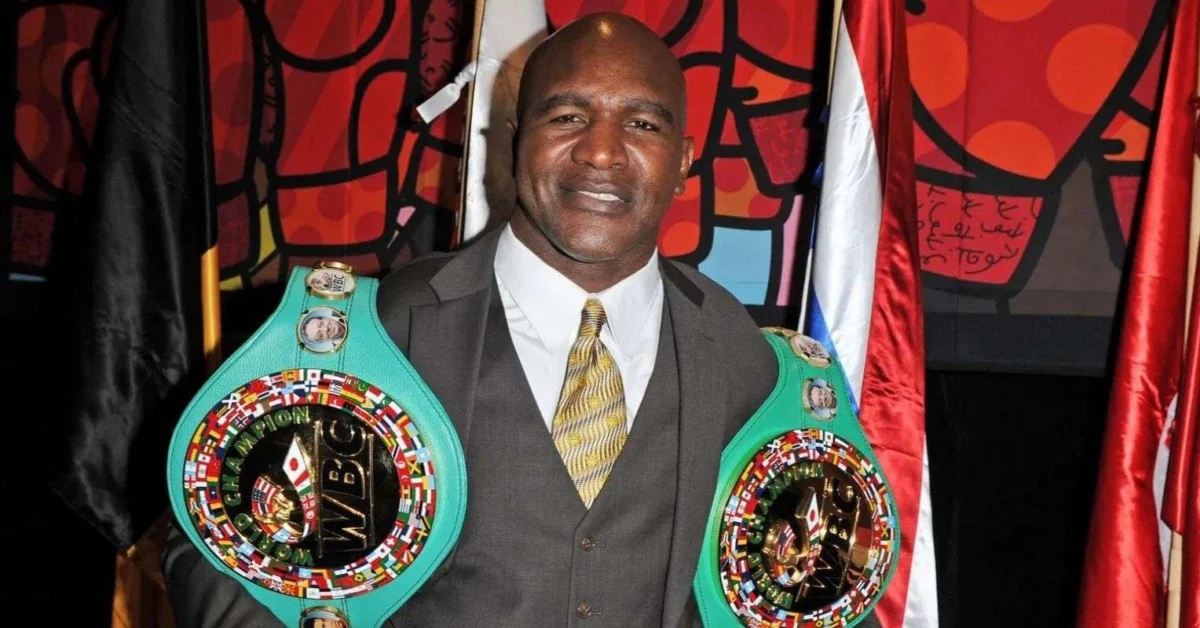
Evander Holyfield has long secured his status as one of the most formidable and accomplished heavyweights to ever step inside a boxing ring, having navigated one of the golden eras of the division with relentless determination and tactical brilliance. Over a career spanning four decades, the man famously known across the sporting landscape as "The Real Deal" established a legacy built on facing every elite challenge available. Yet, when looking back on his legendary encounters with his most famous rival, "Iron" Mike Tyson, Holyfield offers an assessment marked by striking candor and humility. Rather than attributing his victories solely to his own mastery, Holyfield has admitted that timing was a decisive factor, acknowledging that he was fortunate to cross paths with Tyson after the fearsome puncher had transitioned past the peak of his formidable prime.
Holyfield’s candid reflections, shared in a video retrospective, shed light on the subtle tactical shifts that separated the virtually invincible version of Tyson from the one who stepped into the ring during the latter half of the 1990s. For years, the boxing world had wondered how a prime Tyson would have fared against a prime Holyfield, a dream matchup that was delayed by timing, promotional disputes, and personal setbacks. By the time the two icons finally met in the ring, Holyfield observed a critical evolution in Tyson’s approach—one that transformed a terrifying, unpredictable force into a fighter whose patterns could ultimately be deciphered, anticipated, and neutralized.
In discussing the aura and mechanics of Tyson at his absolute best, Holyfield zeroed in on the element of surprise that once paralyzed opponents before the opening bell had even sounded. During his meteoric ascent, Tyson’s ferocity was matched by an unorthodox rhythm, slipping punches from awkward angles and unleashing explosive combinations from unexpected trajectories. However, as Holyfield pointed out, that elusive unpredictability eventually eroded, giving way to a more habitual style that elite tacticians could prepare for and exploit.
"Unpredictable," Holyfield explained when breaking down what once made Tyson such a devastating assignment. "When you didn’t know what Tyson was gonna do, everybody was in trouble. He changed up and got into a rhythm that everybody knew and became beatable. I was fortunate enough to fight him when he was beatable."
The admission highlights the profound level of ring IQ that defined Holyfield’s career just as much as his celebrated heart and physical durability. To label Tyson as "beatable" was not intended as a slight against his rival’s extraordinary talent, but rather an honest evaluation of how Tyson’s tactical repertoire narrowed over time. In his younger years, Tyson was a whirlwind of perpetual motion, using evasive head movement to create devastating openings. As time wore on, his reliance on single power shots and predictable forward pressure allowed a seasoned veteran of Holyfield’s caliber to establish control, dictate the tempo, and weather the initial storm.
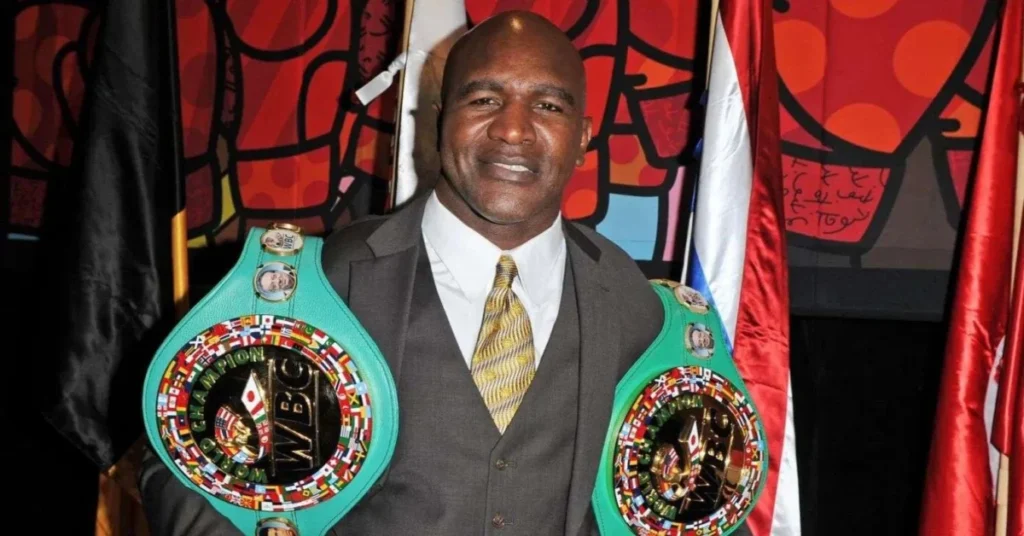
Holyfield’s place in boxing history gives immense weight to his words. Spanning the cruiserweight and heavyweight divisions, his accomplishments remain unique in the annals of combat sports. After capturing Olympic bronze in 1984, Holyfield launched a professional career that redefined the cruiserweight division, cleaning out the weight class with historic authority. By 1990, he made history by becoming the very first fighter in the sport’s history to claim the undisputed world championship at both cruiserweight and heavyweight.
His championship pedigree only expanded from there. Holyfield remains the only boxer in history to capture the world heavyweight title on four separate occasions, a milestone that cemented his standing among the greatest heavyweights of the past forty years. Over the course of a Hall of Fame career, Holyfield stood toe-to-toe with an extraordinary roster of legendary champions. He secured memorable triumphs over seasoned icons such as Larry Holmes and George Foreman, and engaged in an unforgettable, punishing trilogy with Riddick Bowe that produced some of the most thrilling rounds in heavyweight history.
Yet, for all his championship triumphs, it was his rivalry with Tyson that captured the imagination of the global sports public like few other rivalries before or since. When Holyfield and Tyson finally met in November 1996, the general consensus among many observers and oddsmakers was that Holyfield was past his best, while Tyson was widely expected to score another emphatic victory. Holyfield completely dismantled those expectations, standing his ground in the center of the ring, absorbing Tyson’s heaviest artillery, and using disciplined inside fighting to wear down the champion before stopping him in the eleventh round.
Their rematch in June 1997 produced one of the most infamous spectacles in sports history. Tyson, frustrated by Holyfield’s command of the pocket and tactical dominance, was disqualified in the third round after twice biting Holyfield’s ears. While the bout ended in unprecedented chaos and controversy, Holyfield had once again proved that he held the psychological and tactical measure of his rival. Looking back decades later, Holyfield’s perspective reveals that his confidence in those encounters was grounded not in arrogance, but in a clear-eyed understanding that Tyson’s once-impenetrable armor had developed noticeable cracks.
The version of Tyson that Holyfield described as "unpredictable" was the young phenomenon who had terrorized the heavyweight ranks during the mid-1980s. Bursting onto the professional scene in 1985 as an eighteen-year-old prodigy, Tyson took the boxing world by storm with a relentless knockout streak that earned him the moniker "Iron Mike." Barely out of his adolescence, Tyson possessed a terrifying combination of blinding hand speed, devastating power, and defensive discipline. In November 1986, at just twenty years old, Tyson dismantled Trevor Berbick to capture the WBC heavyweight title, becoming the youngest heavyweight champion in boxing history—a record that still stands unchallenged today.
During that peak era, Tyson was an athletic marvel whose offensive onslaught appeared chaotic and terrifying to opponents, yet was governed by precise fundamentals and fluid transitions. He was able to shift weight, slip incoming jabs, and deliver crushing hooks and uppercuts from angles that defied conventional boxing logic. Opponents were routinely defeated before they even entered the ring, overwhelmed by his sheer aura and the impossibility of forecasting his next move.
However, as Tyson’s career progressed, personal turmoil, legal issues, extended absences from the ring, and changes in his corner contributed to a gradual shift in his fighting identity. By the mid-1990s, the fluid, multi-punch combinations and bobbing-and-weaving defense were increasingly replaced by a more stationary, aggressive attack that relied heavily on landing one fight-ending blow. While still possessor of pulverizing power and dangerous to anyone in the division, Tyson’s rhythm had become recognizable. To a master counterpuncher and tactician like Holyfield, that predictability provided the blueprint necessary to achieve victory.
Tyson’s later career would continue to be marked by volatility and dramatic headlines, yet his enduring cultural impact and status as one of boxing’s most magnetic figures never waned. Decades after stepping away from championship contention, Tyson’s name still carries unmatched drawing power across the sports world. That enduring appeal was demonstrated once again this past November when, at 58 years of age, Tyson made a sensational return to the ring to take on influencer-turned-prizefighter Jake Paul.
Held at the sprawling AT&T Stadium in Arlington, Texas, the high-profile, eight-round heavyweight contest attracted worldwide attention. Although Tyson showed flashes of the familiar intensity that once defined him, the decades separating him from his formidable prime were on full display. Tyson was ultimately defeated via unanimous decision by Paul, unable to generate the sustained bursts of offense that had once terrorized the heavyweight division. The bout served as a vivid reminder of Father Time’s undefeated record and further emphasized just how distant the era of Tyson’s absolute peak had become.
Holyfield’s willingness to contextualize his own triumphs against Tyson reflects the depth of respect that has developed between the two former adversaries in the years since their violent clashes. By acknowledging that he shared the ring with a more predictable version of the once-untouchable champion, Holyfield does not diminish his own monumental achievements. Instead, he offers a masterclass in boxing analysis, recognizing that at the highest level of the sport, victory belongs to those who understand their opponents’ patterns better than the opponents understand themselves. In a sport where egos often overshadow reality, Holyfield’s admission stands as a testament to the tactical honesty that helped define one of the most legendary careers in boxing history.