


When resistance training routines are discussed in everyday conversation, the focus almost invariably centers on dynamic movements—lifting and lowering weights through a full range of motion. Yet, exercise science and strength history alike point to a powerful alternative that has long been sidelined by conventional wisdom: isometric training. While traditional fitness culture often reduces static exercises to beginner-level wall sits or planks, emerging scientific evidence and historical accounts reveal that isometric training can be a remarkably effective modality for building both muscle strength and size.

Understanding Muscle Actions
To accurately evaluate how static training stacks up against dynamic exercise, researchers first look at how muscle actions are defined throughout scientific literature. Traditionally, resistance training relies on isotonic muscle actions, where muscles maintain constant tension while undergoing changes in length during dynamic movements. These dynamic actions consist of two primary components: concentric actions, which involve the active shortening of the muscle as it pulls two bones closer together, and eccentric actions, which involve the lengthening of the muscle under an external load.

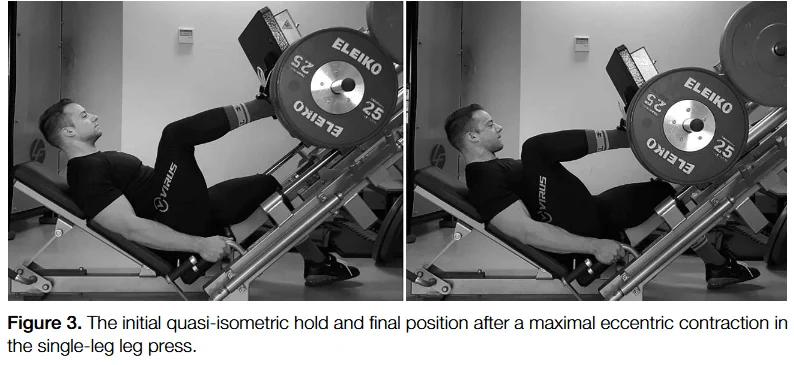
In contrast, isometric muscle actions occur without a meaningful change in the overall length of the muscle-tendon complex. Although muscles and tendons may experience microscopic shifts internally, such as fascicles shortening while tendons elongate, the joint angle remains fixed. Beyond these two common modalities lie isokinetic muscle actions, which involve moving at a constant angular velocity using specialized laboratory equipment, and eccentric quasi-isometrics, a hybrid approach where individuals hold a static position until fatigue forces a controlled, resisted lengthening phase.

A Brief History of Static Strength
Long before modern laboratories began measuring torque and cross-sectional areas, historical strongmen recognized the profound power of static tension. One of the earliest figures to champion isometric training was the Russian-born strongman Alexander Zass, famously known as "The Iron Samson." Imprisoned during World War I, Zass reportedly maintained his immense physical strength by performing repeated static muscle contractions against heavy chains and iron bars.

Zass firmly believed that coupling dynamic lifting with deliberate static strain against immovable objects was the secret to developing resilient muscles and tendons. Decades later, in 1953, researchers Hans-Jürgen Müller and Theodor Hettinger published what is widely considered the first formal scientific study on isometric training. Their landmark work demonstrated that brief, daily static contractions could drive substantial strength gains, paving the way for decades of subsequent biomechanical research into how muscles respond to static loads.

Types of Isometrics and Their Physiological Impacts
When examining isometric training, exercise scientists generally divide static actions into two distinct categories: pushing, also known as overcoming isometrics, and holding, known as yielding isometrics. Pushing isometrics involve attempting to move an immovable object, thereby generating high levels of maximal force. Holding isometrics require resisting an external load to prevent joint movement, closely mimicking the deceleration demands frequently encountered during athletic injuries.

Research has shown that these two isometric types elicit distinct physiological responses. Studies investigating time-to-task failure at identical relative intensities have consistently found that pushing isometrics can be sustained significantly longer than holding isometrics. Conversely, holding isometrics frequently generate higher ratings of perceived exertion, greater cardiovascular strain, and more pronounced electromyographic activity. These differences suggest that holding isometrics rely on more complex sensorimotor control strategies, making them particularly relevant for rehabilitation contexts and injury prevention.

Muscle Growth, Tendons, and Rehabilitation
For decades, common fitness assumptions dictated that static training was vastly inferior to dynamic lifting for muscle hypertrophy. However, a growing body of scientific literature challenges this notion, demonstrating that isometric training can yield significant increases in muscle cross-sectional area. Studies examining training volume, intensity, and contraction duration indicate that when sufficient mechanical tension and time under tension are accumulated, isometric training can stimulate robust muscle growth.

Furthermore, isometric training plays a critical role in tendon rehabilitation and the management of tendinopathy. Tendons act as viscoelastic structures that transfer force from muscle to bone, and heavy mechanical loading is essential for driving positive structural adaptations such as increased tendon stiffness. While some early clinical studies suggested that isometric exercises provide superior acute pain relief compared to dynamic movements, subsequent systematic reviews have highlighted significant variability in these findings, emphasizing that load management and gradual progression remain the cornerstone of effective tendon rehabilitation.

Comparing Isometric and Dynamic Training
When researchers directly compare isometric training to traditional dynamic resistance training, the results often surprise skeptics. Multiple human studies spanning several decades have evaluated the impacts of isometric versus isotonic training on muscle size and strength. While dynamic training typically yields superior performance improvements in tasks that strictly mirror dynamic testing protocols—largely due to the principle of task specificity—isometric training frequently matches dynamic protocols in driving overall muscle hypertrophy.

In recent trials, researchers have directly compared long-muscle-length isometric protocols to full range of motion dynamic training, observing remarkably similar increases in muscle thickness. Although dynamic training continues to serve as the foundation of most strength and conditioning programs due to its broad practicality, the scientific consensus increasingly recognizes isometric training as a viable, highly effective tool. Whether utilized to overcome stubborn sticking points in compound lifts, manage joint pain, or stimulate muscle growth through novel mechanical stimuli, static training proves that visible movement is not an absolute prerequisite for building a stronger, more muscular physique.