
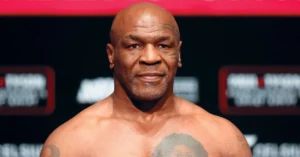

In a dramatic and unfortunate turn of events for the featherweight division, the scheduled World Boxing Association (WBA) Featherweight World Championship bout between reigning champion Brandon Figueroa and top contender Tomoki Kameda did not take place as planned in Las Vegas. The high-stakes world title fight collapsed during the official pre-fight weigh-in proceedings when Figueroa failed to meet the mandatory 126-pound division limit. In accordance with long-standing WBA rules and regulations, the failure to make weight resulted in Figueroa losing his world championship on the scale. The sudden cancellation of the main event was further heightened by news that Figueroa suffered medical complications during his weight-reduction efforts, prompting the sanctioning body to issue an official statement addressing the title status, the rights of the scheduled challenger, and upcoming structural steps for the division.
The official position of the sanctioning organization was formally conveyed by WBA President Gilberto Jesús Mendoza, who expressed deep regret over the cancellation of the championship event in Las Vegas while reiterating the strict necessity of enforcing rules and safeguarding athlete health. The WBA confirmed that because Figueroa could not scale at or below the contractually required 126-pound weight limit, he automatically forfeited his status as the WBA Featherweight World Champion. Beyond the formal losing of the championship, the sanctioning body expressed immediate concern for the physical health and well-being of the former titleholder. Following his failure on the scales, reports confirmed that Figueroa suffered medical complications linked to his weight cut. President Mendoza, speaking on behalf of the entire organization, extended official well-wishes to Figueroa for a full, safe, and complete medical recovery.
The extreme physical demands associated with shedding weight to meet designated division limits remain one of the most taxing aspects of professional boxing. When an athlete attempts to drop critical pounds in the final hours leading up to an official weigh-in, severe dehydration and acute physiological strain can create serious health risks. In the case of Figueroa, the inability to safely reach the 126-pound threshold brought the process to an abrupt halt, leaving regulatory officials, medical staff, and the WBA with no alternative option other than to call off the championship bout. The priority of protecting the athlete’s physical safety superseded the execution of the scheduled fight card in Las Vegas.
While the medical complications effectively ended Figueroa’s reign as champion and forced the fight’s cancellation, the situation created an equally profound predicament for Tomoki Kameda. The Japanese contender entered the scheduled championship match having satisfied every single professional, athletic, and contractual requirement expected of a world title challenger. Kameda had dedicated months of strenuous preparation to this bout, undertaking an intensive training camp to ensure he reached optimum physical condition for his opportunity to compete for the world crown. At the official weigh-in, Kameda stepped onto the scale and successfully made the required 126-pound featherweight limit without issue, fully honoring his obligations to the promoters, the sanctioning organization, and the athletic commission.
In his official statement, President Mendoza commended Kameda for his high level of professionalism throughout the entire process. The WBA leader noted that Kameda did everything that was asked of a elite professional athlete, spending months preparing specifically for this fight and making the weight limit as required. Having invested substantial time, physical effort, and financial resources into his camp, Kameda found himself in the difficult position of having his world title opportunity canceled at the final moment through no fault of his own. Acknowledging the severe impact this places on a fully compliant fighter, the WBA leadership emphasized that resolving Kameda’s situation fairly is a primary organizational priority.
To address the immediate operational and divisional consequences of the fight’s cancellation, the WBA announced that its Championships Committee will convene for an official meeting on Monday, October 19. According to President Mendoza, the committee’s primary focus during this session will be to address Kameda’s standing and determine the next official steps for his career path. The committee is tasked with evaluating the situation to ensure that Kameda’s successful weigh-in, professional compliance, and months of preparation are appropriately accounted for within the sanctioning body’s official championship framework.
The upcoming Monday, October 19 meeting of the WBA Championships Committee will not only address Kameda’s situation but will also comprehensively assess the broader state of the featherweight division. President Mendoza explicitly stated that the committee will review Kameda’s position together with the rights and standing of all other rated contenders within the WBA featherweight rankings. When a world championship becomes vacant under unexpected circumstances, the sanctioning body must navigate its official bylaws to establish how the vacant title will be filled—whether by ordering a direct vacant title match, establishing mandatory positions, or structuring elimination contests among top-ranked contenders.
Balancing the immediate rights of a compliant challenger like Kameda against the standing of other highly ranked contenders presents a complex administrative responsibility for the sanctioning body. Contenders throughout the top ranks of the WBA featherweight division have earned their positions through competition and maintain legitimate aspirations to fight for the world title. The WBA Championships Committee’s mandate during the October 19 meeting will involve a thorough examination of current divisional rankings, active fighter availability, and regulatory guidelines to chart a clear and equitable path forward for the vacant championship.
In addition to addressing the immediate title status and contender rankings, the incident in Las Vegas has highlighted broader regulatory discussions within the sport. In his formal communication, President Mendoza revealed that the WBA is actively working in coordination with the Nevada State Athletic Commission (NSAC) as well as other state and international athletic commissions. The goal of this collaborative effort is to closely align weigh-in procedures and regulatory protocols across different jurisdictions, ensuring that every professional boxer competes under consistent, transparent, and standardized rules.
Currently, minor variances in weigh-in schedules, monitoring procedures, and regulatory enforcement across different state and international athletic commissions can lead to administrative friction and uncertainty during major fight weeks. By collaborating directly with prominent regulatory bodies like the Nevada State Athletic Commission—which oversees many of the sport’s highest-profile events in Las Vegas—the WBA seeks to establish uniform standards. Standardizing these procedures across commissions is designed to ensure that fighters, camps, and promoters operate under predictable conditions regardless of where a championship contest is hosted.
Establishing clear and unified weigh-in rules is widely viewed as a crucial step toward protecting both the integrity of world championship bouts and the physical health of the athletes involved. Standardized protocols help establish clear parameters for weight monitoring, reduce the likelihood of dangerous late-stage dehydration strategies, and ensure that administrative rules regarding weight failure are enforced uniformly. Clear rules also ensure that compliant fighters receive swift administrative clarity when scheduled opponents fail to make weight or experience medical setbacks during fight week.
The cancellation of the championship match in Las Vegas underscores the unpredictable nature of elite professional boxing, where months of preparation and complex event logistics can be completely altered during the official weigh-in. For Brandon Figueroa, the immediate focus centers entirely on recovering his physical health under medical guidance before evaluating his future athletic plans and deciding whether remaining at the 126-pound featherweight limit is physically sustainable for his long-term health.
For Tomoki Kameda and the rest of the featherweight field, attention turns to the WBA Championships Committee meeting on Monday, October 19. The rulings established during that session will define the immediate future for Kameda, clarify the status of the top-rated featherweight contenders, and outline the exact procedure for determining the next WBA Featherweight World Champion. Through its planned committee session and ongoing alignment efforts with the Nevada State Athletic Commission, the WBA aims to maintain clear regulatory standards while providing a transparent resolution for all parties involved.
Gilberto Jesús Mendoza
President, World Boxing Association