

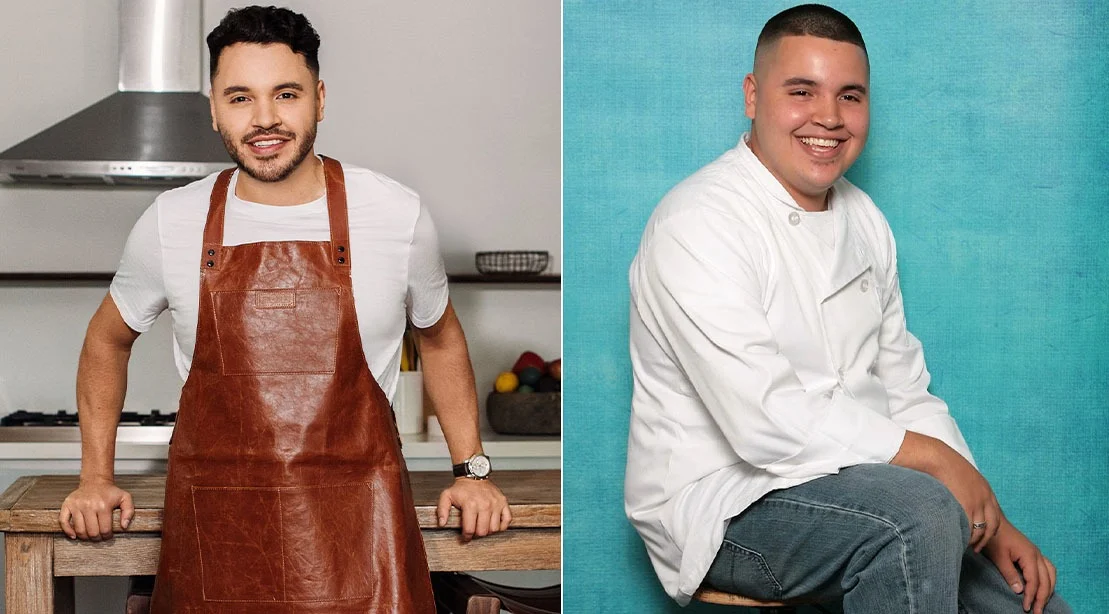
MIAMI — For Chef Chris Valdes, food has always been far more than mere sustenance; it has served as an intimate expression of culture, family history, and personal identity. The Miami native, who captured national attention as a standout finalist on Season 14 of Food Network Star and has since built a multifaceted career as a cookbook author and frequent guest host on programs like Good Morning America, built his reputation on rich, evocative Latin cuisine. Yet behind the vibrant public persona and the mouthwatering displays presented on camera, Valdes was quietly facing a profound personal challenge.
Faced with mounting health concerns that intensified in his twenties, Valdes ultimately undertook a disciplined lifestyle transformation that saw him burn 40 pounds of body fat. Crucially, the celebrated chef managed this health overhaul without abandoning the bold culinary heritage that made him a household name. Stepping out of his bustling kitchen to reflect on his journey in an in-depth conversation with Muscle & Fitness, Valdes detailed how this significant weight loss was achieved not through drastic deprivation, but through a long-term recalibration of his body, mind, and professional craft.
Valdes describes his trademark culinary approach as inherently bold, vibrant, and profoundly anchored in his Cuban ancestry. Growing up in South Florida, his palate was steeped in the rich traditions of the Spanish-speaking Caribbean. His professional trajectory has centered around honoring those foundational traditions while reinterpreting them through contemporary techniques and artistic presentations that resonate with modern palates.
"I would describe my cooking as bold, flavorful, and heavily influenced by my Cuban roots," Valdes explained. "I love taking the Latin and Caribbean flavors that I grew up with and giving them a modern twist."
However, sustaining physical fitness while immersed in the relentless realities of the culinary industry presents unique challenges. The day-to-day life of a professional chef, which demands continuous tasting, rich recipe testing, long hours on one’s feet, and high-stress environments, frequently stands at odds with the biological discipline required to maintain a caloric deficit. For culinary professionals working in Latin and Caribbean traditions, where hospitality is frequently quantified by portion size and carbohydrate-dense comfort dishes, navigating health requires an intentional and unwavering effort.
Despite common misconceptions surrounding the dietary value of Latin cuisine, Valdes rejects broad generalizations that dismiss these traditional meals as universally detrimental to fitness. Instead, he highlights the vast array of whole, nutrient-dense ingredients embedded in traditional culinary heritage.
"I don’t think you can label Latin food as simply healthy or unhealthy," Valdes observed. "There are so many naturally nutritious ingredients such as beans, vegetables, lean proteins, seafood, avocado, fresh herbs, citrus and spices."
At the same time, the chef openly acknowledges that standard preparations can pose difficulties for someone pursuing weight management. "Some of the comfort foods that I grew up loving can be fried, heavy in carbohydrates, or served in very large portions," he admitted. Recognizing this nuance proved pivotal to his physical turnaround. Rather than discarding the recipes of his childhood, Valdes focused on structural adjustments that kept his heritage intact.
"I’ve now learned that I don’t have to stop eating the foods that connect me to my culture," he said. "Instead, I can change the cooking method, adjust the portions, and make smarter ingredient choices while keeping the flavors that make those dishes special."
That cultural connection ran remarkably deep. In the Valdes household, food was inextricably linked to emotional security, family warmth, and community gatherings. From an early age, these associations established a psychological bond with eating that would follow him well into his adult years.
"Since I was a kid, food was love, comfort, family, and celebration," Valdes reflected. "My dad would treat me to chicken nuggets almost daily. I grew up in our family restaurant, where food was around us 24/7. And, growing up Latino, it felt like everything provided a reason to gather and celebrate… and wherever there was a celebration, there was food."
Chef Chris Valdes Examined His Emotional Relationship with Food
The emotional role of food deepened dramatically during a traumatic period of childhood upheaval. When Valdes was young, his father was incarcerated, a life-altering event that coincided directly with the permanent closure of their beloved family restaurant. Amid the loss of familial stability, cooking evolved from a pleasant childhood pastime into a vital psychological refuge.
"Around that time, I remember seeing cooking on television and becoming fascinated by it," Valdes recounted. "When I started cooking for myself, I discovered this space where I could create, focus, and feel good about something during a time when so much around me didn’t feel good. In many ways, cooking saved me then. What started as a source of comfort eventually became my passion, my career, and the way I would build my life."
Yet, as that refuge transformed into professional training, old emotional coping mechanisms converged with new occupational demands. While attending culinary school, Valdes found himself sampling six to seven complex dishes on a daily basis. The continuous exposure gradually expanded his appetite and eroded internal regulatory cues.
"There still isn’t really an ‘OFF’ switch," he acknowledged regarding his persistent love for eating. "I even daydream about food."
The physiological consequences of these combined factors manifested early. At just 23 years of age, Valdes underwent routine medical testing and received an alarming diagnosis: his cholesterol markers had reached dangerously high levels. Doctors warned him that his current trajectory was unsustainable, delivering a sharp wake-up call that demanded immediate action.
Initially, Valdes responded with abrupt, extreme measures. He hired a personal trainer and threw himself into grueling gym routines. However, because these early interventions were anchored purely in intense physical output rather than structural lifestyle changes, any interruption in training prompted an immediate rebound. Whenever he scaled back his sessions, the weight returned rapidly.
Desperate for a permanent solution, Valdes sought out surgical intervention two years later. "At 25, I even underwent liposuction," he revealed candidly. "At the time, part of me believed that if I could physically change my body, maybe everything else would fall into place, but it didn’t."
The cosmetic procedure provided a superficial change, but it left the underlying psychological dynamics entirely untouched. Without addressing the behavioral triggers that dictated his daily diet, the fundamental issues persisted.
"What I learned was that changing my body didn’t automatically change my habits, my mindset, or my relationship with food," Valdes noted. "Liposuction could change what I saw in the mirror, but it couldn’t teach me discipline or consistency… I had to do that for myself."
Because his profession, television appearances, and core passion centered unequivocally on food, total abstinence was never an option. To forge a lasting solution, he had to reconstruct his mental relationship with nutrition and find physical outlets that fostered true mental resilience. Valdes eventually discovered that outlet in CrossFit, which supplied not only a rigorous cardiovascular and strength stimulus, but also a transformative mental discipline that helped clear his mind of professional pressures.
"I didn’t have to think about everything I was carrying or what tomorrow looked like. I just need to get through the next rep," Valdes explained.
To transition these physical breakthroughs into lasting daily habits, the chef applied the behavioral concept known as the 21/90 rule. The framework suggests that committing consistently to a behavioral change for 21 days creates a functional habit, while sustaining it over the course of an additional 90 days embeds that pattern into a permanent lifestyle. By relying on structured increments rather than temporary, drastic crash diets, Valdes established a framework he could reliably maintain.
Chef Chris Valdes Now Cooks Healthier, but Never Compromises on Taste
When it came to his daily diet, Valdes avoided overly restrictive dogmas, focusing instead on identifying and eliminating unhelpful habitual foods while maintaining steady culinary pleasure. One of his initial strategic moves was completely eliminating sugary sodas, a simple change that yielded profound results over time.
"It’s funny because something that once seemed completely normal doesn’t appeal to me anymore," Valdes noted.
Simultaneously, he began paying closer attention to the visceral aftermath of his meals, stepping back from heavily greased foods and observing how certain ingredients influenced his daily energy levels. "I also started pulling away from really greasy foods and becoming more conscious of how certain foods made me feel after eating them," he said. "I realized that eating something just because it tasted good, for five minutes, wasn’t always worth feeling sluggish for afterward."
Rather than viewing nutrition through a prism of deprivation, wherein beloved elements are constantly stripped away, Valdes altered his mental model to focus on positive addition. He prioritized filling his plate with satiating, highly nutritious options before considering anything else.
"Now I add more protein, vegetables, fresh ingredients, and foods that actually kept me satisfied," he explained.
In the kitchen, Valdes leveraged his extensive technical culinary training to pioneer healthier preparation techniques that mimic the mouthfeel and satisfaction of traditional recipes. Rather than reaching for the commercial deep fryer, he turned toward methods that rely on dry heat, dynamic airflow, and direct flame.
"I’ll grill, roast, air-fry, or sear something instead of automatically deep frying it," Valdes said. "I will use fresh citrus, herbs, garlic, chiles, and spices to create flavor rather than relying on heavy sauces. I’ll choose leaner proteins, incorporate more vegetables, and pay attention to portion sizes."
Despite these structural alterations, Valdes maintains one non-negotiable rule across all his culinary creations: flavor must never be compromised. For the chef, uninspired or bland health food serves as the primary catalyst for dietary failure.
"If the healthier version doesn’t taste good, you’re probably not going to stick with it," he emphasized.
This commitment to uncompromising flavor while navigating nutritional parameters has significantly elevated his technical execution in professional kitchens. Rather than limiting his scope, navigating these creative constraints has forced him to look deeper into the chemical and sensory mechanisms of Latin cooking.
"I don’t consider myself a ‘healthy chef’ and I don’t want people to think I’m suddenly giving up the Cuban and Latin foods that I love, because that’s not realistic for me, and I don’t think it has to be," Valdes explained. "Instead, I’ve become much more intentional, and this has actually made me more creative as a chef, because I love the challenge of finding ways to keep the soul of a dish, while making choices that better fit the way I want to live today."