

The international boxing community is mourning the loss of one of its most courageous and enduring figures following the death of former World Boxing Association middleweight champion Jorge Castro. The Argentine pugilist, revered throughout Latin America and across the global prizefighting landscape under his fitting moniker "Locomotor," passed away at the age of 59 after suffering a sudden medical emergency in his native Argentina.
Castro collapsed unexpectedly on Wednesday while at a bingo hall in Argentina. According to reports detailing the tragic incident, Castro, who lived with diabetes, suffered a severe drop in his insulin levels that precipitated his sudden collapse. Emergency medical services were promptly dispatched to the venue, and paramedics initiated urgent lifesaving measures in an effort to stabilize him. Castro’s daughter was present with him when the emergency unfolded, later recounting that her father tragically passed away at the scene while cardiopulmonary resuscitation was being administered. The sudden loss has sparked an outpouring of grief and condolences across the sporting world, with tributes pouring in for his family, friends, and the generations of fans who followed his extraordinary journey in the ring.
Castro’s passing marks the departure of an athlete whose resilience, power, and unrelenting determination earned him a permanent place in boxing lore. Throughout an era characterized by fierce competition and grueling schedules, Castro stood as a throwback to a bygone age of prizefighting. Over the course of a professional career that began in February 1987 and stretched until January 2007, Castro compiled an astounding ledger of 144 bouts, retiring with an official record of 130 victories, 11 defeats, and three draws, with 90 of his wins coming by way of knockout.
In an era when modern fighters often compete only once or twice a year, Castro’s activity level was nothing short of staggering. Across two full decades, he maintained a relentless schedule against elite domestic and international opposition, building a reputation as one of the roughest, toughest, and most durable prizefighters the sport had seen in recent history. Possessing an iron-clad chin and an indomitable fighting spirit, Castro was stopped only twice in his entire 144-fight professional tenure, an exceptional achievement given the caliber of punchers and the sheer volume of warfare he navigated inside the ropes.
While Castro enjoyed numerous triumphs on the world stage, his definitive moment under the championship lights arrived on a fateful night in December 1994, in what became universally recognized as one of the most astonishing come-from-behind victories in boxing history. Defending his WBA middleweight crown against the skilled and technically gifted American contender John David Jackson in Monterrey, Mexico, Castro found himself in desperate trouble.
Jackson, an elusive southpaw with sharp counterpunching abilities, systematically dismantled Castro’s offense through the first eight rounds of the bout. As Jackson unloaded precise combinations, Castro absorbed heavy and sustained punishment. Both of the champion’s eyes were severely swollen, his face bore the painful marks of Jackson’s relentless accuracy, and the fight appeared to be slipping entirely out of reach. Castro trailed decisively on all three official judges’ scorecards, and ringside observers and commentators viewed him as a certain loser, with some wondering whether the contest ought to be halted to spare him further damage.
Yet, true to his warrior identity, Castro refused to yield. In the ninth round, cornered and with his vision severely compromised by swelling, Castro produced a moment of pure ring theater. Sensing Jackson moving in to press his advantage, Castro unleashed a devastating, thunderous left hook that connected squarely with Jackson’s jaw. The blow dramatically turned the contest on its head, sending the stunned American challenger crashing to the canvas. Although Jackson managed to beat the count, he was visibly shaken and unable to recover his equilibrium. Castro moved in swiftly to capitalize on the opening, dropping Jackson two additional times in rapid succession. The referee was forced to call an immediate halt to the contest, finalizing a miracle turnaround that sent shockwaves through the sporting world.
The dramatic clash was celebrated globally for its sheer drama and heart, ultimately being named The Ring Magazine’s Fight of the Year for 1994. The victory cemented Castro’s reputation not merely as a formidable world champion, but as a fighter who could never be counted out regardless of how dire the circumstances appeared on the scorecards.
Castro’s ascent to the world championship had been forged through grit and determination. He captured the vacant WBA middleweight title in August 1994 by traveling into challenging territory to defeat the accomplished and respected American southpaw Reggie Johnson via a hard-fought decision. Following his sensational rescue victory over Jackson, Castro demonstrated that his initial victory over Johnson was no fluke, successfully outpointing Johnson once again in a closely contested rematch to solidify his status at the top of the 160-pound division.
In total, Castro made four successful defenses of his WBA middleweight belt during his reign, validating his position as a legitimate world champion during a competitive era for the division. His championship tenure eventually came to an end in December 1995, when he traveled to Tokyo, Japan, to defend his belt against challenger Shinji Takehara. In a fiercely contested encounter, Takehara claimed a points decision to capture the title, handing Castro his first defeat in years.
Even after the loss of his world middleweight championship, Castro was far from finished with professional boxing. Rather than stepping away or seeking comfortable domestic assignments, the intrepid Argentine continued to test himself against top-tier competition, eventually moving up through the weight classes to campaign in the cruiserweight division.
Castro’s fearless nature saw him challenge two elite world cruiserweight champions in high-stakes title bouts. In December 2000, he took on the formidable WBC cruiserweight champion Juan Carlos Gomez. Gomez proved to be one of the rare opponents capable of breaking through Castro’s fabled durability, halting the Argentine in the tenth round of a grueling championship encounter. Two years later, in July 2002, Castro received another world title opportunity when he challenged IBF cruiserweight champion Vassiliy Jirov. Although Castro was unable to overcome Jirov’s relentless work rate, dropping a decision on points, he once again displayed the granite chin and competitive heart that had come to define his career.
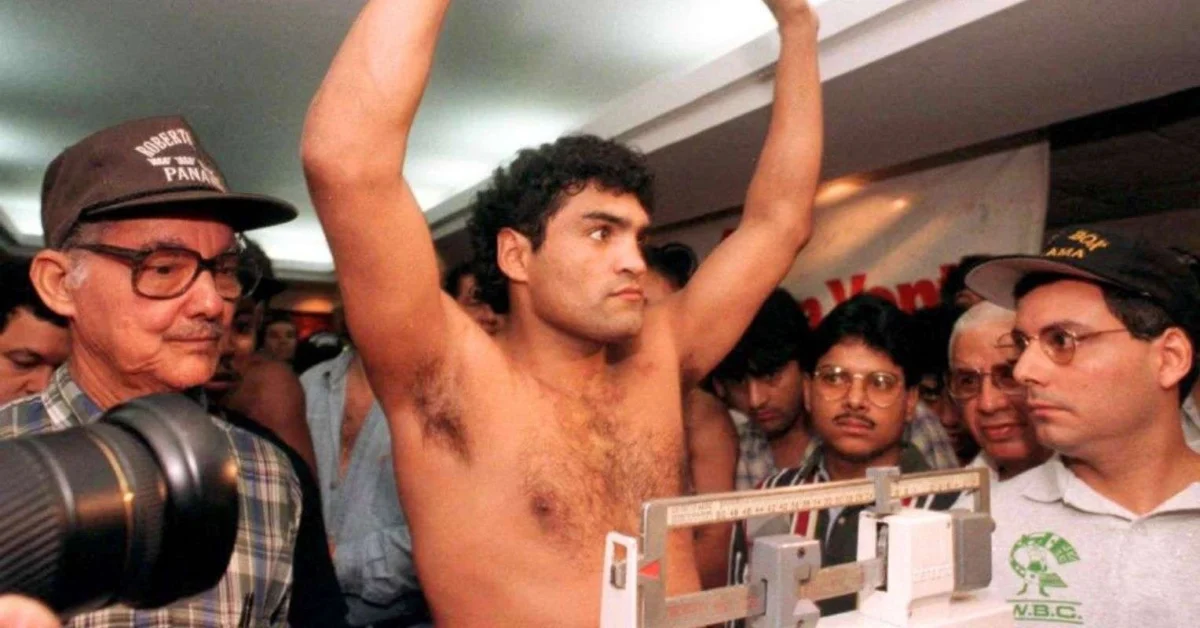
Among his other high-profile ring exploits, Castro took part in a celebrated two-fight series in 1997 against one of the greatest prizefighters in history, Roberto Duran. The two ferocious punchers met twice in non-title action, producing pair of memorable and bruising battles. Demonstrating that he could stand toe-to-toe with the legendary Panamanian icon, Castro defeated Duran in their first encounter before Duran leveled the ledger in their rematch, leaving the two warriors with a proud 1-1 rivalry that captured the imagination of Latin American boxing enthusiasts.
Castro officially closed out his remarkable journey inside the squared circle in January 2007. Fittingly, he exited the sport on the back of a victory, stopping Jose Luis Herrera to write the final chapter of a career that spanned two decades, 144 professional fights, and 90 knockouts.
Outside the ring, Castro remained a genuine and beloved folk hero in his native Argentina, a nation with a rich and storied history of producing hardened boxing icons. Upon hanging up the gloves, Castro chose not to retreat from public life, instead directing his energies toward his community. He dedicated himself to social causes, personally funding and operating community soup kitchens to feed underprivileged families, while also opening and supervising boxing gyms where young people could learn the fundamentals of the sport in a supportive and disciplined environment.
Castro’s passing brings a poignant end to the life of a fighter whose courage, sportsmanship, and generosity left a lasting impression both inside the ropes and out. His extraordinary career, highlighted by his miraculous comeback against John David Jackson and his unmatched durability over 144 professional bouts, ensures that the legacy of "Locomotor" will endure in the annals of Argentine and international boxing history.